|
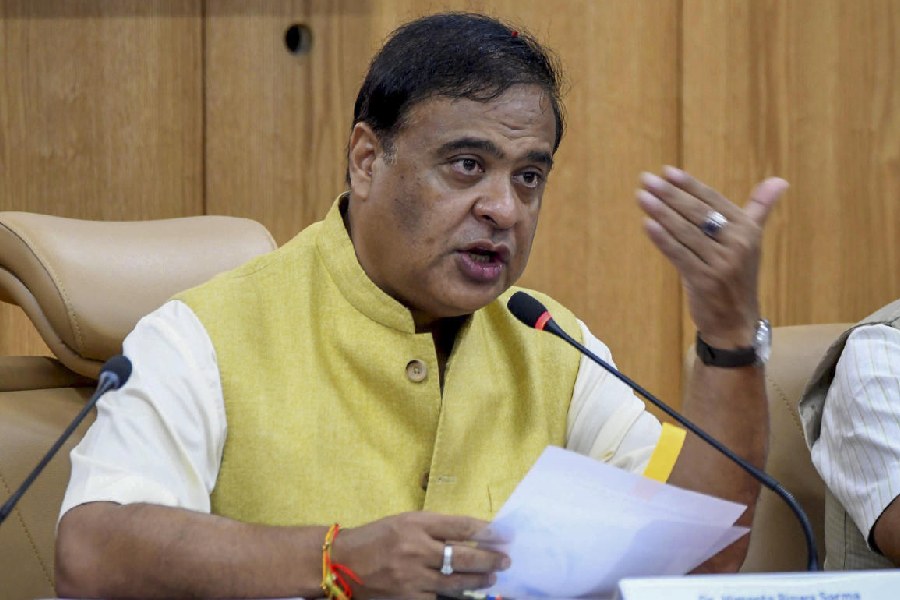
| Planning Commission deputy chairman Montek Singh Ahluwalia with the students of Ravenshaw University in Cuttack on Tuesday. Picture by Badrika Nath Das |
Cuttack, March 4: Special category status should not be the only lookout of states for their development, Planning Commission deputy chairman Montek Singh Ahluwalia said here today.
Ahluwalia, who was here to deliver Dr. Bibudhendra Misra lecture at Ravenshaw University, said Parliament had recently accorded special category status to Seemandhra following bifurcation of Andhra Pradesh.
However, responding to queries on the demand of special category status to Odisha, the deputy chairman of planning commission said that no state should worry about it since there were many others windows for availing central funds.
“Planning commission has no role in according to special status to any state. There are a lot of schemes and programmes through which the backward states can seek grants. A lot of funds have been sanctioned to the KBK districts in Odisha,” said Ahluwalia.
Ahluwalia said that there had been a lot of developments in Odisha and the state had also registered a good economic growth.
Besides, the degree of connectivity between rural and urban areas has also improved with the expansion of roads, railways, national highways and public transport systems.
Quoting RBI governor Raghuram Rajan, Ahluwalia said that a lot of global and domestic factors were responsible for the economic slowdown.
“It is a challenge not only for the Centre, but also for the state governments to have macro-economic stability as we cannot allow fiscal deficit to go out of control,” Ahluwalia said.
Ahluwalia also said that there was an urgent need for control on subsidy and extensive tax reforms and implementation of the goods and services tax, which will benefit the state and Union government to reduce corruption.
In order to achieve long-term growth, the country also needs to adopt new technology to reduce energy and water consumption, putting up infrastructure keeping in mind rapid urbanisation.
According to the 2011 census, 380 million people are living in urban areas in India, and it is estimated that the figure will touch nearly 600 million by 2031.
Hence, there is a challenge both for state and central governments in urban management and providing necessary services to the people.
Moreover, focus should be on imparting skill-oriented higher education to provide adequate employment opportunities to the students.
When Ahluwalia arrived to deliver the lecture, a group of students protested against the Centre’s decision to grant special category state status to Seemandhra, while Odisha was ignored.