Researchers from the Zoological Survey of India (ZSI) have identified two new species of free-living marine nematodes off the coast of Tamil Nadu.
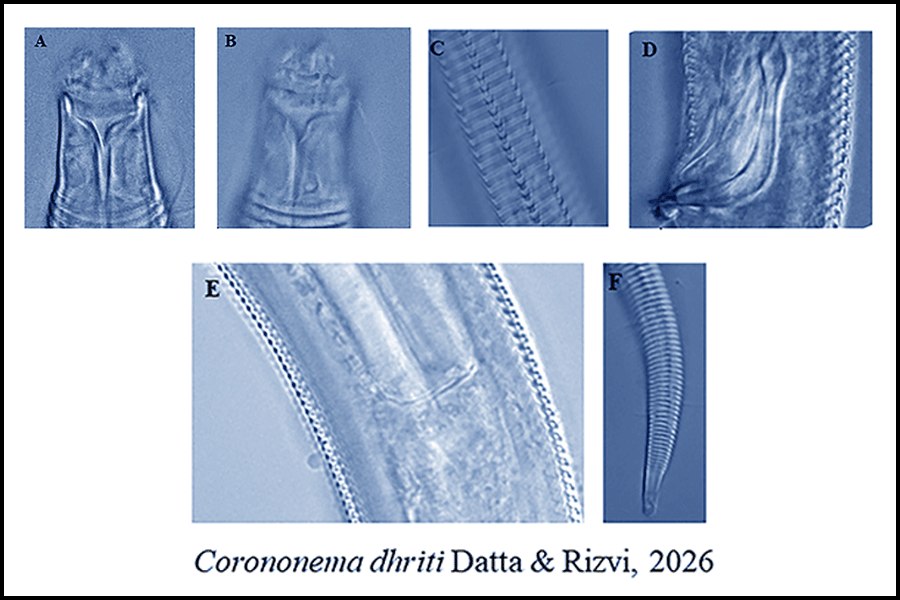
The study, conducted by researchers Ritika Datta and Anjum Rizvi, identifies the species as Corononema dhriti and Epacanthion indica—microscopic organisms that play major roles in maintaining ocean health.
Corononema dhriti is particularly notable, marking only the fourth known species within its genus worldwide. Previously recorded in regions such as Australia, Thailand and Vietnam, its presence in Indian waters represents a significant development in understanding global marine distribution patterns.
The discovery of the species was published in the international journal Zootaxa on March 25, 2026. ZSI researchers Ritika Datta and Anjum Rizvi named the discovery Corononema dhriti in honour of ZSI director acknowledging her contributions to the field.
Dhriti Banerjee, director of ZSI, said, "This discovery underscores how much of our underwater world remains a mystery. These tiny organisms are the backbone of marine food chains. Understanding this 'hidden' biodiversity is essential for creating effective conservation strategies and ensuring the long-term sustainability of our coastal productivity in the face of global environmental shifts."
Though invisible to the naked eye, marine nematodes are critical to the health of the ocean floor. These organisms break down organic matter, recycling essential nutrients back into the ecosystem, and help maintain the stability and productivity of coastal sediments.
Beyond their ecological role, they also serve as natural indicators of environmental health, offering scientists valuable insights into the impacts of climate change and human activity on marine habitats.