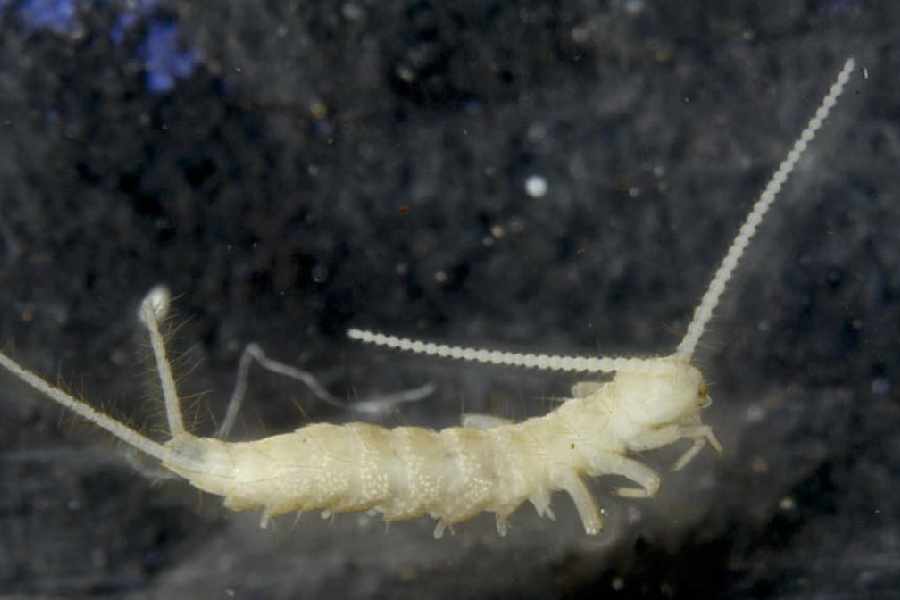
Scientists from the Zoological Survey of India (ZSI) have achieved a breakthrough in Indian entomology with the discovery of a new soil-dwelling micro-arthropod species from the eastern Himalayas, underscoring the region’s global ecological significance.
In a historic first, ZSI researchers have described a new species of Diplura — primitive, wingless hexapods. Diplura means "double tail" in Greek.
This is for the first time an Indian research team has formally documented a species from this group within the country.
The species, named Lepidocampa sikkimensis, was identified from specimens collected near Ravangla in Sikkim, with additional records from Kurseong in Bengal, indicating a wider distribution across the eastern Himalayan landscape.
According to researchers, although 17 Diplura species had previously been recorded in India, they were all described by foreign scientists.
The species, they said, is distinguished by its distinctive body scale arrangement, unique chaetotaxy (bristle patterns), and specialised appendage structures.
“Diplurans, commonly known as two-pronged bristletails, are blind soil-dwellers that play a crucial role in nutrient cycling and maintaining soil structure,” said a researcher.
The latest findings, the researcher said, were published on January 7 this year in the internationally reputed taxonomic journal Zootaxa, thus ending a nearly five-decade gap in domestic research on the Indian Diplura.
“The discovery of Lepidocampa sikkimensis marks a vital contribution to the documentation of India’s soil biodiversity. Research into evolutionarily significant and lesser-known groups like Diplura is essential for understanding ecosystem functioning,” said Dhriti Banerjee, the director of the ZSI.
The study, sources said, was led by Surajit Kar. It included researchers Souvik Mazumdar, Pritha Mandal, Gurupada Mandal and Kusumendra Kumar Suman.
The research team from ZSI has also rediscovered the rare subspecies Lepidocampa juradii bengalensis, which had not been recorded in nearly 50 years.
Last year, the ZSI scientists had also discovered a new species of Collembola (springtails) in the high-altitude regions of Sikkim.
The newly identified species, Neelus sikkimensis, represents the first recorded occurrence of the genus Neelus in India.
The findings were published on December 1 last year in the peer-reviewed Journal of the Entomological Research Society.
“Such discoveries underscore the necessity of sustained taxonomic efforts in biodiversity hotspots like the Himalayas,” Banerjee added.