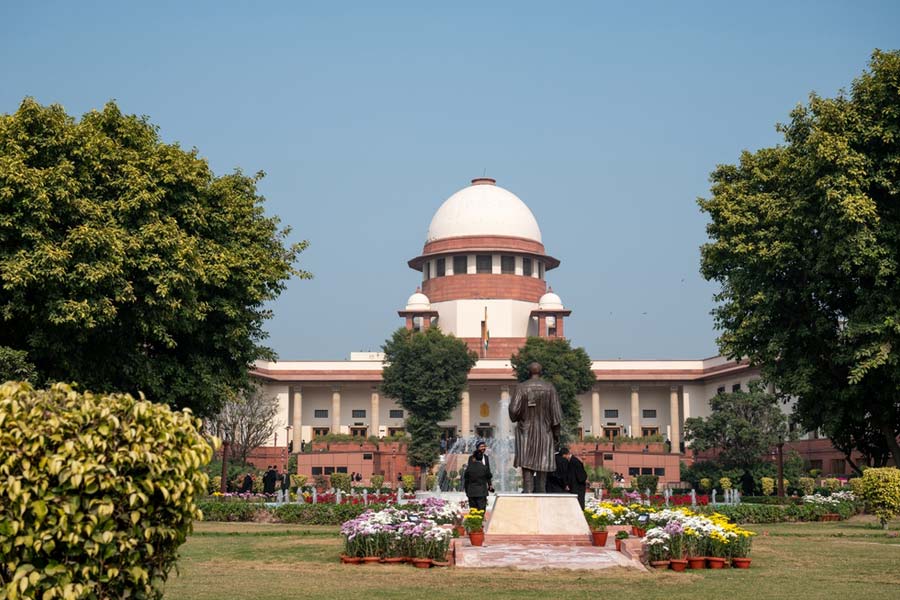
The Supreme Court has ruled that a will executed by a testator shall be considered a valid document by revenue authorities for mutation of immovable properties in the name of the beneficiary unless its genuineness is disputed by another person.
The apex court passed the ruling while setting aside a Madhya Pradesh High Court judgment that said a will could not be used for mutation under the Madhya Pradesh Land Revenue Code, 1957.
Mutation refers to the updating of official ownership records of immovable properties held by a person through various rights like sale, inheritance, gift or will.
In the present case, the revenue authorities had carried out the mutation of a property in the name of appellant Tarachandra based on a purported will bequeathed to him by Rodilal dated May 1, 2017.
The mutation was set aside by the high court on an appeal by the respondent Bhawarlal, who contended that the mutation should not have been permitted on the basis of a will. Bhawarlal claimed he was the owner of the property located in the Manasa revenue division of Ujjain district, according to a sale agreement he had entered into with Rodilal.
Aggrieved, Tarachandra had filed the present appeal.
A bench of Justices Sanjay Karol and Manoj Misra said there were several modes through which rights to an immovable property might be acquired — through sale, gift, mortgage or lease. Rights may also be acquired through devolution of interest through a will or inheritance/succession on the death of the title or interest holder.
“There is nothing in Section 109 or Section 110 of the 1959 (MP Revenue) Code limiting acquisition of rights to a particular mode…. Thus, there is nothing in the 1959 Code proscribing acquisition of rights in land through a will. As a sequitur, if a will is set up, the application for mutation based thereupon will have to be considered on merits and it cannot be rejected merely because it is based on a will,” Justice Misra, who authored the judgment, observed.
The apex court said none of the legal heirs of Rodilal raised a dispute regarding the will.
“The will is a registered document. The objection, if any, is from the first respondent (Bhawarlal) who claims himself to be in occupation of a particular piece of land held by the deceased tenure holder. Moreover, the claim... is based on an agreement for sale, and possession thereunder... Impugned judgment and order of the high court is set aside.," the bench said.