
New Delhi: Scientists have decoded the genome of the opium poppy, a plant that has fascinated people for more than 5,000 years, providing intoxication and relief from pain and giving rise to trade, wars and recipes, including Bengal's aloo posto.
An international team of researchers has assembled the poppy genome sequence, made up of some 2.7 billion genetic alphabets, a feat expected to bolster efforts to increase the yields of the medicinal compounds in the plant.
Poppy-derived morphine is among the most effective and inexpensive medicines available for relief from severe pain and plays a key role in palliative care. Another compound from the same plant, called codeine, provides relief from pain and cough.
Synthesising these chemicals in the laboratory is not viable, and the poppy plant remains the only commercial source of these pharmaceutical compounds.
"The genome sequence will greatly assist efforts to develop high-yielding varieties of poppy plants, varieties with high yield of morphine or varieties that make only codeine," Ian Graham, professor of biochemical genetics at the University of York, who led the sequencing effort, told The Telegraph over the phone.
Graham and his colleagues in Australia, China and Britain have identified a cluster of 15 genes close to one another on the genome that makes enzymes that control the production of a cough-suppressant chemical called noscapine as well as morphine and codeine. Their findings appeared in the US journal Science on Friday.
Humans have harvested poppy for over 5,000 years, using its compounds to induce euphoria, satisfy the addict's craving and bring relief from pain. The website of America's Drug Enforcement Administration Museum cites historical references to poppy cultivation in lower Mesopotamia in 3400 BC.
Opium trade flourished in the 18th century, leading to the Opium Wars in China during the mid-1800s. The DEA Museum website also cites the emergence of "opium dens" in China and parts of Europe, Southeast Asia and the US through the 19th century.
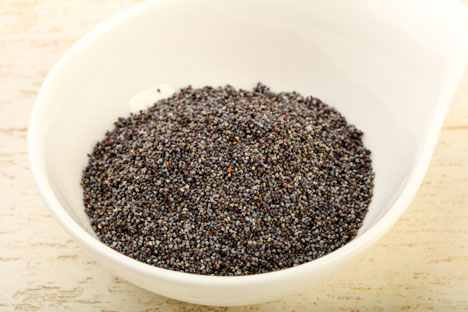
Poppy seeds have also found their way into recipes -- from posto delicacies in Bengali cuisine to poppy-seed bagels in the US.
Physicians began prescribing morphine as a pain reliever in the 19th century but worldwide regulation of poppy cultivation, and unequal geographical distribution, means several regions face a shortage of the drug.
The supply of morphine in America and Canada is 30 times their estimated needs and its availability in Western Europe is 8.7 times the requirement. But China's supply meets only 16 per cent of its needs and India's, 4 per cent.
The length of the poppy genome is close to that of the human genome, but a vast portion of the poppy genome contains repetitive sequences that make its assembly challenging.
"The main challenge was to handle the repetitive sequences that make up 70 per cent of the poppy genome," Zemin Ning, a research team member and scientist at the Wellcome Sanger Institute, Cambridge, said.
The scientists have also pinpointed ancestral genes that came together to produce a genetic "fusion" element that plays a key role in the biological synthesis of morphine and codeine. Their analysis suggests that this fusion occurred more than 7.8 million years ago.