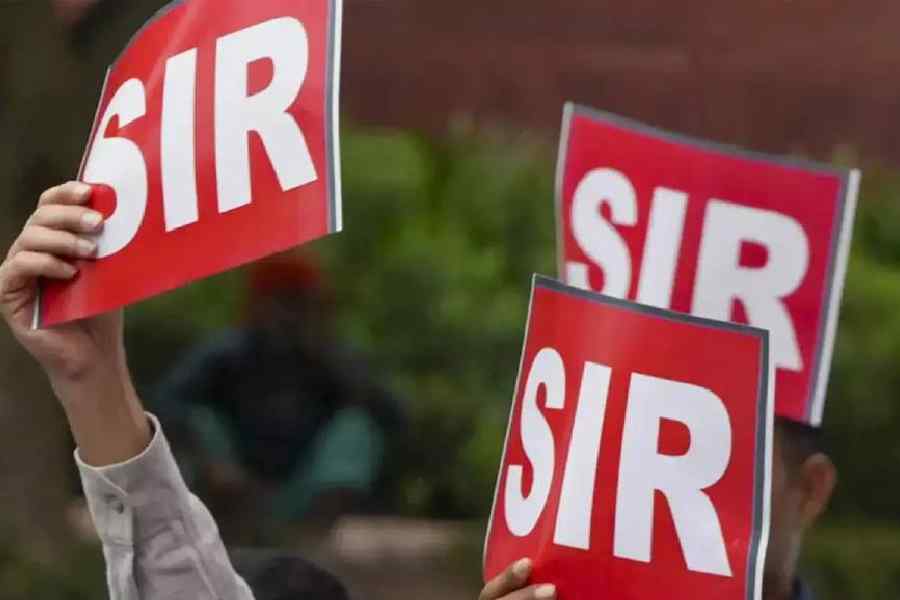
More than 40 per cent of voters deleted in Bhabanipur after adjudication as part of the special intensive revision of electoral rolls are Muslims though the community makes up only 20.1 per cent of the population in Bengal chief minister Mamata Banerjee’s Assembly constituency in south Kolkata, an analysis has found.
In Bhabanipur, 59.9 per cent of the total deletions in the adjudication – that is part of the Election Commission’s special intensive revision (SIR) of electoral rolls – has been among non-Muslims.
When the electoral rolls were published by the Election Commission on February 28, out of the 1,59,201 electors in the constituency a total of 42 per cent were Bengali Hindus, 34 per cent non-Bengali Hindus and roughly 24 per cent Muslims.
The fresh data for the constituency provided by the commission after the adjudication process was completed reveal that 3,875 voters were deleted. Among them, 1,554 are Muslims and 2,321 are from other communities including Hindus, Jains and Sikhs, who together make up around 80 per cent of the constituency’s population.
“What we find is the number of Muslim voters deleted [in the adjudication] in Bhabanipur is disproportionate to their population in the constituency,” said Asim Chakraborty, head of research at the Sabar Institute that analysed the data. “This is what we are seeing in other places too.”
In the draft rolls published on December 16, around 44,000 voters were deleted.
According to the final rolls published on February 28, Bhabanipur had 1,59,201 voters. From the 1,61,525 voters in the draft rolls, 2,342 voters were deleted, 18 names were added and 14,154 were marked as under adjudication.
The Sabar Institute had on Monday flagged a similar but more staggering disproportion in East Midnapore’s Nandigram, where 2,700 Muslim voters – around 95.5 per cent – were among the 2,826 voters deleted in the constituency in the adjudication.
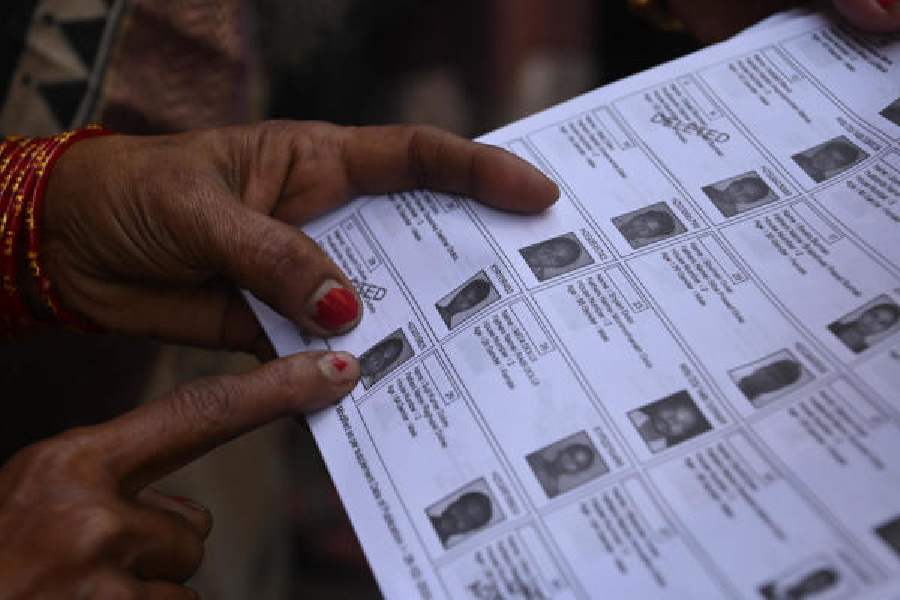
Nandigram is represented by the BJP’s Suvendu Adhikari, leader of Opposition in the outgoing Bengal Assembly.
Adhikari is contesting from Nandigram as well as Bhabanipur against Mamata. Nandigram will vote on April 23, and Bhabanipur on April 29.
The analysts said when the draft rolls were released in December 2025, the number of absent, shifted, dead and duplicate voters was around 22.7 per cent.
“This broadly aligns with the population. A major shift has been observed after the supplementary lists following the adjudication process were released,” said Souptik Halder, a researcher.
According to the study, the deletions are triggered by minor spelling mismatches or questionable criteria such as “too many siblings.”
After the final rolls were published on February 28, Adhikari had said: “In the first round, 45,000 voters were deleted, and 14,514 voters are pending adjudication. So, there will be no voters left to make her [Mamata] win from Bhabanipur.”
After the electoral rolls for the first phase on April 23 were frozen, Mamata in a rally in Chakdaha on Tuesday said: “They had deleted 44,000 voters earlier from my own constituency. I will have to find out how many voters have been deleted.”
An earlier study carried out by the Sabar Institute had found Muslim-sounding names were overrepresented under “logical discrepancy” in the four Assembly constituencies in Calcutta – Ballugunge, Bhabanipur. Kolkata Port and Metiabruz - and in Cooch Behar’s Sitai.
The researchers are studying the pattern of deletions in Murshidabad’s Shamsherganj where 1,08,400 voters were marked under adjudication. Murshidabad tops the list of deleted voters with 4,55,137 names declared ineligible to vote.
The SIR process has deleted around 91 lakh voters from the electoral rolls in Bengal.
According to reliable sources, of the total 50,987 deletions in Bhabanipur since the SIR process started, 37,227 are Hindus and 12,084 are Muslims.
Out of the 44,770 voters deleted in the draft rolls published in December last year 10,460 were Muslims and 32,871 Hindus. Then, 23 Muslims and 2,292 Hindus were removed from the final electoral rolls published on February 28, after which the adjudication process began.