Kashmir on Sunday witnessed its largest protests in years following the assassination of Iran leader Ali Khamenei in a joint US-Israeli strike.
Thousands poured onto the streets and Srinagar’s long-subdued city centre sprang back to life as a hub of demonstrations after nearly a decade.
Police, who report to the lieutenant governor’s administration, escorted the protesters — mostly Shias but including many Sunnis — and placed no restrictions on their movement.
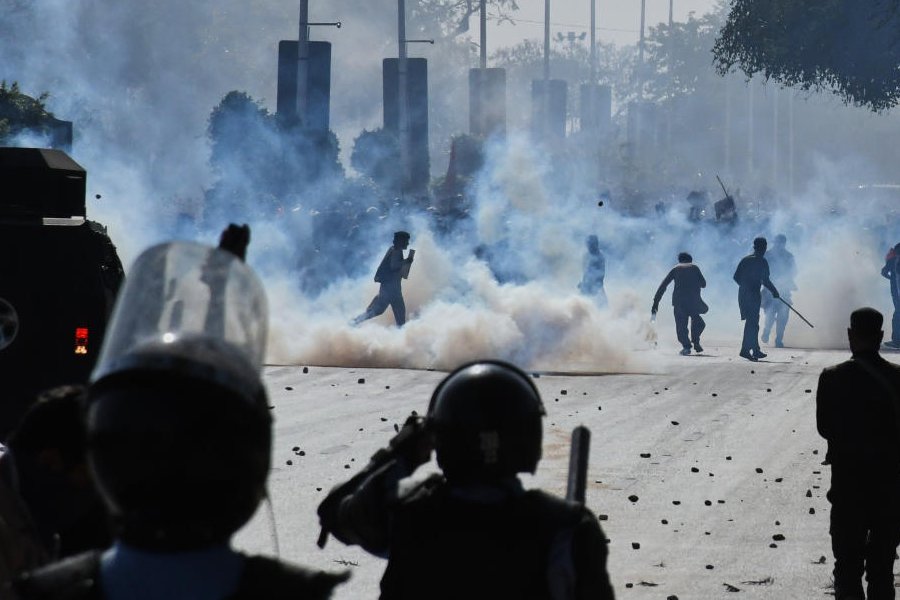
The protesters were allowed to march the streets, venting their anger by chanting anti-US and anti-Israel slogans, following an assessment that they were unlikely to turn violent.
Intense protests were seen at Srinagar’s Lal Chowk — once the epicentre of pro-independence demonstrations — the Shia-dominated towns of Budgam and Magam, and many other places. Swathes of Kashmir observed a shutdown. But the day passed peacefully.
Politicians from across the Sunni-Shia divide, whether pro-India or pro-azadi, expressed outrage at Khamenei’s killing.
Chief minister Omar Abdullah asked the police and the administration “to exercise utmost restraint and refrain from using force or restrictive measures” on the mourners.
The Mutahida Majlis-e-Ulama, a body of Kashmiri religious scholars from both the Shia and Sunni schools, led by Hurriyat chief Mirwaiz Umar Farooq, issued a rare call for a “peaceful voluntary strike” on Monday.
It termed the assassination a “blatant act of aggression by the US and Israel that has shaken the conscience of the Muslim world”.
Officials said the administration, wary of the protests snowballing after witnessing Sunday’s momentum, was weighing the option of imposing restrictions on Monday.
Khamenei, a central religious authority in the Shia world, was revered by Kashmir’s Shias — and many Sunnis, too — for his firm stand against the US and Israel.
Tens of thousands – men and women, young and old -- began surging onto the streets after reports of the assassination emerged early in the day.
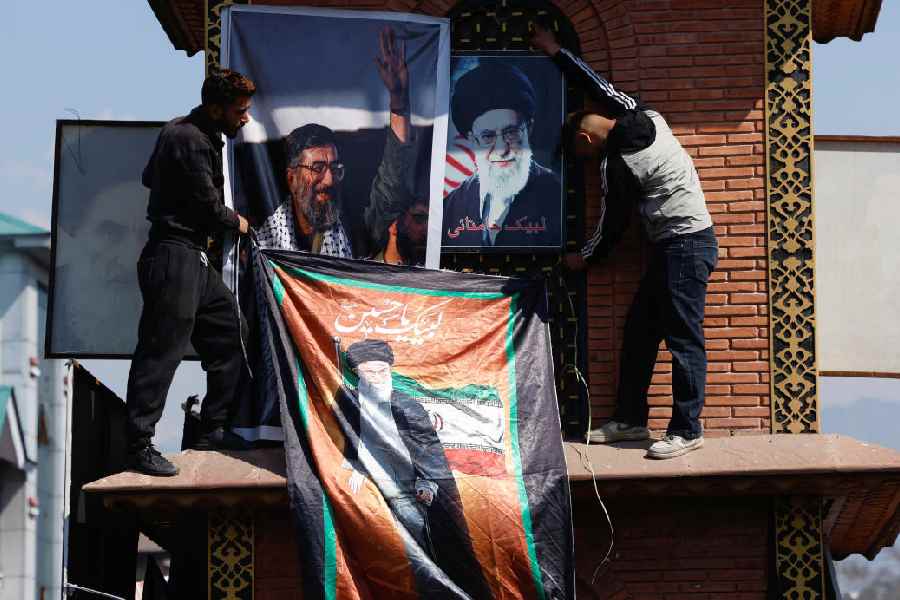
Many wore black clothes and waved Khamenei’s pictures along with Palestinian, Hezbollah and Iranian flags. They chanted slogans all day, reciting elegies in rhythmic unison. Many beat their chests and wept.
Fiery speeches were delivered, with many condemning the Arab states for failing to stand up to the US and Israel. Iran has been a formidable supporter of the predominantly Sunni Palestinians.
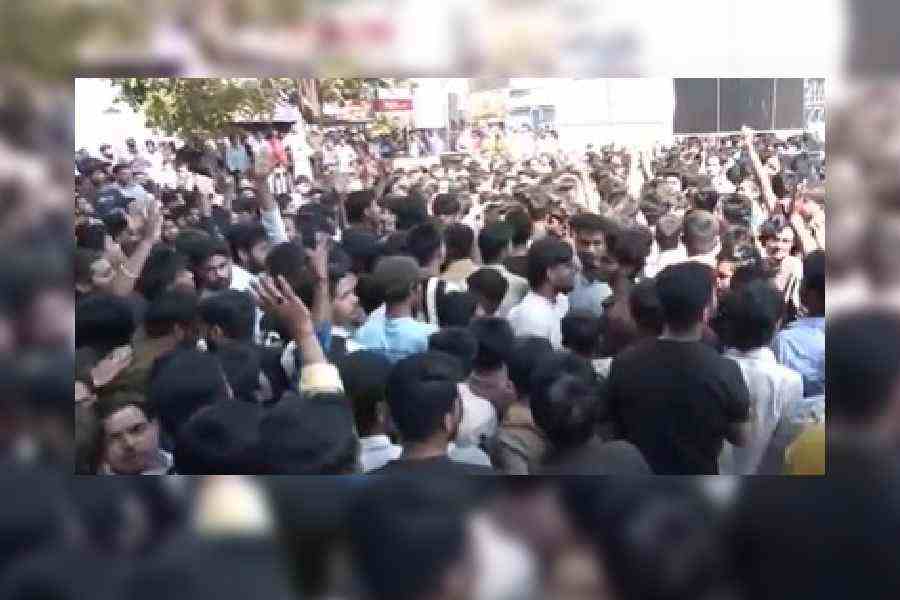
Imtiyaz Hussain, a protester, said Khamenei had stood like a rock against the US and Israel while many other Muslim leaders were cosying up to them.
People’s Democratic Party (PDP) leader Iltija Mufti — daughter of former chief minister Mehbooba Mufti — shared a video of the Iranian leader telling an audience that women were the managers of the home and not servants to men.
“Yet imperialist paedophiles who drugged & assaulted minors will pontificate about how the Islamic world & it’s leaders disrespect & disempower women,” Iltija wrote.
In a post on X, the Mirwaiz said the people of Jammu and Kashmir collectively condemned the brutal assassination and the “ongoing aggression against Iran, as well as the massacre of innocent girl students in Minab”.
Mehbooba said in a post that her party would extend “full support” to the shutdown call for Monday “on the martyrdom of Iran’s Supreme Leader”.
“United in grief and united in resistance, we stand firm with the people of Iran,” she said.
Lal Chowk, home to the political landmark of Ghanta Ghar, last witnessed a big protest in 2016 after the encounter death of Hizbul Mujahideen poster boy Burhan Wani.