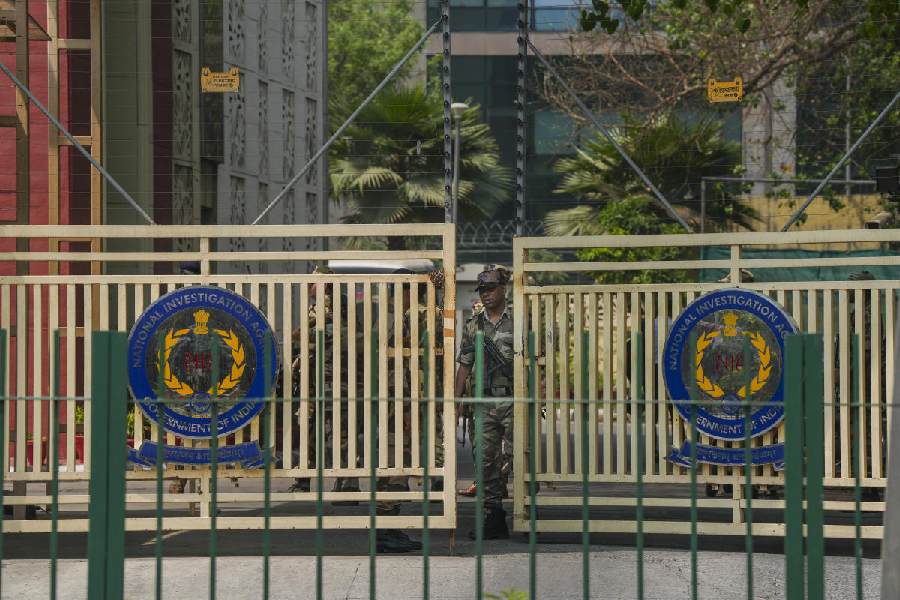
The National Investigation Agency (NIA) on Saturday filed a chargesheet against five persons in a case relating to the alleged online radicalisation of vulnerable youths by the Al Qaeda in the Indian Subcontinent (AQIS) terror group in Gujarat.
The accused, identified as Mohammad Fardeen, Kureshi Sefulla, Mohammad Faique, Zeeshan Ali and Shama Parveen, have been charged under various sections of the draconian UAPA and Arms Act.
The chargesheet was filed before a special NIA court in Ahmedabad.
"The NIA's investigation in the case revealed that the accused used social media platforms for propagating, supporting and disseminating the anti-India ideologies of the banned AQIS. They posted provocative posts, including videos, audios and photos, through various social media accounts," the agency said in a statement.
The accused, through these posts, had called for armed revolt against the democratically elected Indian government, and for the establishment of the Caliphate based on Sharia law, the agency alleged.
They also promoted the extremist ideologies of other proscribed terror organisations to radicalise gullible youths.
The NIA, which had taken over the investigation from the Gujarat Anti-Terrorism Squad (ATS), claimed to have seized various incriminating materials, in both paper and digital formats, along with deadly weapons such as semi-automatic pistols with cartridges and a sword from two of the five accused during the course of the investigation.
The agency claimed to have traced the digital footprints and identified incriminating posts, strengthening evidence against the accused.
The NIA said Shama Parveen from Bengaluru propagated AQIS videos through her social media and actively participated in extremist groups that promoted radical content after the Pahalgam attack and Operation Sindoor last year.
"She was in regular contact with a Pakistani national, Sumer Ali, to whom she sent screenshots and discussed banned literature and operations. Her mobile contained incriminating books authored by extremist ideologues, videos and Pakistani contacts," the agency said.
The agency found that Mohammad Faique, a resident of Old Delhi, had played a pivotal role in the conspiracy by sharing "radical posts and inciting content on Jihad, Ghazwa-e-Hind, and violence against a section of society".
"He circulated excerpts from extremist and radical literature promoting the ideology of AQIS and JeM leaders through his Instagram account and also through a group specifically created for the purpose," the agency said.
Mohammad Fardeen from Ahmedabad, Kureshi Sefulla from Modasa (Gujarat) and Zeeshan Ali from Noida, the NIA said, were found to have conspired to propagate the radical content in the form of audio, video and other posts promoting the banned terror outfits.