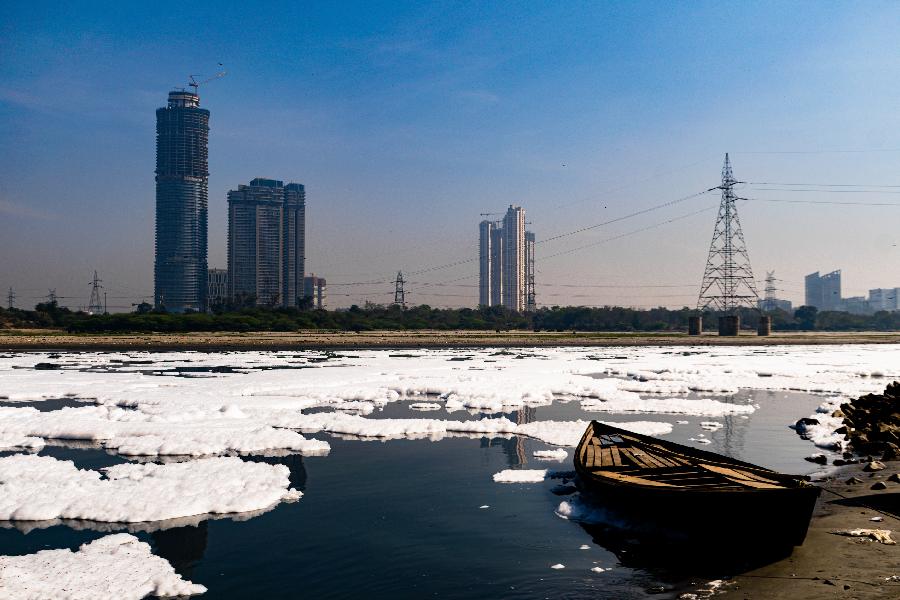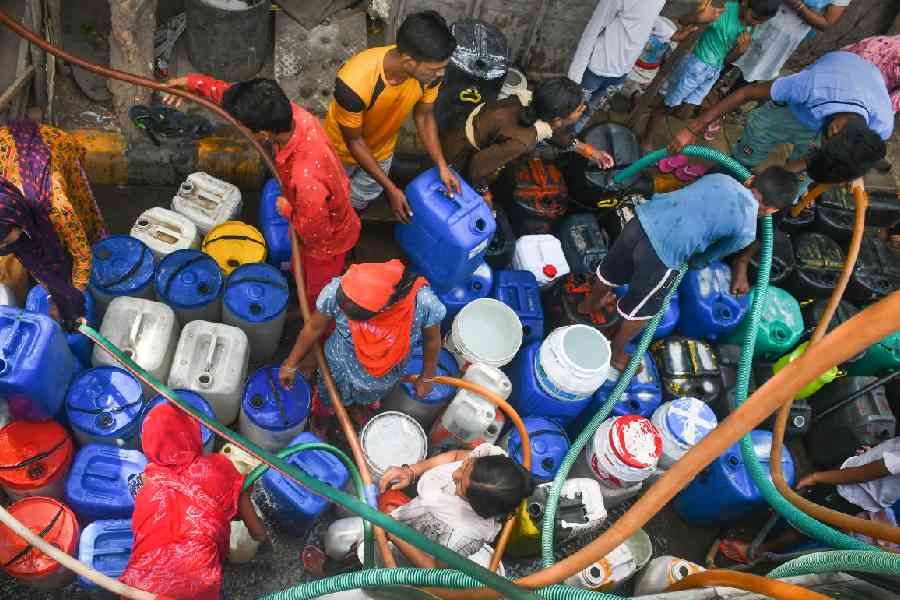
Several parts of the national capital are likely to continue facing water shortages despite Haryana releasing Yamuna water to Delhi, as the water level at Wazirabad barrage remained critically low at around 669.5 feet on Wednesday against the normal level of 674.5 feet, officials said.
While the Haryana government has said that 979.5 cusecs of water have been released via the Carrier Line Canal (CLC) and Delhi sub-branch (DSB) of the Delhi Jal Board (DJB), the water supply has not improved.
"It does not solve our problem because we need water in the Wazirabad pond through the Yamuna river. The water in the two canals has seen some increase, but that will take around three days to reach the plants," a senior DJB official said.
“Until the water levels return to normal, the water treatment plants are likely to operate below capacity,” he added.
According to Delhi government officials, talks are underway with the neighbouring Haryana government to increase the raw water supply.
The DJB's two major water treatment plants, Wazirabad and Chandrawal, have reduced water production due to low raw water supply, impacting several areas in North, West, and parts of South Delhi.
The Wazirabad water treatment plant has an average production capacity of 131 million gallons per day (MGD), while Chandrawal’s average capacity is 94 MGD. A 25-30 per cent reduction in their output will bring down Jal Board’s overall water production.
DJB's overall average production capacity ranges between 990 and 1000 MGD of drinking water, including the tubewells. As per current estimates, approximately 70-100 MGD of overall water production has been reduced due to problems with low pondage levels at Wazirabad.
Areas affected include Civil Lines, Hindu Rao Hospital, Kamla Nagar, Shakti Nagar, Karol Bagh, Pahar Ganj and NDMC areas and parts of the Cantonment and adjoining areas. The DJB has not given any timeline as to when the situation will improve.