Summary
Students who had consistently scored highly in school assessments, pre-boards, and competitive exam preparation said the board results have left them struggling to reconcile years of academic consistency with marks they did not anticipate
CBSE has started the post-result verification and re-evaluation process for Class 12 Board Examination 2026 amid growing concerns raised by students over unexpectedly low marks and the implementation of the On-Screen Marking (OSM) system
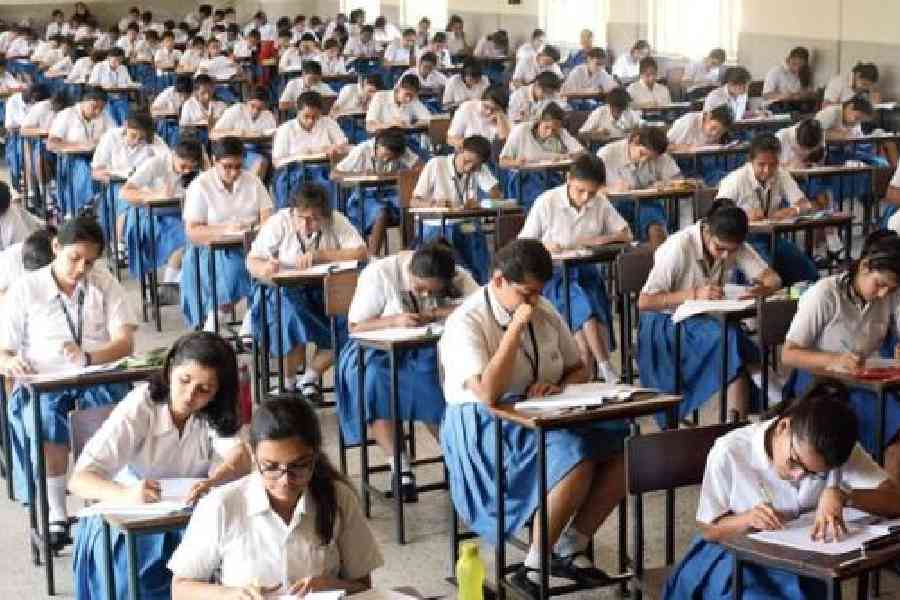
For many students, the days following the declaration of CBSE Class 12 Result 2026 have been marked less by celebration and more by disbelief. Across schools, coaching groups, and student circles, discussions have shifted from college admissions and entrance counselling to comparisons of unexpectedly low subject scores, re-evaluation applications, and questions over whether this year’s marking process accurately reflected student performance.
Students who had consistently scored highly in school assessments, pre-boards, and competitive exam preparation said the board results have left them struggling to reconcile years of academic consistency with marks they did not anticipate.
In conversation with The Telegraph online Edugraph, a student from Kolkata said, “You spend two to three years with the understanding that board examinations serve as the final measure of your consistency and academic preparation."
“Now many of us are looking at our scorecards and questioning whether the evaluation truly reflects what we wrote in the examination, with our confidence shaken in the process as well.”
Among students, the strongest reaction has emerged around unpredictability. Several said they could understand strict checking or difficult papers, but what unsettled them was the absence of any visible pattern connecting preparation to outcomes. Another student expressed his concern saying, "Students who had been average throughout the year are suddenly scoring far beyond expectations, while consistent toppers are seeing unexpectedly sharp drops in individual subjects. What students are struggling with is the lack of any clear pattern explaining these outcomes.”
Several students reported the experience has altered their confidence in subjective evaluation systems altogether.
“You always believed that if your concepts were strong, your marks would eventually reflect it,” another student said. “Now students are questioning whether effort and understanding are enough, or whether results depend on things outside your control.”
Students also described a growing emotional toll following the results.
“Many hardworking and academically strong students are reporting marks that are shockingly inconsistent with their expectations and previous performance,” one student said. “Students who consistently scored exceptionally well and expected marks in the 90s have suddenly received marks in the 60s and 70s.”
“This is not merely about marks,” the student said. “It concerns trust in an evaluation system that significantly shapes students’ futures — college admissions, scholarships, career opportunities, and confidence after years of hard work and sacrifice.”
This year was also the first full-scale implementation of On-Screen Marking (OSM) for Class 12 evaluations under CBSE, where scanned answer sheets were assessed digitally instead of through physical copies.
Sabita Saha, Director of Aditya Academy Group of Schools, described OSM as “a double-edged sword” that has exposed both advantages and vulnerabilities in the evaluation process.
“For subjects like Mathematics and Accountancy, where answers are step-marked, OSM ensures every page is seen and marks are auto-totalled accurately. That is a major advantage,” Saha said. “But at the same time, a faint pencil diagram or a crowded answer can be missed more easily on screen than on paper. The concerns students are raising are genuine and CBSE must address them structurally, not just through post-result re-evaluation.”
Saha suggested introducing additional safeguards into the digital evaluation system.
“The software should not allow an evaluator to submit until every scanned page has been scrolled through and marked as checked,” she said. “That would help prevent missed-page errors.”
Madhumita Seal, Principal of Birla Bharati under the Sarala Birla Group of Schools, said the intent behind OSM was to improve standardisation and reduce manual inconsistencies in evaluation.
“OSM was introduced to standardise marking, reduce human error, and save on logistics. In principle, it should bring greater transparency because every response is digitally tracked and reviewable,” Seal said.
However, she added that the transition still appears to have operational gaps.
“But if we think with sangfroid, has it delivered complete justice yet? Not fully,” she said. “Senior teachers required more hands-on training before evaluation began. Students also need orientation on OSM-friendly writing practices — clear handwriting, proper margins, and correct numbering so that responses remain easy to scan and assess digitally.”
“Cases involving missing pages during scanning indicate back-end gaps that can shake students’ trust in the system,” she said.
Meena Kak, Director of Lakshmipat Singhania Academy, said the effectiveness of On-Screen Marking ultimately depends on how consistently the system is implemented.
“OSM improves fairness in the evaluation process, but its success depends heavily on the quality of scanning and the level of examiner training,” Kak said.
She added that some degree of disruption was expected during the first year of transition.
“Any newly introduced system will have glitches, and these will surely be minimised by the next academic session,” she said.
To strengthen confidence in the system, Kak suggested additional layers of review and examiner calibration.
“Any answer script evaluated with gross errors should automatically be escalated by the system to the assistant head examiner and head examiner for review,” she said. “That would help minimise serious evaluation mistakes.”
For many students awaiting photocopies of their evaluated answer sheets, however, the issue has already moved beyond marks.
Meanwhile, CBSE has started the post-result verification and re-evaluation process for Class 12 Board Examination 2026 amid growing concerns raised by students over unexpectedly low marks and the implementation of the On-Screen Marking (OSM) system.
Students can apply for scanned copies of evaluated answer sheets through the official portals till May 23, 2026, following an extension announced by the board due to portal-related difficulties faced by several candidates.
CBSE has also significantly reduced the fees for post-result services this year, bringing down the cost of obtaining scanned copies and verification from Rs 700 and Rs 500, respectively, to Rs 100 each, while re-evaluation of each question will cost Rs 25. The board stated that applications for re-evaluation and verification can be submitted between May 26 and May 29, 2026.
Last updated on 27 May 2026