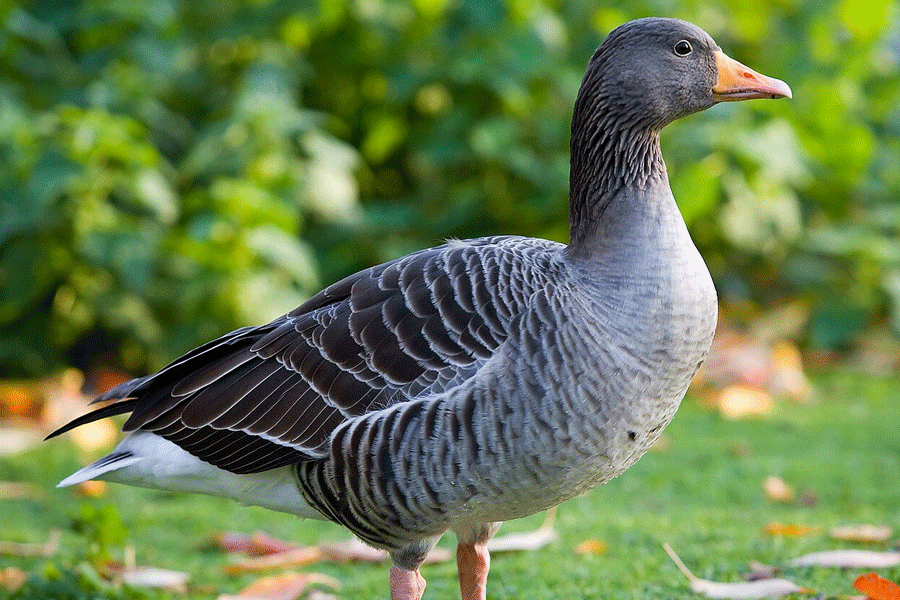
In a first for Bihar’s bird-monitoring efforts, researchers in Bhagalpur have fitted a female Greylag Goose with a solar-powered GPS-GSM transmitter to map its long migratory route across continents, marking a milestone for wetland conservation and regional ecological research.
The Bird Ringing and Monitoring Station (BRMS) in Bhagalpur tagged the goose at the Ghatora wetland on Friday, officials said. The bird, which breeds across northern Europe, Central Asia and South Asia, has been named “Sonbarsa” after the nearby village where it was captured — a name chosen to reflect the area’s fertile, river-shaped landscape.
GPS tracking, officials added, will help chart the bird’s full migration arc: its timing, stopover sites, habitat preferences and movement along the Central Asian Flyway. Such data is crucial for planning protection of wetlands across Bihar, where migratory birds rely on seasonal water bodies for wintering.
“BRMS, Bhagalpur, a joint venture of the state government’s Department of Environment, Forest and Climate Change and the Bombay Natural History Society (BNHS), tagged a female Greylag Goose… with a solar-powered GPS-GSM transmitter to study its migratory movements,” Principal Chief Conservator of Forests Prabhat Kumar Gupta told PTI.

Officials described the tagging as the district’s first GPS-based bird monitoring effort, calling it a “significant milestone in Bihar's migratory bird research.”
He said this tagging marks a major step toward advancing scientific understanding and safeguarding migratory birds that depend on the state's wetlands.
This effort follows the GPS-GSM tagging of two Bar-headed Geese in Jamui district in February this year, strengthening Bihar's contribution to waterbird monitoring under the Central Asian Flyway.
Earlier, BRMS, Bhagalpur had documented a juvenile Greater Flamingo in the Ganga near Sultanganj on December 8, 2024. It marked the first documented appearance of the species in the Bhagalpur district, the PCCF said.
"The Greater Flamingo is usually found in northwestern, central, and southern India, with very limited records from the east. The last confirmed sighting in Bihar dates back to 1991, making this observation after 26 years a significant event for the state's wildlife. The BRMS has been monitoring birds along the 63-km Vikramshila Gangetic Dolphin Sanctuary (VGDS) stretch since 2020," he said.
The strengthened conservation efforts, healthier riverine habitats, and consistent protection measures may have supported the arrival of this rare migratory species.
This important sighting highlights the ecological value of VGDS and reinforces the need for continued monitoring and conservation along the Ganga, Gupta added. PTI PKD ACD
Except for the headline, this story has not been edited by The Telegraph Online staff and has been published from a syndicated feed.