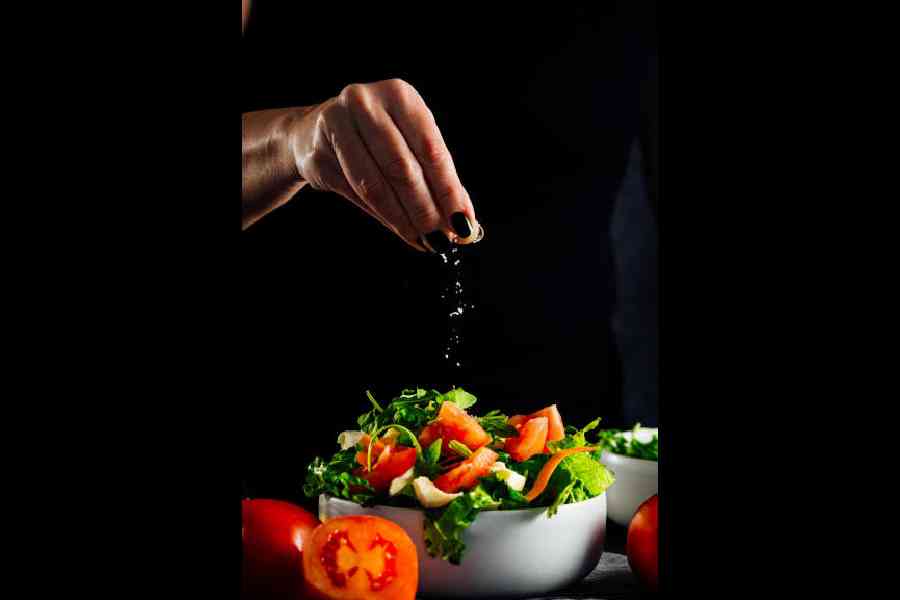
Salt is magical: it can reduce bitterness, increase sweetness and enhance overall flavour. But 90 per cent people in the US eat too much of it.
The US dietary guidelines recommend that adults consume no more than 2,300 milligrams of sodium each day, but the average American consumes 3,400 milligrams, increasing their risk of heart disease, strokes, kidney issues and death.
The good news is that you can retrain your palate to crave less salt, but many people don’t know where to begin. So we asked experts for their best tips
and tricks.
Deepen flavour
In general, taste follows two flavour-sensing pathways: one for sour and salty and another for sweet, bitter and umami. So you can use lemon juice, apple cider vinegar and other sour ingredients to make food taste saltier, said Yanina Pepino, a professor of nutrition at the University of Illinois Urbana-Champaign, US.
If you like to cook, take advantage of the Maillard reaction — the browning process where dry heat creates hundreds of new flavour compounds. This reaction can make the existing salt in your food pop without increasing the amount of sodium you consume, Pepino said. So try searing meat, roasting vegetables and toasting nuts to build deep, savoury flavours without extra sodium.
Also, you can try cutting back on the salt while cooking and add a tiny
bit right before you take a bite. “The flavour you get is when something first hits your tongue,” said Dr Bruce Neal, executive director of the George Institute for Global Health, Australia. So, the most economical place to salt food is on its surface.
Try potassium salt
To cut the downsides of table salt, try potassium salt. Potassium allows your blood vessels to relax and helps your kidneys flush out extra sodium, but 72 per cent of Americans don’t get enough.
While potassium salt can be bitter on its own, many grocery stores sell it mixed with table salt, and most people can’t tell the difference when using a 25 per cent potassium salt and 75 per cent table salt mixture, Dr Neal said. In a 2021 trial of 21,000 adults, replacing table salt with this mixture led to 14 per cent fewer strokes and a 12 per cent lower risk of premature death over about five years of follow-up.
Given these benefits, the World Health Organization and the American Heart Association have recommended using potassium salt to reduce blood pressure. But before making this switch, check with your physician. This substitute can push potassium levels too high for people with kidney disease and on certain blood pressure medications, said Dr Tom Frieden, former director of the Centers for Disease Control and Prevention and the author of The Formula for Better Health.
Add herbs and spices
Try seasoning your food with mushroom powder, nutritional yeast and MSG, since they are full of umami — which is characterised by a savoury, meaty flavour — and add depth and body to the dish, Pepino said. (MSG, notably, has only one-third the amount of sodium as table salt.) You can also try incorporating more fermented foods, tomato products and aged cheeses into your meals to replace a little salt with a boost of umami.
Herbs and spices also engage your sense of smell and increase flavour without salt, said Danielle Reed, chief science officer at the Monell Chemical Senses Center, US. So, fill a saltshaker with your favourite ones — or at least blend some with your salt — such that every sprinkle cuts your sodium intake without sacrificing flavour.
For some easy starters, try cumin for warm, nutty undertones; smoked paprika for roasted, earthy depth; and basil for sweet, peppery lift. And the next time you’re in the grocery store, take a stroll down the seasoning aisle and buy some herbs and spices you’ve never tried.
Look out for salt bombs
While you can cut back on table salt when cooking, about 70 per cent of the sodium you eat comes from packaged, prepared or restaurant foods.
Frozen meals, soups, deli meats and other ultraprocessed foods are some of the obvious sodium bombs, Pepino said. But breads — rolls, buns and bagels — are the biggest driver of sodium consumption, not necessarily because each serving is so salty but because Americans eat so much.
For some families, ultraprocessed foods are too convenient, affordable or tasty to stop eating. But you can still defuse these sodium bombs by comparing nutrition labels and choosing a product with the least sodium per serving — for example, going for low-sodium soy sauce or chicken broth.
You can also rinse canned vegetables or beans to remove residual salt, said
Dr Stacey Rosen, president of the American Heart Association, and go 50-50 on things, like mixing regular soup with low-salt soup.
Also, consider eating out less or at least ordering smarter. For example, many condiments — like ketchup, salsa and teriyaki sauce — are quite salty, so order them on the side. You can also request some acidity to brighten flavours, Dr Frieden said, like lemon instead of salad dressing, or vinegar instead of soy sauce.
All large restaurant chains must provide nutrition facts on request, so use those to steer your order. Independent restaurants may also have these details; either way, ask your server about low-salt options or if the kitchen can avoid adding extra salt.
“Anything that lowers your daily salt intake counts,” Dr Rosen said. “You don’t have to be perfect.”
NYTNS