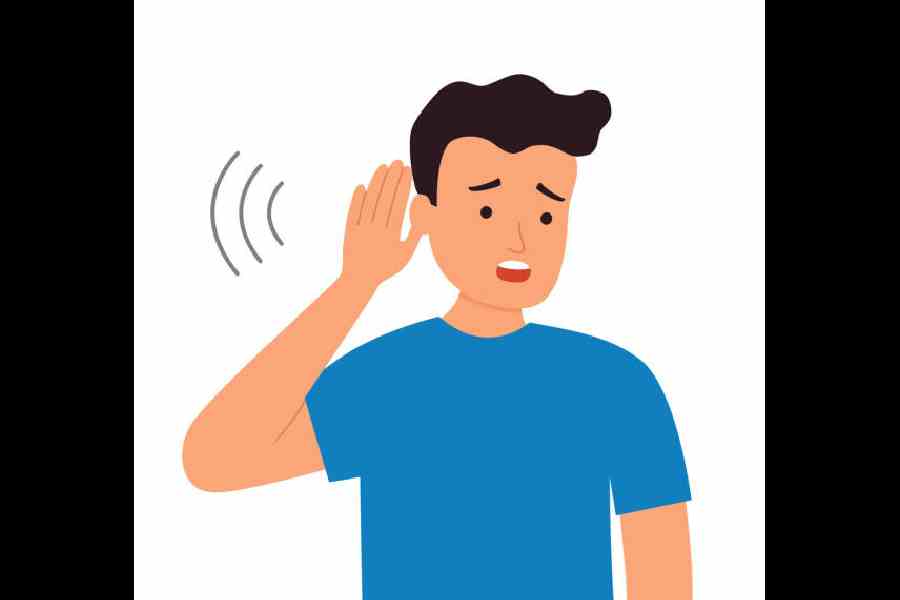
Hearing is one of the five essential senses — sight, smell, taste and touch are the others — that enable us to lead productive and fulfilling lives. When hearing becomes impaired, our ability to communicate with family, friends and society is affected. Hearing loss does not have to be complete to cause problems. Partial hearing loss can make it difficult to follow conversations at social gatherings, speak on the telephone or hear clearly in crowded places. Many people find themselves turning up the TV volume high enough to disturb everyone around them.
It is even more frustrating when sounds can be heard but words are not clear. Speech discernment is impaired, making communication difficult and leading to misunderstandings.
The prevalence of hearing loss in India ranges from 4.5 per cent to 18.3 per cent. Among people over 60, between 25 per cent and 50 per cent are affected.
Some children are born deaf. In many hospitals, newborn hearing screening helps identify the problem early on. More commonly, parents notice that their child does not respond to sounds or fails to babble. Deafness does not imply intellectual disability. With early diagnosis and intervention, many children with hearing impairment grow up to become productive and successful members of society.
Hearing loss in children may be inherited. It can also occur if the mother develops infections such as rubella (German measles) or cytomegalovirus during pregnancy. Complications during birth, including lack of oxygen to the baby’s brain, premature birth, low birth weight or severe neonatal jaundice, can damage the auditory pathways.
Children may also lose hearing due to recurrent ear infections. These infections can perforate the eardrum or lead to the accumulation of fluid or pus in the middle ear.
Adults often develop hearing loss gradually (presbycusis), as part of ageing. This age-related decline may be accelerated by smoking, exposure to industrial toxins and certain medications.
At any age, impacted ear wax can block sound. Head injuries, exposure to sudden loud noises and some viral infections can also cause hearing loss.
Modern life exposes us to significant noise pollution. Traffic, industrial machinery, construction work, loudspeakers and prolonged headphone use can all damage hearing over time. Unlike many other causes, noise-induced hearing loss is largely preventable.
If hearing loss is suspected, the ears should be evaluated by an audiologist and an ENT specialist. A hearing assessment can determine the type and severity of hearing loss. Fortunately, some common causes, such as impacted wax or fluid in the middle ear, can be corrected.
There is no single treatment suitable for everyone. Hearing loss affects a child’s speech, language development, education and social interactions. Therefore, treatment should begin as early as possible, ideally before six months of age.
Modern hearing aids are highly sophisticated and can be adjusted to suit an individual’s specific hearing loss pattern and lifestyle needs. Tiny in-ear models and behind-the-ear and bone-conduction hearing aids offer excellent alternatives. Some newer wireless earbuds can even function as hearing aids.
Children with severe to profound hearing loss may benefit from a cochlear implant. While hearing aids amplify sound, cochlear implants bypass damaged parts of the ear and directly stimulate the auditory nerve.
For individuals in whom the cochlea or auditory nerve is absent or severely damaged, newer surgical procedures called auditory brainstem implants can transmit sound signals directly to the brain.
Reduced stimuli to the brain — say, due to hearing loss — has been linked to cognitive decline and an increased risk of dementia.
The writer has a family practice at Vellore and is the author of Staying Healthy in Modern India. If you have any questions on health issues, please write to yourhealthgm@yahoo.co.in