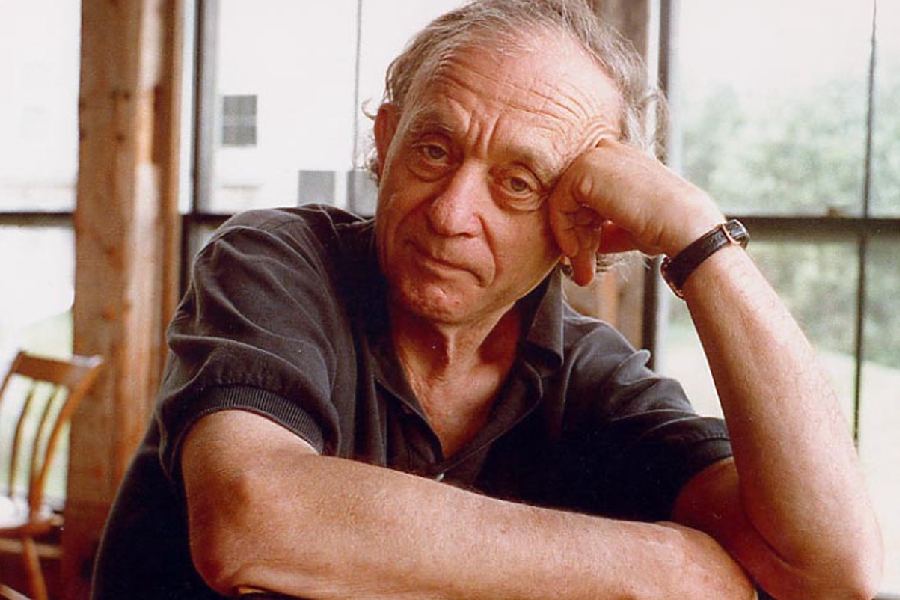
Veteran American filmmaker Frederick Wiseman, known for Titicut Follies and a slate of documentaries that chronicled American institutions with unflinching realism, has died at the age of 96.
His death was announced in a joint statement by his family and his production company, Zipporah Films. “He will be deeply missed by his family, friends, colleagues, and the countless filmmakers and audiences around the world whose lives and perspectives were shaped by his unique vision,” the statement said.
Widely regarded as one of the most influential documentary filmmakers of his time, Wiseman received an honorary Academy Award in 2016 and directed over 35 documentaries during a career spanning more than five decades.
His films, often several hours long, explored institutions ranging from schools and hospitals to military facilities and cultural establishments. They were broadcast on public television, screened at international festivals and retrospectives, and preserved by the Library of Congress.
Born in Boston to a lawyer father and a mother who worked in a psychiatric ward, Wiseman studied at Williams College and Yale Law School. Before turning to filmmaking, he worked in the Massachusetts attorney general’s office, served in the US Army and taught law.
He began his film career as producer of the 1964 adaptation of William Miller’s novel The Cool World, directed by Shirley Clarke, before moving on to direct his own projects.
Wiseman began filmmaking in his mid-30s and soon emerged as a leading figure in modern documentary cinema alongside contemporaries such as D.A. Pennebaker and Robert Drew.
He developed a distinctive observational style with minimal crew and no narration, often serving as his own sound engineer. His early works, including High School and the controversial Titicut Follies, drew critical acclaim as well as legal challenges.
Released in 1967, Titicut Follies documented conditions at the Massachusetts-based Bridgewater State Hospital for the criminally insane. Graphic scenes led to legal restrictions on the film’s release.
In 1968’s High School, he portrayed everyday life in a suburban Philadelphia school, capturing classroom interactions and administrative exchanges that critics said reflected broader social dynamics.
“I don’t set out to be confrontational, but I think sometimes the content of the movie runs against people’s expectations and fantasies about the subject matter,” Wiseman told Gawker in 2013.
“What we see in Fred Wiseman’s documentary … is so familiar and so extraordinarily evocative that a feeling of empathy with the students floods over us,” The New Yorker’s Pauline Kael wrote. “Wiseman extends our understanding of our common life the way novelists used to.”
Accepting his honorary Oscar, Wiseman had said, “I think it’s as important to document kindness, civility and generosity of spirit as it is to show cruelty, banality and indifference”.
Even in his later years, Wiseman remained active, directing films such as Crazy Horse, At Berkeley, and Monrovia, Indiana. He also worked in theatre, staging plays and adapting his film Welfare into an opera.
In 2025, he appeared in brief roles in Jane Austen Wrecked My Life and Eephus.
Wiseman is survived by his two children. His wife, after whom his production company Zipporah Films was named, died in 2021.