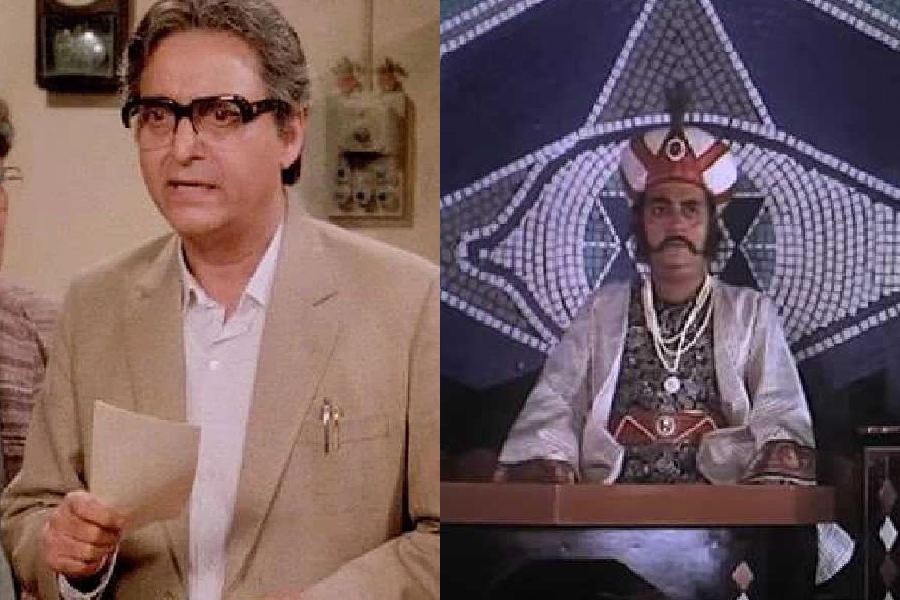
The Indian audience is fairly backward, Satyajit Ray had famously said in an interview. While the statement may have been true, it goes without saying that Ray was ahead of his time. More than a century after his birth, Ray’s work stands as both a mirror to society and a warning. The world he depicted is, uncomfortably, all around us.
The subjects that run through his cinema — war, corruption, majoritarian jingoism, the decay of scientific temper, and the rise of self-styled godmen — mirror the fault lines of today’s world.
On his 105th birth anniversary, we look at six of his films that underscore just how sharply Ray anticipated the times to come.
Mahapurush (1965)
YouTube screengrab
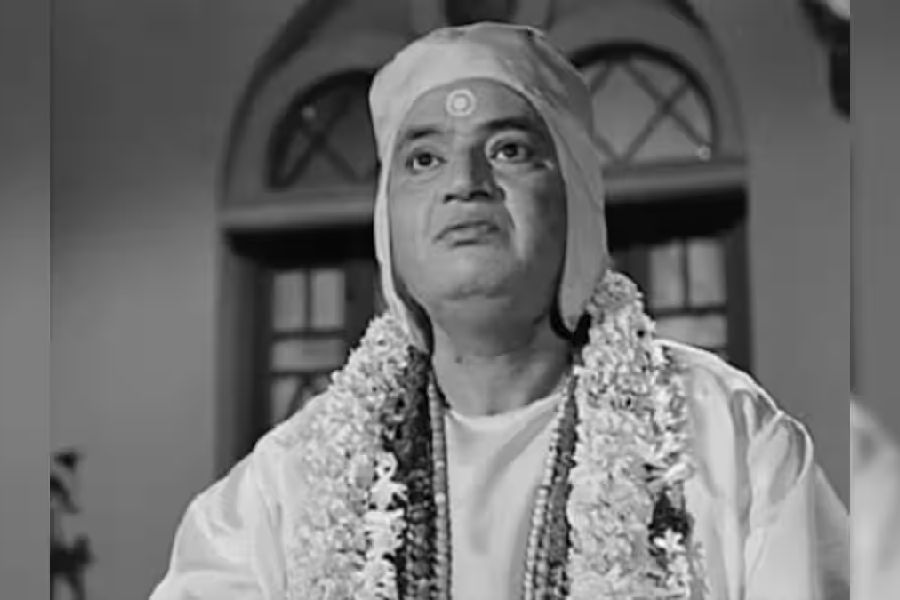
In this scathing satire, based on the story Birinchi Baba by Rajshekhar Basu, Ray takes aim at blind faith and the cult of self-styled godmen. The character of Birinchi Baba (played by Charuprakash Ghosh) is sweet-talking, eloquent and dangerously persuasive. He thrives on the gullibility of those seeking easy answers. We live in a time where dubious spiritual figures command mass followings and influence public life, and Mahapurush reminds us how easy it is to manipulate the public, using eloquence as a skill.
Goopy Gyne Bagha Byne (1969)
File picture
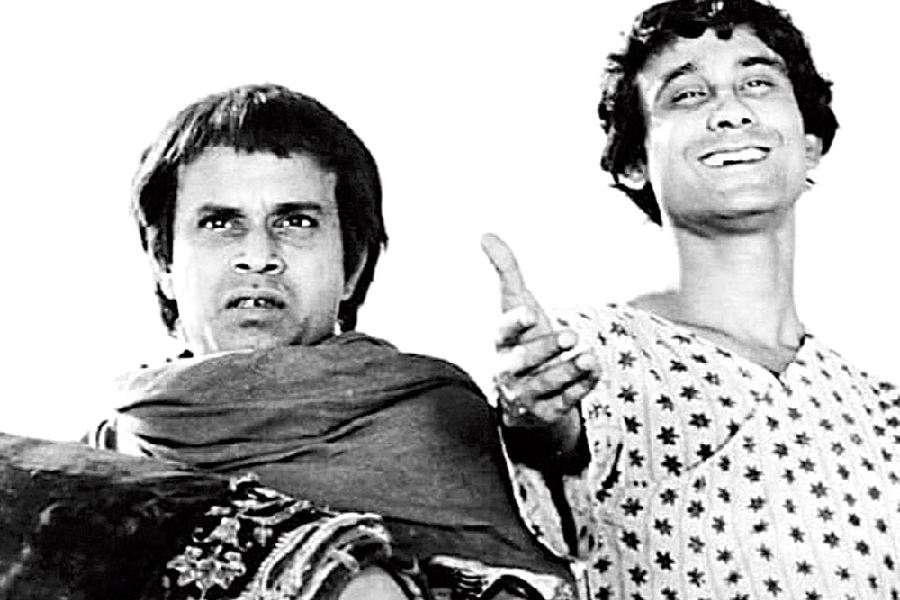
What begins as a whimsical fantasy evolves into a pointed anti-war parable. The story revolves around two simpletons, Goopy Gyne (Tapen Chatterjee) and Bagha Byne (Rabi Ghosh), who armed with music and magic, confront a kingdom marching blindly toward conflict. Ray strips war of its grandeur, presenting it instead as the product of manipulation and vanity. At a time when geopolitical tensions between US and Iran has the whole world in a quandary, the film’s plea for peace feels remarkably contemporary.
Pratidwandi (1970)

Festival de Cannes
Set against the turbulence of urban unrest, Pratidwandi captures the disillusionment of a generation caught between idealism and survival. Siddhartha’s (Dhritiman Chatterjee) struggle with unemployment, systemic corruption, and moral compromise echoes in today’s climate of economic anxiety and institutional decay. In this film, Ray paints a portrait of a society where the individual is perpetually at odds with the system.
Hirak Rajar Deshe (1980)
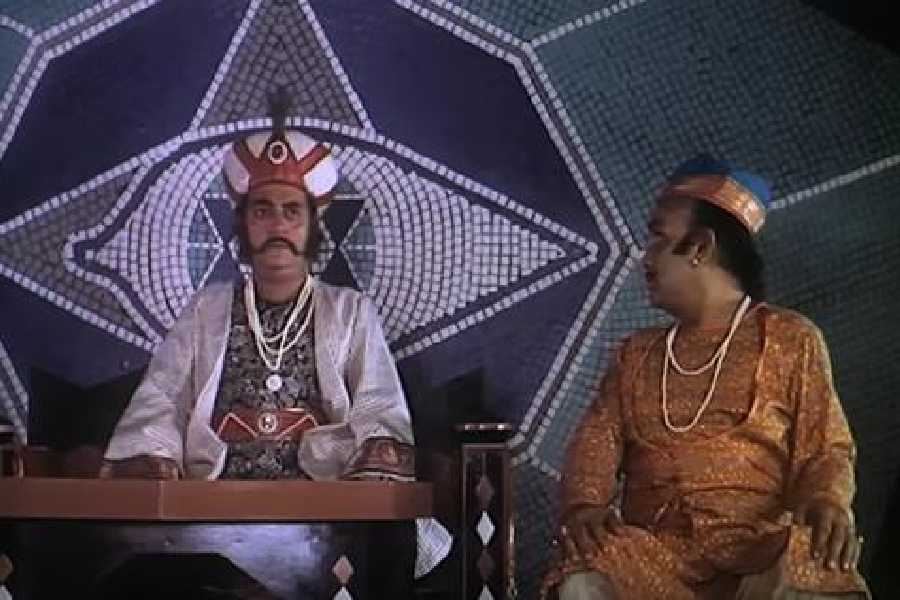
File picture
A sequel in form but a political allegory at heart, this film is Ray’s most direct critique of authoritarianism. The tyrant king’s use of propaganda, surveillance, and “brainwashing” to maintain control feels eerily prescient in an age of information manipulation and shrinking space for dissent. Beneath its playful rhyming dialogues lies a stark warning: when power goes unchecked, truth itself becomes a casualty.
Ghare Baire (1984)
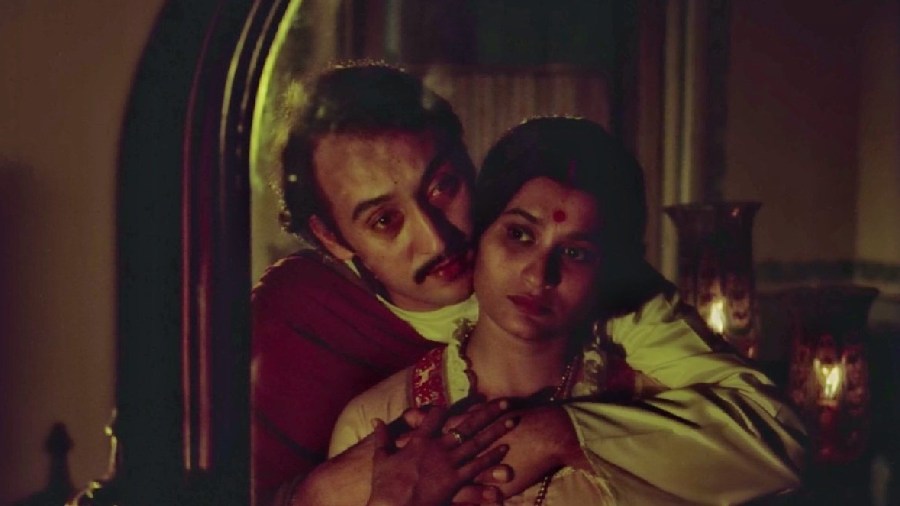
File picture
Adapted from Rabindranath Tagore’s eponymous novel, this film examines the dangerous intersection of nationalism and identity politics. What begins as a movement for self-reliance gradually morphs into exclusionary zeal. Ray dissects how political rhetoric can inflame communal divisions, a theme that resonates strongly today around us, with religious intolerance and polarisation on the rise.
Ganashatru (1989)
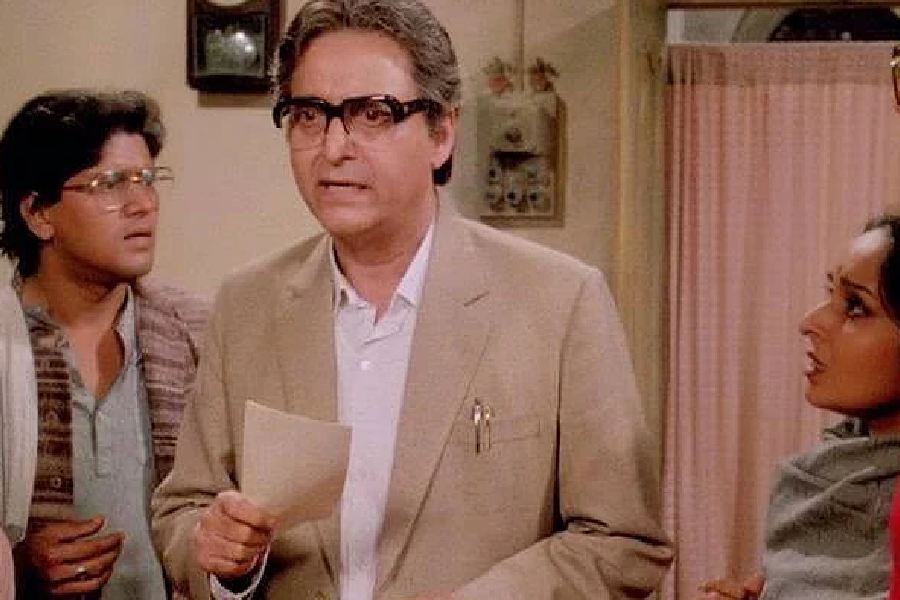
Perhaps Ray’s most explicit defence of scientific temper, Ganashatru pits rational logic against blind faith. A doctor who uncovers a public health crisis from the charanamrita of a temple finds himself ostracised for challenging religious orthodoxy. Readers will remember how a national debate broke out last year over the potability of Ganga water, after several devotees taking a holy dip at Maha Kumbh were reported to have fallen ill. Maybe a repeat viewing of this film would help revive the scientific temper in our country.