Forget borders, the new front lines are over oil. India and China are locked in a fierce battle but it isn’t in the icy wastes of Ladakh or Aksai Chin. It is a desperate scramble for Russian crude oil that two of the world’s most energy-hungry countries need to keep their economies running and their citizens mobile.
"The competition for Russian crude between India and China has been intense and will continue to be so for June-loading cargoes,” Muyu Xu, a senior analyst at Kpler, a data and analytics firm that tracks global commodity flows, told CNBC.
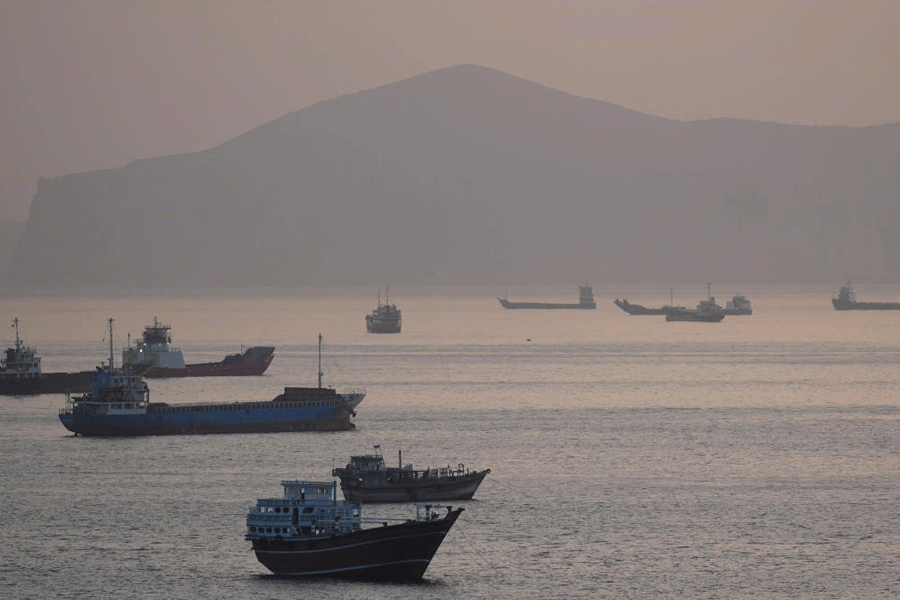
The conflict involving the US, Iran and Israel has choked traffic, leaving millions of barrels stranded and pushing India and China towards Russia and into direct competition for fuel.
In April, the honours appear roughly even, with both countries importing around 1.5–1.6 million barrels per day (mbd) of Russian crude. That is down sharply from March, when India’s imports surged to nearly 2 mbd as refiners scrambled to replace missing Gulf supplies.
The April drop reflects multiple pressures: logistical bottlenecks, disruptions at Russian ports, and the simple reality that there isn’t enough supply to go around as more buyers enter the market.
The scale of disruption is stark. Chinese oil imports through the Strait of Hormuz have collapsed from 4.45 million barrels per day before the conflict to about 222,000 barrels per day in April. India’s fall is just as dramatic, plunging from 2.8 million barrels per day in February to roughly 247,000 now.
India’s total purchases have dropped by about 21 per cent from March highs, forcing refiners to rebalance their sourcing.
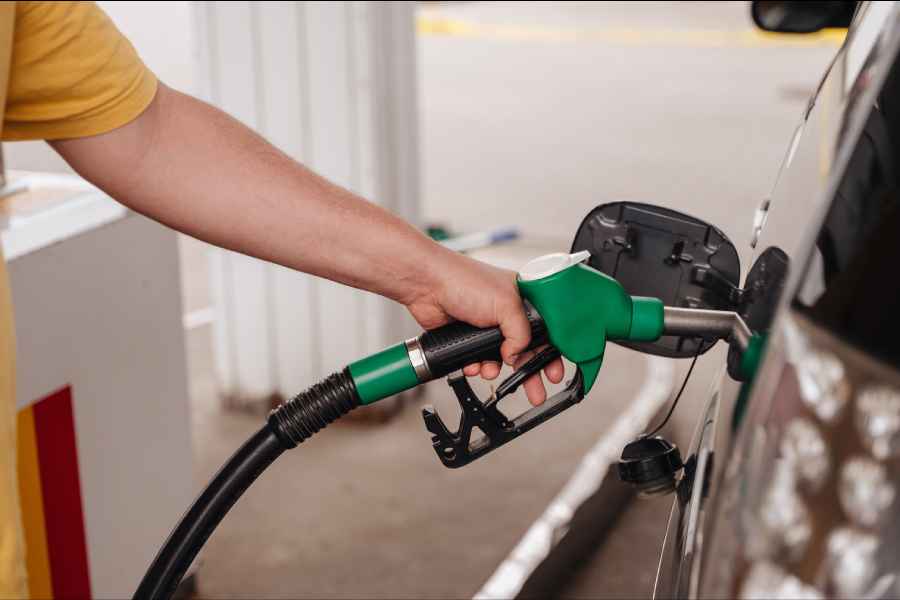
The result is a tightening squeeze that, with just 30 days of reserves, could soon be felt at the pump. With supplies constrained and prices elevated, India may be forced to raise domestic fuel prices to curb demand. Analysts suggest a possible hike of Rs 25–28 a litre if crude prices remain high.
The competition is no longer just bilateral. A growing queue of Asian buyers, including the Philippines, Vietnam and Indonesia, is chasing the same Russian barrels, while Thailand is preparing to enter the market.
There has also been a crucial shift in pricing. Russian crude, once sold at a discount, is now commanding hefty premiums. The panic triggered by the Hormuz disruption initially pushed spot premiums to record highs, with some grades selling far above benchmark prices as refiners scrambled for supply.
Global benchmarks have been volatile. Brent crude has whipsawed in recent days, surging above $120 a barrel, then falling sharply before climbing again as tensions in the Middle East fluctuate.
At the same time, India and China are competing aggressively for alternative supplies from the Gulf. For now, China has more breathing room, having built stockpiles that could last three to four months, analysts say.
Two months into the disruption, “global oil markets are adjusting to the loss of around 20 mbd through a combination of supply curtailments, refinery run cuts and inventory drawdowns,” says Kpler analyst Sumit Ritolia.
Saudi Arabia and the UAE are maximising bypass routes, though export terminals and pipeline limits cap their effectiveness. Inventories are swelling across the region even as production has been curtailed sharply.
Saudi Arabia has ramped up shipments via its Red Sea port of Yanbu, using pipelines that bypass the Hormuz chokepoint. The UAE is doing the same through its Habshan–Fujairah pipeline, allowing crude to reach the Gulf of Oman without entering the strait. These routes have become strategic lifelines.
India, meanwhile, is diversifying further, picking up smaller volumes from countries such as Venezuela and Brazil, as well as from Africa, in a bid to plug the widening supply gap.