The most moving moment of the three days of the Global Media Forum for me came not at one of the brilliant conferences but past midnight on Day 2 at a throbbing party on board the Rhein Energie, which had taken us sailing down the Rhine.
Champagne swirling in my head and corns popping up on my toes, I was resting beside a gentleman from Algiers called Ouçama (pronounced Osama) who went about introducing himself as, “Hi, I am Ouçama, not the terrorist.”
Probably because he shares his name with the most-wanted terrorist of the last decade, Ouçama wanted to talk about world peace.
Gesturing towards the heaving dance floor where delegates from 100-odd countries were grooving to Waka Waka, This Time for Africa, he said: “You want to end terrorism? This dance floor can end terrorism! See how people are meeting people, see how people are embracing people.”
Friends in all places
It was true. Apart from some very engaging sessions, thanks to GMF I came away with an understanding of some people and some of their problems in so many corners of the world. Much more than what years of newspaper reports would teach me. And I made friendships and received invitations to visit cities and countries as diverse as Ukraine, Hungary, Spain, Kenya, Uganda, London, Berlin, Cameroon….
I also realised how not everyone has the luxury of inviting friends home, when home is a strife-torn swathe of violence and uncertainty. “Let us hope we meet again, in another country, just like this,” is what friends from South Sudan or Iraq or Zimbabwe said.
What is GMF
This was the 10th year of the Global Media Forum, organised by Deutsche Welle (DW), Germany’s public international broadcaster (“you can think of them as Germany’s BBC”, I had overheard someone say).
Held in Bonn, this year’s conference started on June 19, with 2,000 participants from 130 countries. On the itinerary were nearly 40 conferences, discussions, workshops and group activities, covering everything from news and international politics to digital innovations, feminism, human rights, cyborgs, drones... the works!
Attended by journalists, political commentators, artists, satirists, aid workers, activists and others, the conference also gave us a chance to listen to global figures like European Parliament secretary-general Klaus Welle, Unesco deputy director-general Frank La Rue, controversial Russian oligarch Mikhail Khodorkovsky, Amnesty International secretary-general Salil Shetty and Carmen Perez, co-founder of the “Women’s March” initiative in the US, among others.
We also witnessed the Freedom of Speech Award 2017, which went to The White House Correspondents’ Association. As DW’s head of news, Richard Walker, mentioned, “2017 has been a hair-raising ride for everyone covering the Trump administration.”
I also learnt that Donald Trump is today a great global unifier. Everyone seemed up for a joke or a jibe or a serious discussion on the current US President! I also discovered that much of the world doesn’t like Russian President Vladimir Putin either.

How I got there
Participants are nominated by the respective consulates, like I was nominated by the German Consulate in Calcutta as a candidate for the fellowship programme of the German Foreign Office. Once selected by DW, I was provided with return airfare, visa services and accommodation in Bonn. One may also participate in GMF at one’s own cost.
India connect
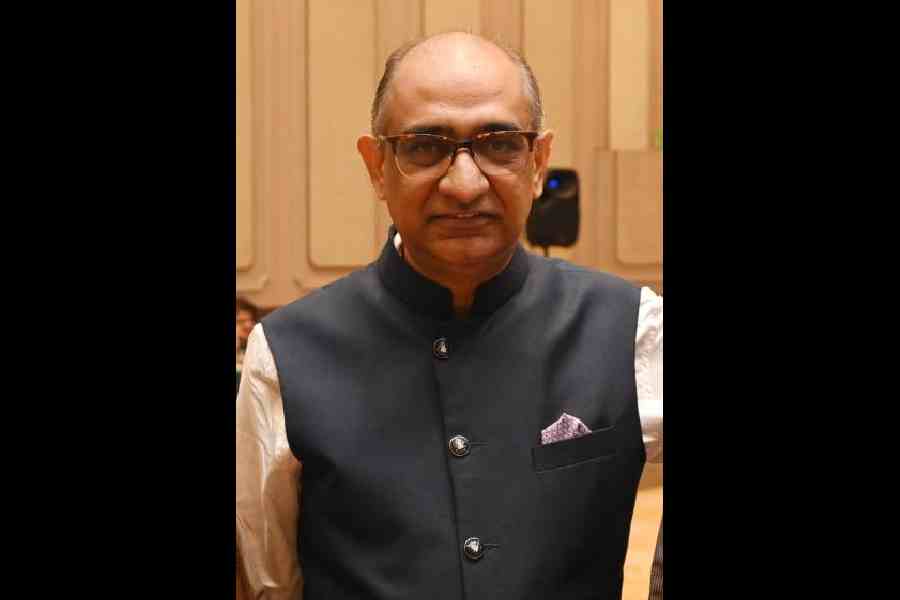
On Day 1, the Lord Mayor of Bonn welcomed us to his city. In his early-50s, with a head of silver hair and smiling brown eyes, Ashok Sridharan is of Indian origin, and readily agreed to speak to me when I said I was an Indian journalist.
Sridharan belongs to the Christian Democratic Union (German Chancellor Angela Merkel’s party) and took over as mayor of Bonn in 2015.
“My father hails from Chennai. He was working for the Indian embassy and while he was here, he met my mother. My mother’s family has lived in Bonn for decades. They married and I am their first son. I have two brothers,” he said about his Indian roots.
Sridharan studied law in Bonn and worked in municipal administration when “the Christian Democrats of Bonn asked me whether I would campaign to be the mayor of Bonn. And luckily, I made it.”
Calcutta & Bonn
I mentioned how both our cities were similar in their loss of “capital” status. While Bonn was the capital of West Germany and lost out to Berlin after the German reunification of 1990, Calcutta was the capital of British India before it was shifted to Delhi in 1911.
But while Calcutta’s has been a tragic tale of decline, Bonn, though a tiny city compared to the great metropolises of Europe, has managed to retain its international flavour. I asked mayor Sridharan about it, and he had much to say.
“When the Parliament and the federal government of Germany shifted from Bonn, not all of the ministries went to Berlin. There are six ministries headquartered in Bonn. And the federal government located two big companies in Bonn, which are really global players — Deutsche Telecom and the DHL Group.
“And we of course have the United Nations in Bonn. We have 20 departments of the UN, with more than 1,000 employees working here... that’s why Bonn has found a new role, we are the German city of the United Nations. We are the city of DHL Group and the city of Deutsche Telecom and we are the birthplace of Ludwig Beethoven, which is a cultural aspect that we want to specify.”
What is noteworthy is how Bonn makes sure to keep itself attractive for international offices, especially of the UN.
“We try to be really good hosts to them. So we have special branches in our city administration dealing with the United Nations. We have, for example, a director for international affairs and sustainability, and I think that is the reason that so many people of the United Nations feel at home here in Bonn. We do have many international facilities, like kindergarten and secondary schools, we have an international university here and we are a very international city with people from 179 nations living here,” Sridharan pointed out.
Lesson learnt: Capital loss does not have to mean capital lost!

GMF 2018
On the closing day, the dates for the 11th edition of GMF were announced — June 11 to 13, 2018. To know more, log on to www.dw.com/en/global-media-forum/global-media-forum/s-101219. You can also check out the Facebook page of the German Consulate of Calcutta: https://www. facebook.com/GermanConsulateGeneralKolkata
After GMF got over, as I was taking a bus back to my hotel, the Ibis Bonn, I met this elderly gentleman from Baghdad, an editor of a news channel, who said he had been coming to GMF for “many, many years”. I asked if he was going back that night itself, like me.
“No, no, I cannot do that,” he exclaimed. “I haven’t shopped for my wife yet. She will not let me in if I go empty-handed.”
Life may vary in every corner of the world but wife is the same everywhere, I chuckled to myself.
Samhita Chakraborty
Pictures: Mohammed Hussein (Iraq),
Samhita Chakraborty
and Deutsche Welle