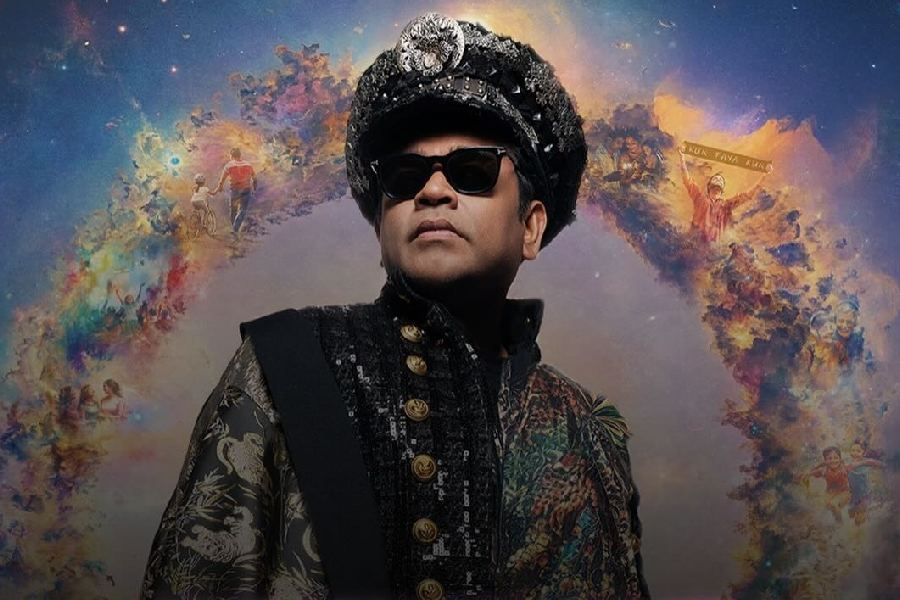
Amid a raging controversy surrounding A.R. Rahman's recent interview, where he said that he is losing work opportunities in Bollywood due to alleged ‘communal’ bias, the film fraternity in India remains divided.
While a section of the celebrities, including veteran screenwriter-lyricist Javed Akhtar and novelist-columnist Shobhaa De have dismissed Rahman's remarks, some others like Chinmayi Sripaada, Paresh Rawal and Varun Grover have extended him support.
In an interview with India Today, Akhtar said, "I don't agree with that, and I also doubt that he would ever say something like this. Rahman is a great composer, and a lot of people respect him. But they are scared to reach him because he is so big. They are scared to talk to him and handle him. It's a wrong assumption, though. It is out of awe and fear of him that people keep away."
De also responded to Rahman’s statement during a session at the ongoing Jaipur Literature Festival 2026. Calling it a “very dangerous comment”, she added, “If I've seen any place which is free of any kind of communal tension, it is Bollywood. If you have talent, you will get a chance. If you don't have talent, there's no question of religion being a factor, that they're not giving you a chance”.
The controversy stems from Rahman’s interview with BBC Asian Network, where he spoke about not getting much work in Bollywood.
In the interview, Rahman said, “Maybe in the past eight years because a power shift has happened and people who are not creative have the power now. It might be a communal thing also… but it is not in my face.”
He added that he sometimes heard through “Chinese whispers” about projects going to other composers.
The remarks triggered strong online backlash. “Incredibly hurt at this comment by musical genius A R Rehman. Reminds me of a TV IV, I did with him once when I kept begging him to sing or at least hum his divine Ma Tuje Salaam Vandataram and throughout the half an hour he steadfastly refused,” wrote journalist Swati Chaturvedi.
However, several other celebrities, including Chinmayi Sripaada, came out in support of Rahman. Clearing the air, Chinmayi said, “A.R. Rahman and all of us sang Vande Mataram to a crowd that chanted with us on November 23 2025 in Pune at the R. K. Laxman memorial award concert. He sings Maa Tujhe Salaam at almost every concert @bainjal - everyone who has attended the concerts knows this. Maybe he felt his voice was not at its best or just didn’t feel like singing that day when you interviewed him. And that’s OK. The responses under this tweet ‘OH THAT EXPLAINS IT’ shows exactly what’s gone wrong in the recent past.”
In an interview with NDTV, singer Hariharan acknowledged that there indeed existed a grey area especially with respect to corporate powers taking creative decisions.
"I really wish there were more creative people, or at least people who genuinely understand music, taking these calls. You have to think about creativity first and money later. If you only think of money when it comes to art, then who knows what the future will be,” he said.
Lyricist Varun Grover also expressed his support for Rahman. Sharing the music video of A.R. Rahman’s much-loved number O Paalanhaare from the film Lagaan on his X account, he wrote, “The greatest living composer of the last 3 decades got attacked and abused (even by people within the industry) for stating an opinion in the politest, mildest manner, that too based on his lived-experience.”
Echoing similar sentiments, director-producer Rahul Dholakia wrote, “I like @arrahman’s music. I think he has changed the way music is produced in India. He has also made us all proud - many times. You may not like what he says- but you must respect the man and try to understand why he said what he said. Jai Ho.”
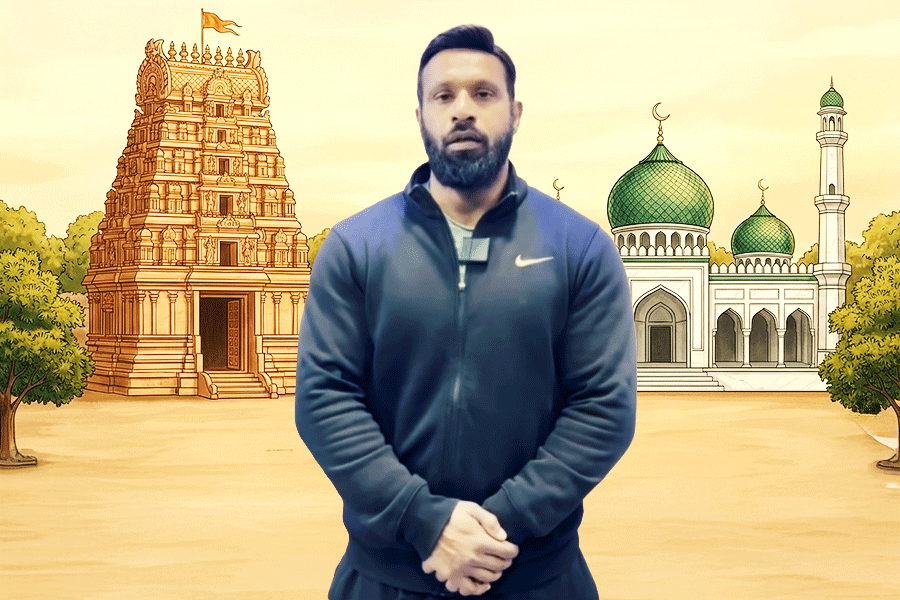
Rahman himself issued a clarification after his remarks stirred a controversy online.
In a video statement posted on Instagram on Sunday, Rahman reaffirmed his connection to the country, saying, “India is my inspiration, my teacher and my home”.
He described India as a space that “allows freedom of expression and celebrates multicultural voices”, and cited several projects as examples of his continued commitment, including his collaborations with young Naga musicians to create a string orchestra, mentoring the Sunshine Orchestra, building Secret Mountain, described as India’s first multicultural virtual band, and scoring Ramayana alongside Hans Zimmer.
Reacting to Rahman’s post, actor Paresh Rawal said, “We love you Sir. You are our pride.”
On the other hand, actress-politician Kangana Ranaut criticised Rahman’s remark as “prejudiced” and “hateful” in her Instagram Stories.
“Dear A.R. Rahman, I face so much prejudice and partiality in the film industry because I support a saffron party, yet I must say I have not come across a man more prejudiced and hateful than you, I desperately wanted to narrate my directorial Emergency to you, forget narration, you even refused to meet me. I was told you don't want to be a part of a propaganda film,” wrote Ranaut.
Singer Shaan also denied the existence of any communal bias in Bollywood.
“I have been singing for so many years and I am also not getting much work. But I don’t go into it much because I feel it is a personal thing. Everyone has their own thoughts and likes. And how much work we should get is not in our hands...Whatever work you get, do it well,” he told news website Moneycontrol.