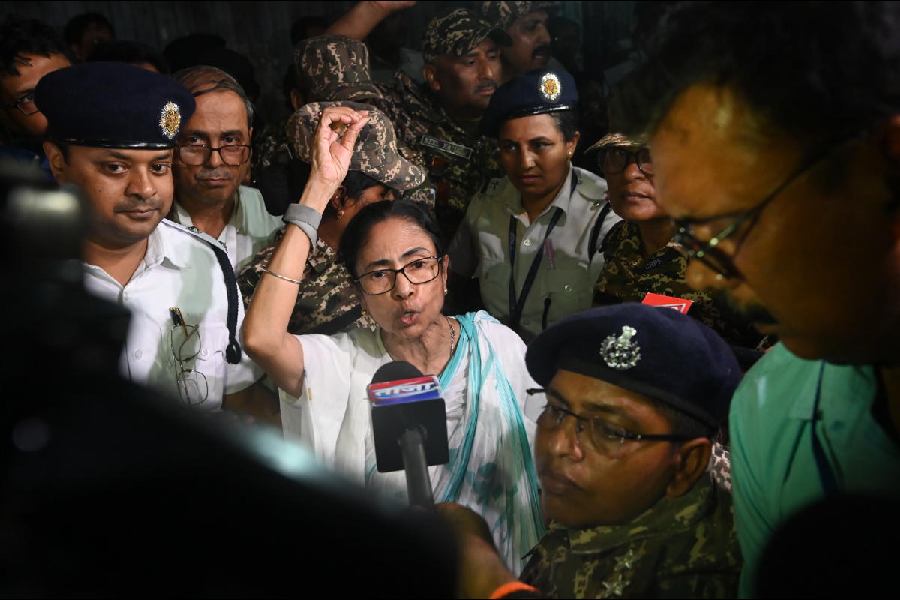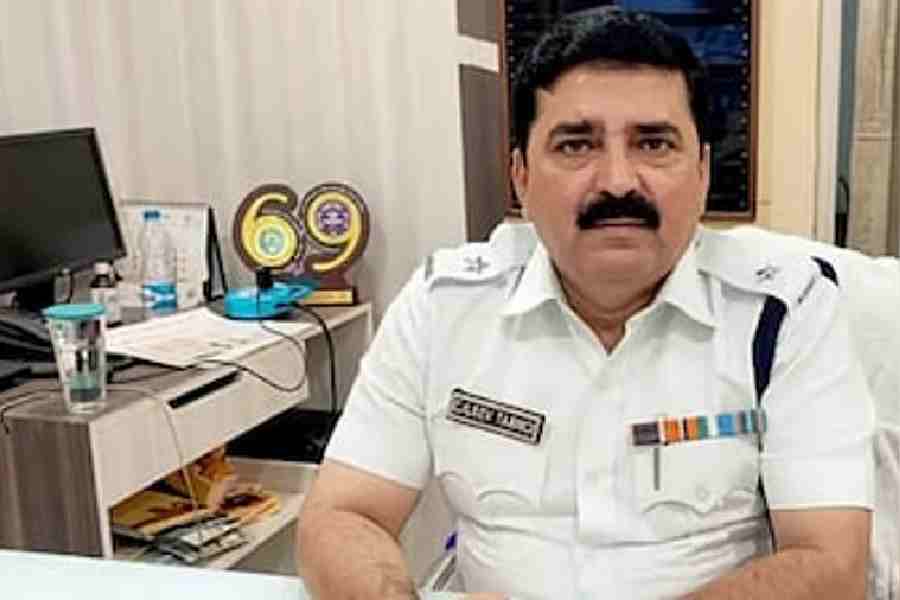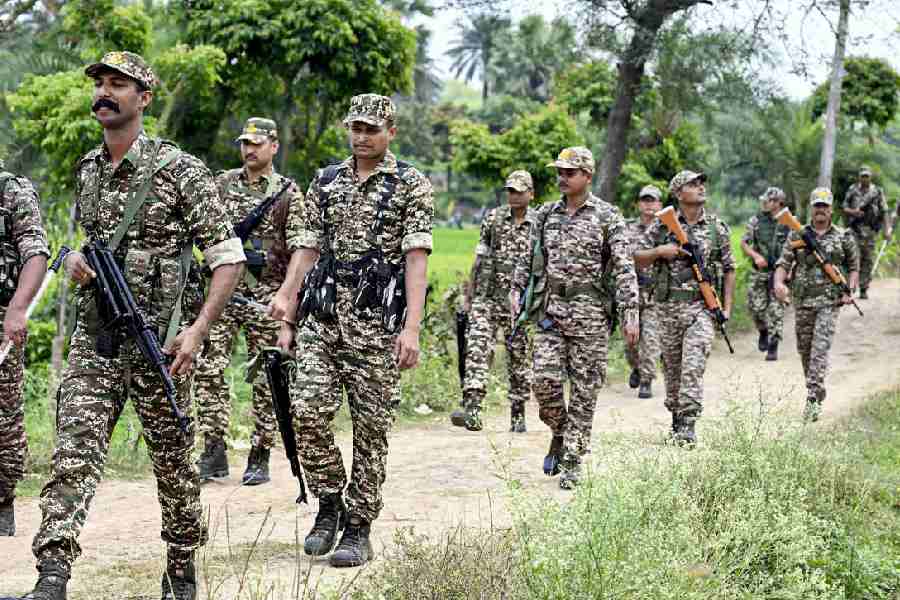
The Election Commission (EC) has deployed 2,407 companies of Central Armed Police Forces, over 2.4 lakh personnel, for Phase 1 of the Bengal Assembly elections on April 23 in which 152 constituencies, more than half of the state’s 294 seats, will vote.
For context, around 288 such companies, roughly 29,000 personnel, were deployed at the peak of ethnic violence in Manipur, where the Armed Forces Special Powers Act is in force, in November 2024. The violence left over 200 people dead and displaced 60,000 for more than a year.
The Central Armed Police Forces (CAPF), under the Union home ministry, include the CRPF, the BSF, the CISF, the ITBP, the SSB, the NSG and Assam Rifles.
The scale of central force deployment in Bengal, in a state not under extraordinary security legislation, marks a significant escalation in election-time force presence.
With an electorate of 3.4 crore in Phase 1, the deployment translates to roughly one CAPF personnel for every 100–150 voters. In contrast, India’s doctor-to-population ratio stands at 1:811, and the police-to-population ratio at about 1:650.
How much force is necessary to secure a democratic exercise, and at what point does such a presence begin to reshape the nature of that exercise itself?
Calling the huge deployment “worrisome,” former Rajya Sabha member Jawhar Sircar, who served as the state’s chief electoral officer in the 1998-99 Lok Sabha elections, said, “this is a de facto central takeover of Bengal.”
“A deployment of this scale has the impact of overwhelming the electorate. There is a socio-psychological impact of having an unprecedented CAPF presence which may trigger responses in voters,” Sircar said.
But is that the idea?
Last Wednesday, leader of Opposition in the outgoing Assembly Suvendu Adhikari said: "Central forces have to stay here with full power. West Bengal police and the Mamata Banerjee government have failed.”
Adhikari, for the past three years, has been consistently demanding President’s Rule and presence of central forces in Bengal.
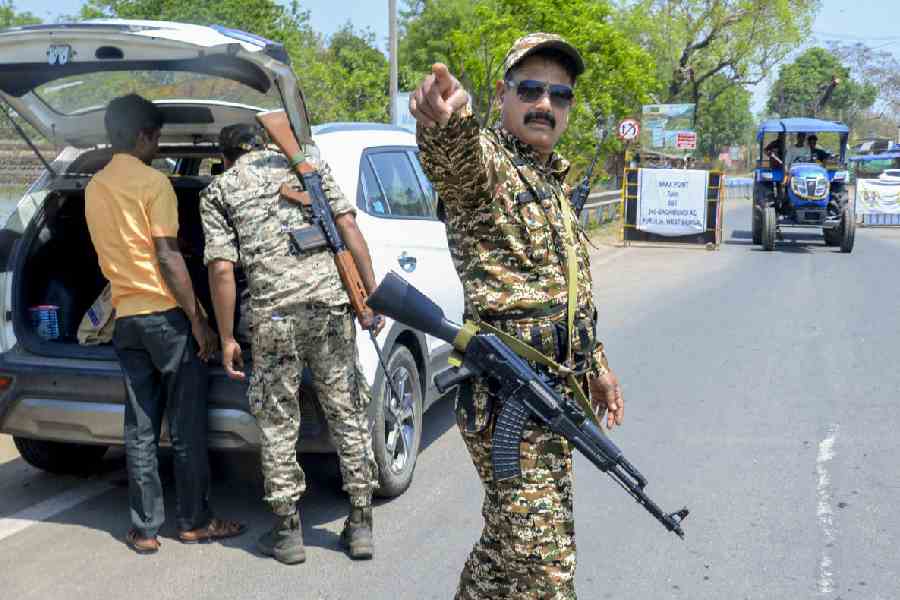
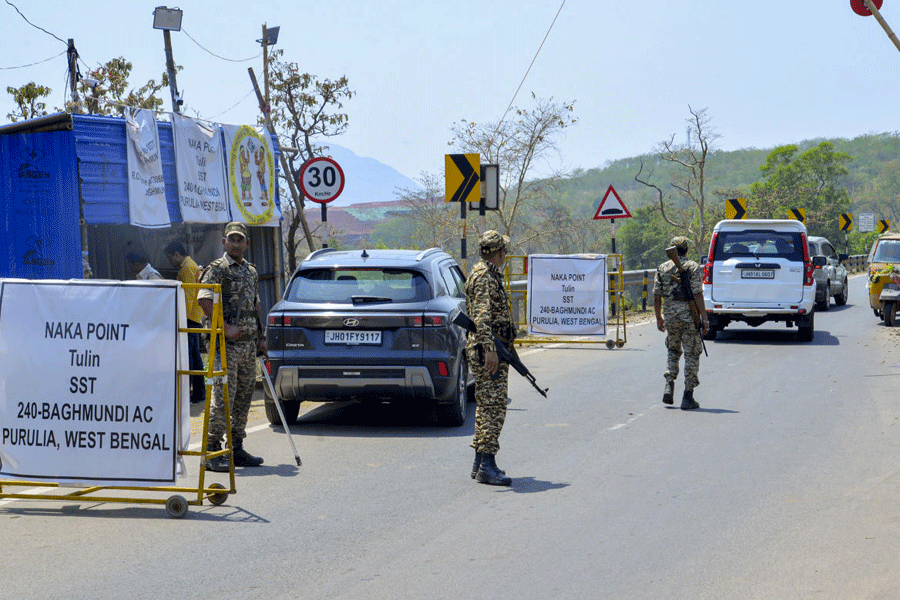
Central Reserve Police Force (CRPF) personnel check a vehicle as security has been intensified ahead of the West Bengal Assembly elections, at the inter-state border check post in Tulin, Ranchi district, Jharkhand, Sunday, March 29, 2026. (PTI)
Chiefs of all CAPFs held an “unprecedented” high-level meeting in Kolkata on Saturday to review security arrangements for Bengal’s two-phase Assembly elections.
The meeting was followed by a summit with Bengal police and Election Commission officials, where an “integrated security grid” was finalised to manage potential disruptions.
Officials said such a joint meeting of CAPF directors general in a poll-bound state has not been held before.
On March 1, the first batch of 240 companies of central forces entered Bengal. Since then, the forces fanning across the state have already started area domination drills, a strategic high-visibility presence, with some civilian observers around urban pockets in Kolkata alleging that the mobilising of security forces appear to have begun earlier than in previous Assembly elections cycles.
In the 2021 Bengal Assembly elections, a total 725 companies were deployed for the eight-phase polls, with 495 companies reaching pre- for an electorate of 6.99 crore. In 2016, around 800 companies came for the elections, with 200 arriving pre-polls for an electorate of 6.55 crore.
Former chief election commissioner N. Gopalaswami cautioned against reading the numbers without context.
“The numbers itself do not tell you much,” Gopalaswami told The Telegraph Online. “Earlier there were eight phases and now polling is being compressed into two, so there would be a higher concentration of forces at this time.
“The purpose is to instill confidence so that people can vote without fear of law and order issues,” he added.
This year’s increase in central forces raises questions of political signalling, according to political scientist and writer Sovanlal Dutta Gupta.
“The CAPF deployment coupled with the reshuffling of a large number of administrative and police officials signals that the Centre does not have the confidence in the state to conduct elections without a threat of internal violence,” he told The Telegraph Online.
The Election Commission has reportedly designated 45 per cent of north Kolkata’s polling booths as ‘super sensitive’, determined on the basis of whether 150 or more names were deleted from the voter list.
“The nomenclature ‘super sensitive’ coupled with the scale of deployment indicates the EC’s view of a possible law and order breakdown, reflecting a deeper trust deficit between Bengal and the Centre,” said Dutta Gupta.
In 2021, in Cooch Behar’s Sitalkuchi, five civilians were killed after a scuffle at a polling booth led to CAPF personnel opening fire.

Last week, Bengal chief minister Mamata Banerjee said that central forces tried to search her car when she was travelling to Kolkata Airport. "If you have the guts, you check my car every day," she said.
Mamata also asked people to resist the central forces on polling day. On March 27, the EC sought a report from Bengal’s chief electoral officer on Mamata's recent provocative statement at public meetings in Naxalbari and Darjeeling where she allegedly instigated local women to be at polling booths with local household and kitchen tools to deal with "necessary situations."
The ruling party fuming at central-force deployment is not unique to this election cycle or the Trinamool. In 2006, at least one CPM leader – part of the then ruling Left Front – had told an election rally in then Maoism-affected Purulia: “Don’t be scared of central forces, they are also CPM – central para military.”
That year, 2006, was the first time the Election Commission had rolled out a massive deployment of CAPF for Bengal Assembly elections.
“Voter comfort and confidence also depends on how central forces behave,” G.K. Pillai, former Union home secretary whose tenure saw the intensification of Maoist insurgency and the resulting expansion and coordination of CAPF deployment strategies, told The Telegraph Online.
“Before any election, three election commissioners call the Union home secretary to get an estimate on how many security personnel can be spared. On that basis, sensitive and super sensitive areas are decided based on the threat perception, and then the number of phases of polling are decided. Violence history is one of the key factors considered in deployment,” he explained.
Murshidabad, a minority-dominated district which also had the highest number of SIR deletions, has the highest central force deployment. Around 316 companies of forces are reportedly arriving there before April 23.
The district is also known for political violence.
Pillai called the Bengal election a “polarised” one, with the SIR issue adding fuel to the fire of an already sensitive political faultline.
With no other state heading to the polls between 23 and 29 April,except Tamil Nadu, Pillai suggested that mitigating any security threats by mobilising available forces was the Election Commission’s risk-aversion strategy.
Dutta Gupta argued that excessive central force positioning may inadvertently exacerbate election mismanagement, primarily due to linguistic barriers. And this is made even worse in the midst of the “unprecedented transfer of crucial administrative and police officials”.
As of April 18, the number of transfers and suspensions stood at over 500.
“The intelligence of these officers over the Bengal map is deep and the transfers ruin it,” said Sircar.
The EC announced early this month that 500 companies will remain in Bengal even after the counting of votes on May 4. An additional 200 companies will remain stationed in the state to secure electronic voting machines (EVMs), strong rooms, and counting centres until the completion of the counting process.
"During the last Assembly elections, there was post-poll violence,” an official explained to PTI. “The decision is also based on past incidents."