Two autism centres are training young adults to vote through simulated polling exercises.
Simulation helps individuals with autism become familiar with an otherwise unfamiliar process—standing in a queue, waiting their turn and following instructions, said those working with them.
The familiarity helps reduce anxiety and restlessness, they said.
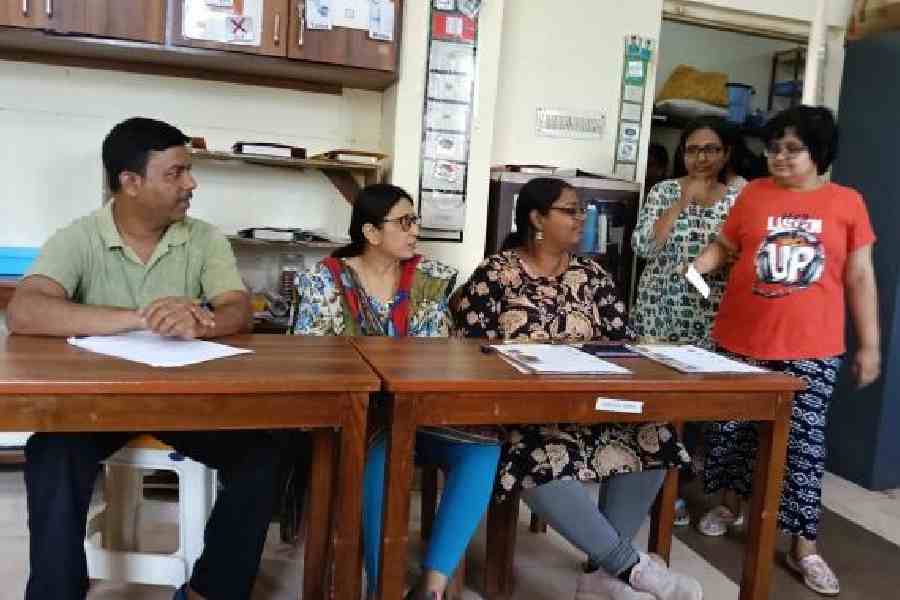
Amrit Somani Memorial Centre and Autism Society West Bengal have recreated polling booths, complete with officials and enclosed voting areas.
Some participants used photocopies of their voter identity cards during the exercise.
“We first had them practise individually, and then in groups of five to 10 standing in a queue, to familiarise them with different situations. If they don’t know what to expect, it can become overwhelming and lead to restlessness,” said Namita Somani of the
Amrit Somani Memorial Centre.
At Autism Society West Bengal, there are about 20 young voters. Some of them are first-time voters.
“We conduct a run-through as a rehearsal. It involves standing in a queue, entering an enclosed space, choosing where to cast the vote, and finally getting
the finger inked. This way, the process isn’t entirely unfamiliar, and we hope they won’t feel anxious or worried inside a polling booth,” said Indrani Basu of Autism Society West Bengal.
Waiting in the long queue in the heat can make anyone — neurotypical or neurodiverse — agitated or restless.
“A neurotypical person knows what to expect. We similarly try to familiarise neurodiverse individuals. However, some accommodations may be needed for those who find it difficult to wait,” said a member of Autism Society West Bengal.
For those who have voted before, a single rehearsal has proved sufficient, those working with them said. First-time voters, however, require several rounds.
It is not just voting; for any new or unfamiliar process, such organisations create simulations for individuals with autism.
For example, if they have to go for a blood test, they are shown pictures of the syringe, the people associated with it and the process by which the blood is drawn.
But every individual is different, and situations have to be tailored accordingly. Some need to be trained well in advance, while for others, a few days’ preparation is enough, said Somani.