Thousands of deleted voters had hoped for clarity on how the appellate tribunals would function after the Supreme Court hearing on April 6. Nearly a week later, they remain in the dark.
They expected answers on when hearings would begin, how long retired judges might take to decide their appeals, and whether voters from districts outside Calcutta would need to travel to the city. None of this is clear.
“We are in the same darkness as we were a week ago, or even before that,” said a man in his 30s who is no longer on the electoral rolls.
During the April 6 hearing, the apex court asked Calcutta High Court to set up a three-judge committee to “establish the procedure” to be followed by the 19 tribunals.
Metro had reported that Calcutta High Court Chief Justice Sujoy Paul formed a three-member panel to frame the guidelines. It comprises former Calcutta High Court Chief Justice T.S. Sivagnanam and former judges Pradipta Roy and Pranab Kumar Deb.
However, little information has emerged since. “In the 12 days since I filed my appeal, I have regularly searched for information on how the tribunals will work,” said Hasir Mallick, a voter from the Uttarpara Assembly constituency.
“I live in Konnagar, Hooghly. Travelling to Joka to appear before a tribunal, if I am called, might be difficult. There is no public information on how the tribunals will function.”
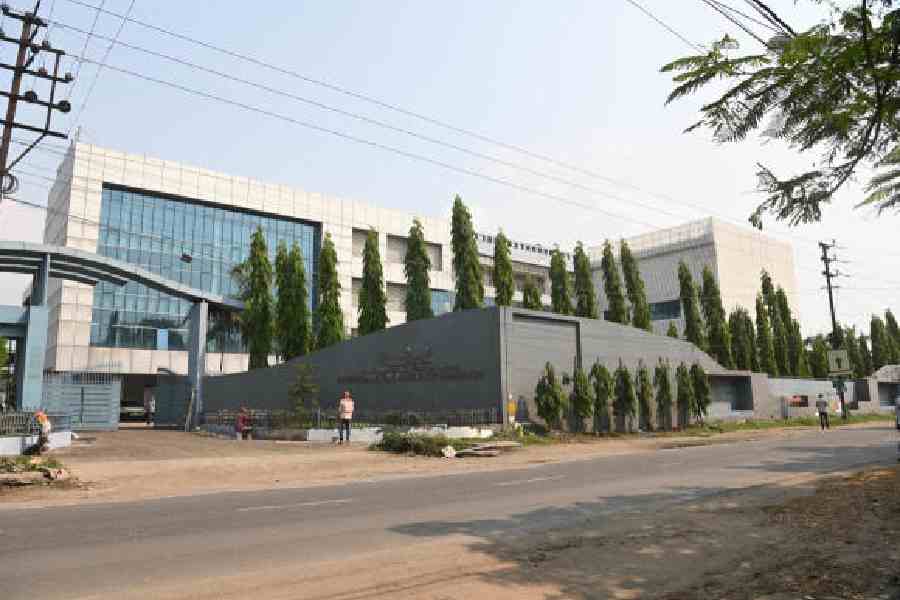
In its April 1 order, the Supreme Court said the tribunals would function from the Syama Prasad Mookerjee National Institute of Water and Sanitation (SPM-NIWAS), located about 1km from the IIM Joka campus.
More than 27 lakh voters were excluded from the rolls after the post-SIR adjudication process. Of them, the cases of only four have been cleared so far. The Telegraph reported on Saturday that over 2 lakh online appeals and about 5 lakh offline appeals have been filed.
Uncertainty persists even among those familiar with legal processes. Supreme Court lawyer Gaurav Ghosh, whose name was also struck off the rolls, said he had expected clarity by now. The 36-year-old, who votes in Rashbehari, said he travelled from Delhi to Calcutta for every Assembly and Lok Sabha election to cast his vote.
“It has been 10 days since I filed the appeal, and I have not been informed whether I will be called for a hearing,” Ghosh said.
“My name was removed without giving me a chance to present my case. This is a violation of the principle of natural justice. I hope the tribunal will at least hear me,” he said.
The apex court’s April 1 order also stated: “The Appellate Tribunals are free to evolve their own procedures in accordance with the principles of natural justice, and are requested to adjudicate the appeals after providing the parties with a fair opportunity of being heard.”
The Supreme Court is scheduled to hear the case next on April 13.