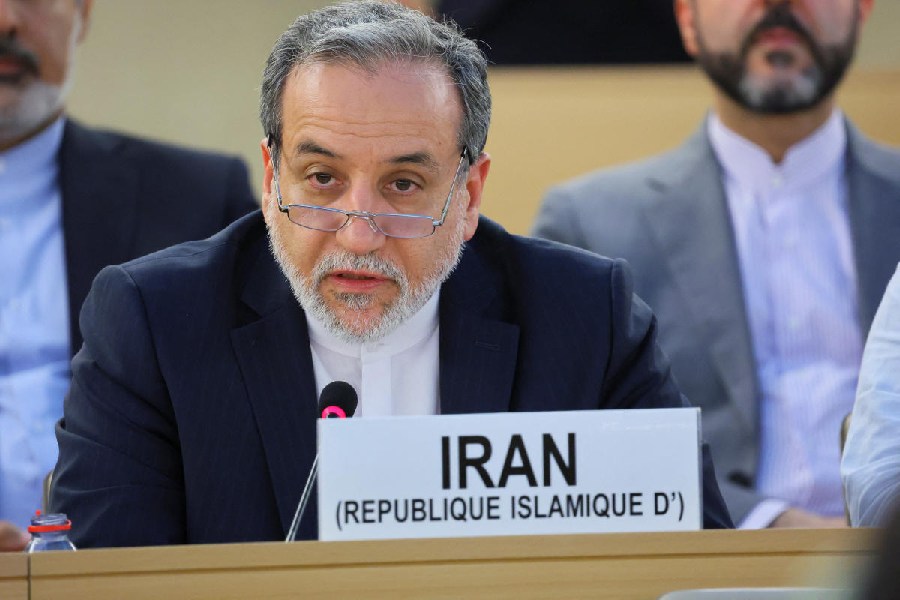
Iran has sent its response to a U.S. proposal aimed at ending the more than two-month war to mediator Pakistan, Iran's IRNA news agency said on Sunday.
According to Iran's proposal, the current phase of negotiations will focus exclusively on the cessation of hostilities in the region, a source familiar with the matter told IRNA.
Sources in both camps have told Reuters the latest peace efforts are aimed at a temporary memorandum of understanding to halt the war and allow traffic through the Strait of Hormuz while they discuss a fuller deal, which would have to address intractable disputes such as Iran's nuclear programme.
Qatar Prime Minister Sheikh Mohammed bin Abdulrahman Al Thani earlier told Iran's foreign minister that using the Strait of Hormuz as "a pressure tool" would only deepen the crisis in the Gulf, the Qatari foreign ministry said on Sunday.
PM Abdulrahman al-Thani also told Iran's Abbas Araqchi in a phone call that all parties in the conflict should respond to mediation efforts to end the war.
One of the main sticking points in the negotiations is the fate of Iran's stockpile of highly enriched uranium. The UN nuclear agency says Iran has more than 440 kilograms (970 pounds) of uranium that is enriched up to 60 per cent purity, a short, technical step from weapons-grade levels.
In an interview with Iranian state media, a spokesman for the Iranian military said that forces were on "full readiness" to protect nuclear sites where the uranium is stored.
"We considered it possible that they might intend to steal it through infiltration operations or heliborne operations," Brig. Gen. Akrami Nia told the IRNA news agency late Saturday. He didn't offer further details.
The majority of Iran's highly enriched uranium is likely still at its Isfahan nuclear complex, which was bombarded by US-Israeli airstrikes in the 12-day war last year, International Atomic Energy Agency Director-General Rafael Mariano Grossi told The Associated Press last month.
The shaky ceasefire in the Iran war was tested again on Sunday when drones of unclear origin set fire to a cargo ship off Qatar's coast and entered Kuwaiti airspace before dawn, authorities said.
Qatar and Kuwait said that no casualties were reported from either attack. The events marked the latest threats to a month-old ceasefire, which the Trump administration says remains in effect.
The pause in fighting has faced difficulties, with Iran restricting traffic through the Strait of Hormuz, a strategic waterway key to the global flow of oil, and the US imposing a blockade of Iranian ports.
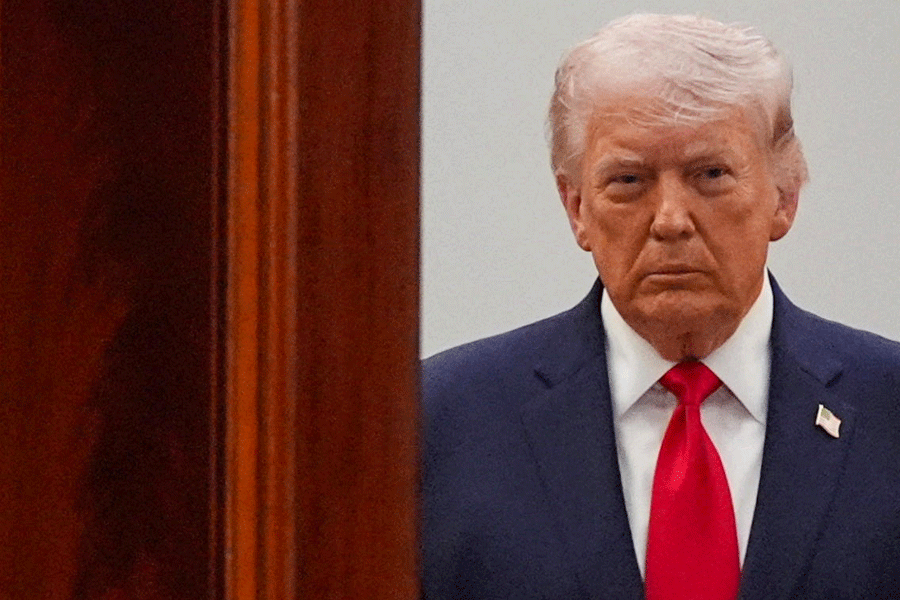
Washington had been awaiting Iran's response to a new proposal for a deal to end the war, reopen the strait to shipping and roll back Iran's nuclear program. US President Donald Trump has reiterated threats to resume full-scale bombing if Iran doesn't accept an agreement to reopen the strait and roll back its nuclear program.
Iran has mostly blocked the waterway since joint strikes on Feb. 28 by the US and Israel launched the war, which has caused a global spike in fuel prices and rattled world markets.
In Sunday's naval attack, Qatar's Ministry of Defence said that a drone targeted a commercial ship coming from Abu Dhabi into a southern port, setting a small fire that was extinguished.
The United Kingdom Maritime Trade Operations Centre said that the attack happened 23 nautical miles (43 kilometres) northeast of Qatar's capital, Doha. It gave no details on the owner or origin of the ship, and there was no claim of responsibility.
There have been several attacks against ships in the Persian Gulf over the past week. On Friday, the US struck two Iranian oil tankers after it said that the vessels were trying to breach its blockade of Iran's ports.
Iran's Revolutionary Guard Navy on Sunday reiterated its warning that any attack on Iranian oil tankers or commercial vessels would be met with a "heavy assault" on one of the US bases in the region and enemy ships.
In Kuwait, Defence Ministry spokesman Brig. Gen. Saud Abdulaziz Al Otaibi said that hostile drones entered Kuwait's airspace early Sunday, and that forces responded: "in accordance with established procedures." There were no immediate reports of casualties, and the ministry didn't say where the drones had come from.
The United Arab Emirates' air defences dealt with two drones coming from Iran on Sunday, the Defence Ministry said, the latest in renewed attacks on the oil-rich Gulf country.
The UAE has reported being attacked in the past days by Iran after four weeks of relative calm since a ceasefire in the Iran war was announced by the United States.
Iran has denied carrying out operations against the UAE in recent days, yet it warned of a "crushing response" if any actions were launched from the UAE against it.
The attacks prompted the UAE to shift to remote learning for schools last week, but authorities said on Sunday that in-person learning would resume from Monday.
No oil leak at Kharg Island, Iran says
Iran’s Oil Terminals Company denied reports of an oil leak near Kharg Island on Sunday, according to state media, after satellite imagery this week appeared to show a large slick west of the country’s main oil export hub in the Gulf.
The company’s chief executive said inspections had found no evidence of leaks from storage tanks, pipelines, loading facilities or tankers operating near the island. He added that the Marine Emergency Mutual Aid Centre (MEMAC), a regional marine pollution body, had also reported no sign of leakage in the area.
The official said Iranian teams had conducted additional field inspections and laboratory testing after the reports emerged and had not identified “even the smallest trace” of leakage.