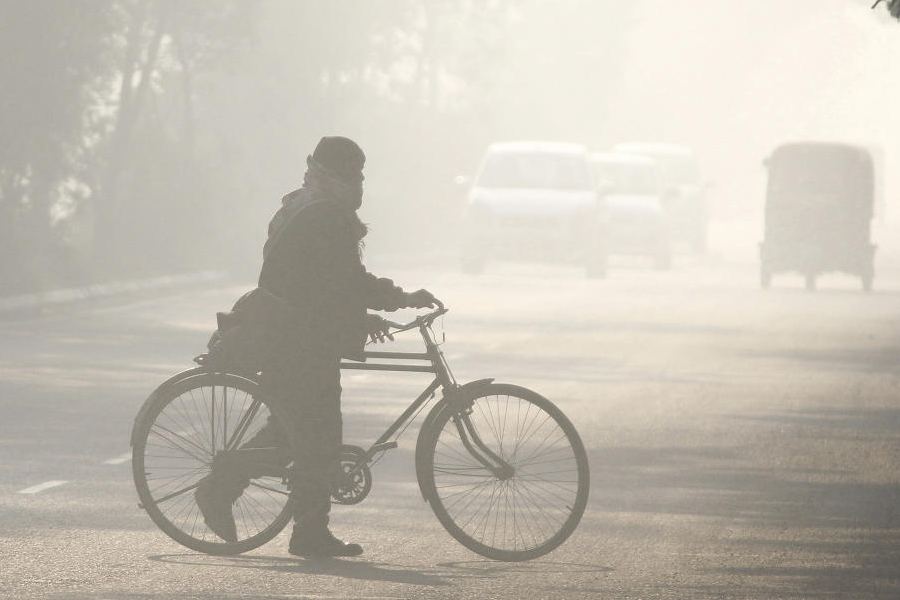
The West Bengal Pollution Control Board (WBPCB) has begun a collaborative study with Columbia University and a Bengaluru-based think tank to assess whether pollutants in urban industrial zones and rural parts of the state carry similar levels of toxicity, a senior official said on Tuesday.
The exercise aims to move beyond conventional air quality readings and examine whether differences in pollutant composition translate into different public health outcomes across regions.
The official said the focus is on toxicity rather than just concentration. “If toxicity levels differ between urban and rural areas, the health implications will also differ,” he said.

He pointed out that the Air Quality Index (AQI), commonly used as a public-facing measure of air pollution, may not fully capture how harmful the pollutants are in different locations.
“When the eastern metropolis' AQI hovers around 200, it may go upto nearly 250 in Durgapur, an industrial hub. At the same time, AQI readings at Jalangi in Murshidabad, a rural monitoring station, can be of the same level. This has led us to examine whether urban industrial and rural pollutants are equally toxic,” the official said.
West Bengal currently has around 400 pollution monitoring stations operated by the WBPCB, generating data at 15-minute intervals. This large volume of real-time data forms the backbone of the study.
Columbia University is supporting the project through its Clean Air Initiative, led by Principal Investigator Faye McNeill. The university is working with the Board on data calibration, analysis and policy advisory support, according to officials.
WBPCB chairman Kalyan Rudra said the Board routinely shares pollution data with researchers from colleges and universities to help develop policy inputs and identify additional pollution-control measures.
“There is a need to analyse and study climate change,” Rudra said.
He referred to rising carbon-dioxide emissions and increasing temperatures over the past three centuries, which he said have altered ecological patterns, caused crop losses and may have contributed to a rise in the frequency of cyclones.
Rudra added that sustained efforts by the state environment department and the WBPCB in recent years have led to an improvement in the overall air quality index situation.