The large-scale deployment of judicial officers to assist the Election Commission in handling an unprecedented volume of disputes arising from the special intensive revision (SIR) of electoral rolls has virtually paralysed courts across Bengal and left litigants stranded.
The move, initiated under the Supreme Court’s direction to ensure transparency and swift adjudication of claims and objections related to voters’ lists, forced judicial officials to skip their regular assignments for what many lawyers described as a “non-judicial” exercise. This has led to legal proceedings in district and subdivisional courts slowing down dramatically, fuelling fears of an impending backlog despite efforts to shift urgent matters to alternative courts.
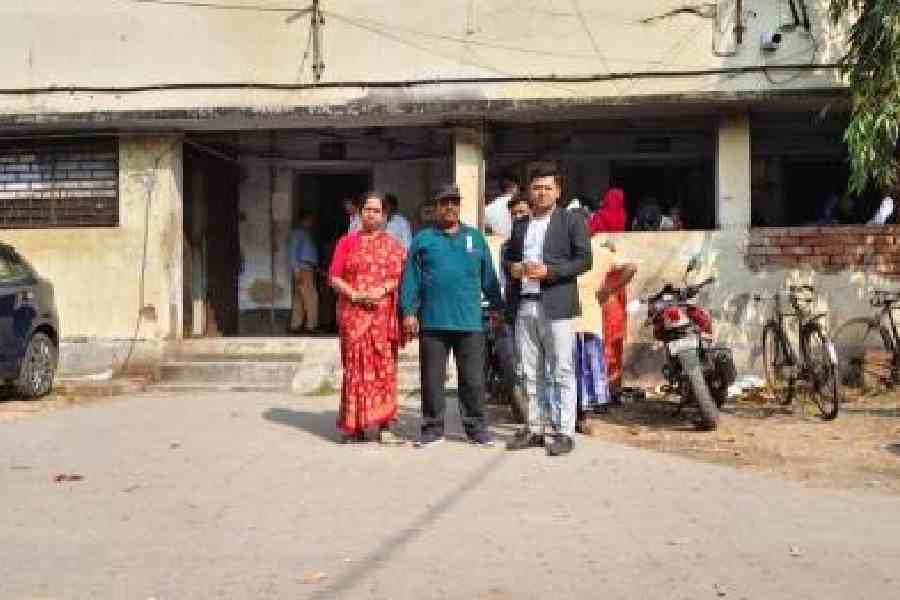
On Wednesday, most district and subdivisional courts across the state wore a deserted look. Many litigants, who had travelled long distances, remained unaware that judicial officials had been deputed for SIR-related duties and were instead undergoing training. Several returned home without any progress in their cases.
The situation deteriorated during the past two days.
At the Basirhat subdivisional court, elderly Sukumar Dhali from Hingalganj was seen waiting anxiously with his daughter. He had expected an order in a petition related to alimony filed by her, but court staff informed him that fresh dates would be communicated later.
In Nadia, a woman who had arrived with her daughter to record testimony in a case under the Pocso Act was similarly turned away after learning that the judicial official was unavailable.
The disruption has affected even serious criminal proceedings.
On Tuesday, Ajai Sk, a resident of Bharatpur in Murshidabad, now working in Uttar Pradesh, travelled back to depose before an additional district and sessions judge at the Kandi subdivisional court in a murder case. He could not record his statement as the judicial officer had been assigned SIR duties.
Special public prosecutor Suman Roy told The Telegraph: “This is an unprecedented situation, and several cases are suffering from such problems.”
Kalicharan Mondal, a public prosecutor at the Basirhat ACJM court, said: “Poor people and victims will suffer most as they have to wait until the SIR assignment of the judicial officials is finished.”
The ripple effect has been felt across multiple districts.
In Barasat, the subdivisional court premises saw sparse movement of lawyers and clients. Sources said nine judicial officers, including a district judge, had been assigned SIR work in North 24-Parganas, leaving just six judges to manage 15 courts.
Litigants whose cases were nearing settlement faced abrupt delays, with witnesses unable to depose and no clarity on fresh hearing dates. In several courts, clients were seen requesting lawyers for fee waivers as proceedings could not take place at all.
Public prosecutor Biswajit Roy Choudhury said: “Until and unless the judicial officials are released and resume normal judicial work, such problems will continue.”
The situation is similar in all north Bengal districts.
In Alipurduar, seven out of 11 judicial officials, including a district judge, have been engaged in SIR proceedings, affecting work in every court and forcing litigants from distant areas to return without progress.
Senior advocate Som Shankar Dutta said: “This is the first time we are facing this kind of problem. Litigants, however, blamed us for no fault of ours.”
Sources in Calcutta High Court said that following the Supreme Court’s directive, as many as 93 civil judges (senior division) were initially deployed for the first phase of SIR adjudication. Subsequently, 177 more judicial officers were assigned on February 24 following a fresh order from the court.
Anticipating that the initial deployment might still fall short given the massive caseload, the registrar of Calcutta High Court issued an “important notice” on Tuesday imposing sweeping administrative measures, including cancellation of leaves, except in cases of medical emergency.
A judicial officer involved in the SIR adjudication, speaking on condition of anonymity, suggested that the present disruption reflected deeper structural issues. “Shortage of judicial officers in Bengal is severely hindering legal proceedings. Roughly around 40 per cent of posts are vacant,” the officer said.
Additional reporting by our Siliguri bureau