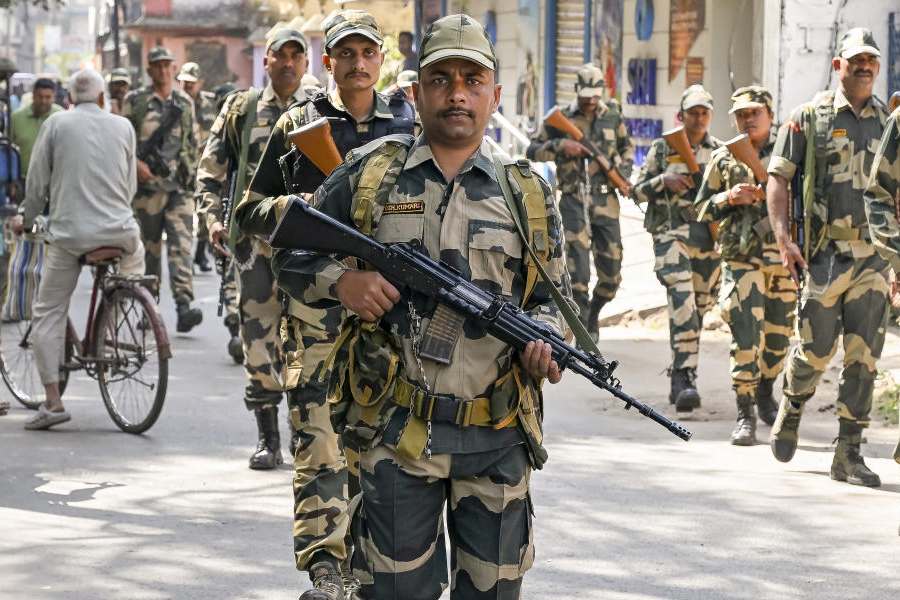
The release of post–Special Intensive Revision (SIR) electoral rolls in West Bengal has sparked a sharp political confrontation between the Trinamool Congress (TMC) and the Bharatiya Janata Party (BJP), with the Election Commission (EC) caught in the crossfire.
On Saturday, the Election Commission published the updated voter lists, showing that around 63.66 lakh names, about 8.3 per cent of the electorate, had been removed since the SIR exercise began in November last year.
The deletions have brought the total number of voters in the state down to a little over 7.04 crore, ahead of the assembly elections due in April.
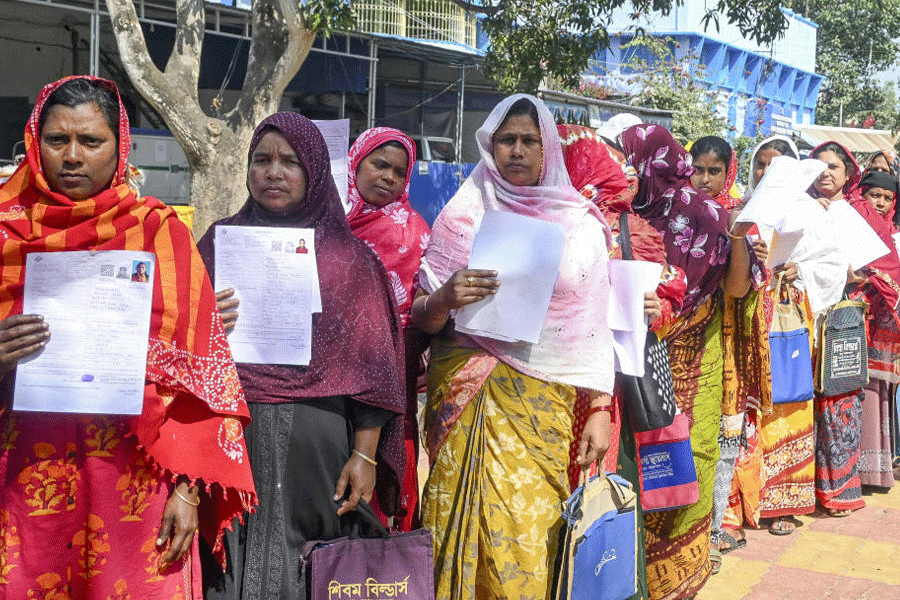
The ruling TMC accused the poll panel of “invisible rigging” in collusion with the BJP and alleged that genuine voters were being removed from the rolls.
In a post on X, the party claimed that the names of a councillor of Naihati Municipality and his mother had been deleted.
“The full, filthy extent of @BJP4India and @ECISVEEP's silent invisible rigging now stands exposed before Bengal's eyes... An elected representative and his family (were) erased like ghosts in this voter-purge conspiracy,” the TMC said in the post.
The party also questioned the role of the Election Commission.
“Is the Election Commission wearing blinders, stumbling in the dark, unable to spot flesh-and-blood voters right under its nose? Or is this Mr Vanish Kumar's twisted vanishing act where genuine voters are wiped out with a flick of his magic wand, all to rig the game for his Delhi Zamindars?” it said.
TMC leaders have repeatedly referred to Chief Election Commissioner Gyanesh Kumar as “Vanish Kumar”, alleging that the poll panel is conspiring to erase legitimate voters from the electoral rolls in the state.
Senior TMC minister Firhad Hakim alleged that the BJP was deliberately targeting voters who did not support it.
“But none of them are Bangladeshis or Rohingyas. People of Bengal will prove by the rule of law and documents that they are not infiltrators,” he said.
Since the SIR began, BJP leaders have maintained that the exercise would remove Bangladeshis and Rohingyas from the voter lists, alleging that they form the TMC’s vote base.
TMC state general secretary Kunal Ghosh accused the Election Commission of acting selectively.
“The EC has done the job as dictated by its masters. The living example is Nandigram, where fewer names were deleted as it is the assembly seat of BJP leader Suvendu Adhikari,” Ghosh said.
He added that the move would not help the BJP win the assembly elections expected in April.
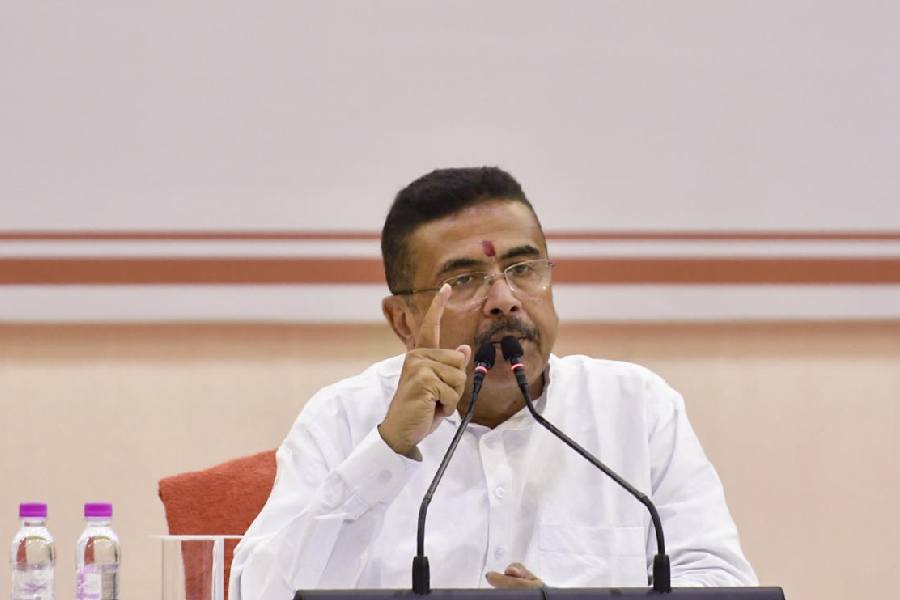
Adhikari, the Leader of the Opposition in state assembly, rejected the allegations and said the revised rolls exposed the scale of irregularities in the earlier lists.
He claimed that the post-SIR data showed how “bogus, fake/infiltrator and outsider voters” had increased across the state and that the rolls had now been cleared “of these elements who had engulfed the Bengal society like cancer.”
“These infiltrators will now be shown the door. But the Hindu refugees need not worry. If their names are missing, they can get their names enrolled by applying through CAA. The Matua community members also need not worry,” Adhikari said.
The Matua community, originally from East Pakistan, migrated to India during the Partition and after the creation of Bangladesh.
With an estimated population of around three million in West Bengal, the community holds influence in more than 30 assembly seats in Nadia, North 24 Parganas and South 24 Parganas districts along the Bangladesh border.
Adhikari said Ghosh’s comments on Nandigram reflected panic within the TMC after realising that “ghost voters and Bangladeshi voters could not be used to inflate their candidates' votes in the next polls.”
“By May, a nationalist state government run by the BJP will take over and free Bengal of the virus of fake documents and infiltration,” he said.
He also claimed that the deletion of a large number of names from Bhabanipur, the constituency represented by Chief Minister Mamata Banerjee, would ensure her defeat by a wide margin.
The Congress struck a different note, questioning the process without aligning with either side.
State Congress president Subhankar Sarkar said the list published during the day “is not free of defects” and that the Election Commission should have exercised greater caution instead of acting in haste.