A school issued thorough instructions to parents on Wednesday about their children’s gadget usage and the nature of discussions they can have with them to pre-empt situations.
The Newtown School has issued a 19-page set of guidelines to all parents, excluding those with children appearing for the board exams, stating that particular online platforms require additional caution due to the potential risks they pose, which children may not fully comprehend.
It could include anonymous chats, unknown groups, multiple hidden accounts and challenge-based games designed to keep them hooked.
The preventive guidelines on responsible gadget use and student well-being come in the wake of the death of three sisters in Ghaziabad on February 4. They were said to be deeply immersed in the online world.
The three girls — aged 12, 14 and 16 — allegedly jumped from the ninth floor of their apartment building.
“The death of the three girls in Ghaziabad is beyond the normal level. But children’s and adolescents’ engagement with the mobile is something which has been there for some years now, and in certain cases it impacts their life as well,” said Sunil Agarwal, the school’s founder-director.
Agarwal said it is not that parents do not know what to do, but they “ignore signals” at times.
“When there is a communication from the school,
some parents will take action,” he said.
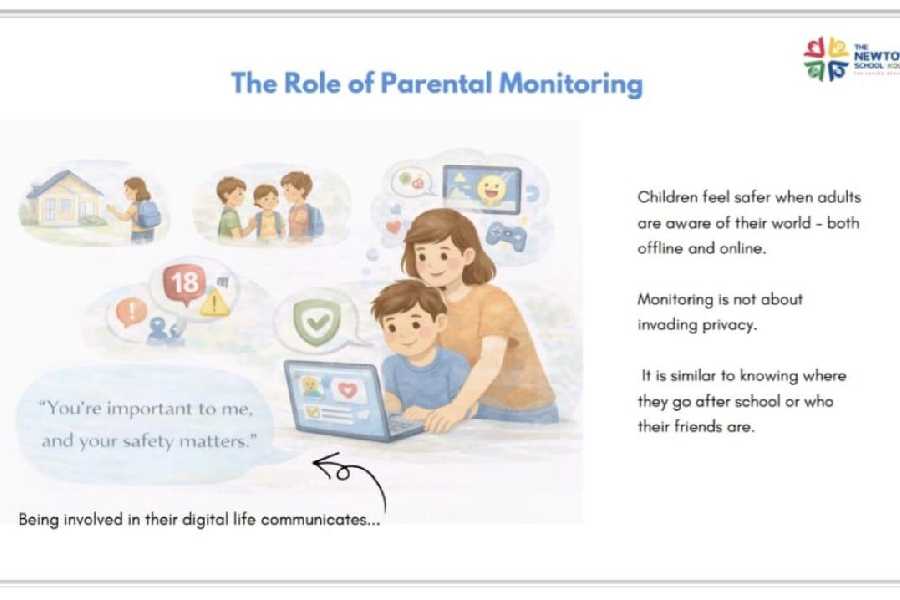
Monitoring is not about invading the child’s privacy, the document says. “It is similar to knowing where they go after school or who their friends are,” it says.
The Ghaziabad deaths have sent shockwaves far and wide. The Heritage School on Monday urged parents to be alert to changes in their child’s behaviour and to regulate their screen time.
In a circular sent to parents of students up to Class XII, the school described the Ghaziabad incident as deeply upsetting. “It reminds us of how important it is for parents to spend time with their children and talk to them regularly. Parents should know who their children’s friends are, what activities they are involved in, and be alert to any change in their behaviour,” principal Seema Sapru wrote to parents in the circular.
The school advocated for the use of child lock and firewall settings on devices and switching off Wi-Fi for a certain period during the day.
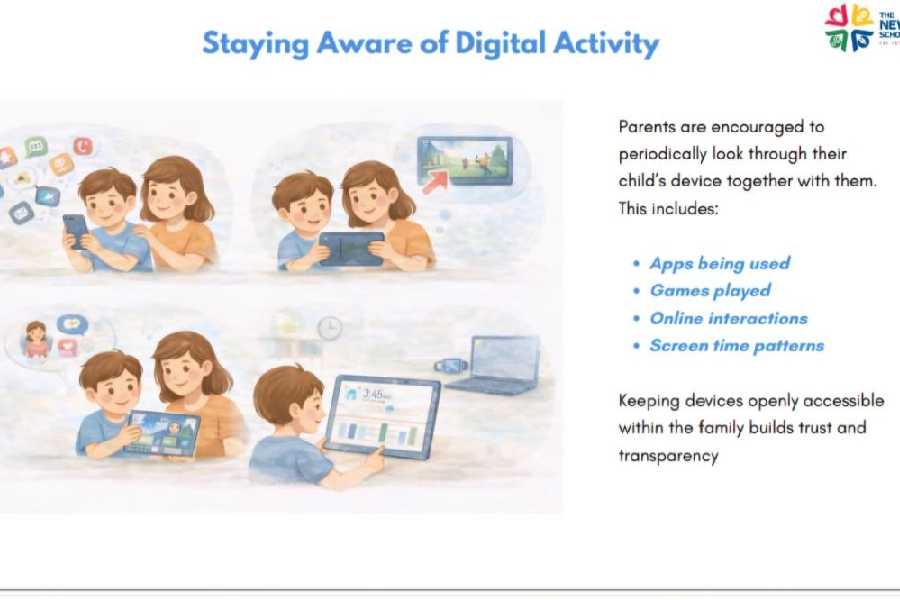
In its guidelines for staying aware of a child’s activities, The Newtown School has encouraged parents to periodically browse the child’s device in the child’s presence.
The guidelines suggest keeping track of the apps used, games played, online interactions and screen-time patterns. Parents should know passwords to important accounts and devices, the school has said. “This has to be introduced as a family safety rule, not as suspicion, but as protection,” the document says.
Sometimes, excessive digital engagement slowly replaces daily experiences.
“These are not signs of bad behaviour. They are signs that the child needs guidance and support,” the document says.
Instead of letting children be on their own or chiding them, parents should initiate conversations about the online world.
The parents can, for example, want to know more about their friends, feelings and confusion about the online world.
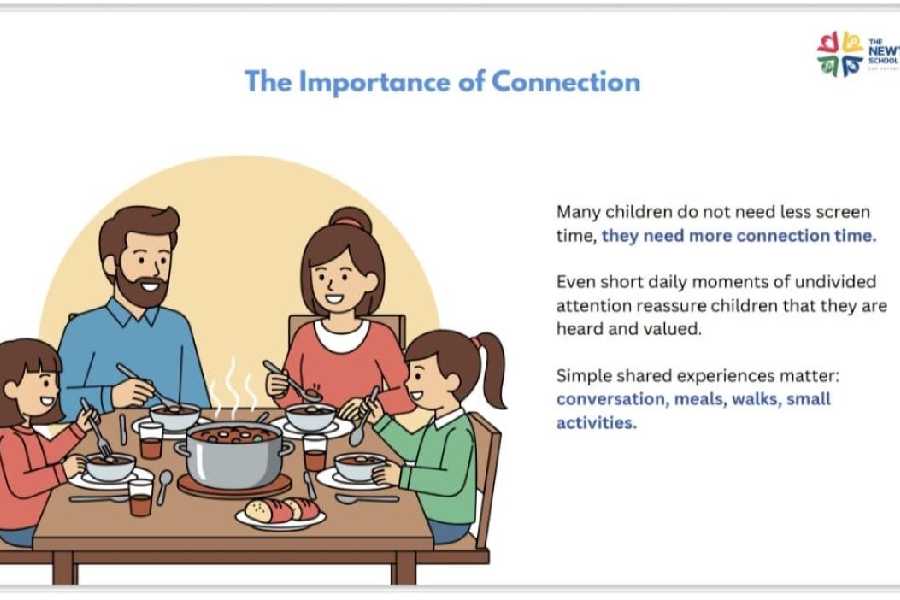
“Many children do not need less screen time; they need more connection time. Even short daily moments of undivided attention reassure children that they are heard and valued,” the school said.
Children speak openly when they feel safe from immediate judgement, psychologists say.
The school has also advised parents to seek help from the school counsellor and psychologists if need be. Seeking help is a preventive step and not a sign of failure, the school said.
“Childhood today includes the digital world. With calm guidance and steady involvement, children learn to use it wisely,” the school said.