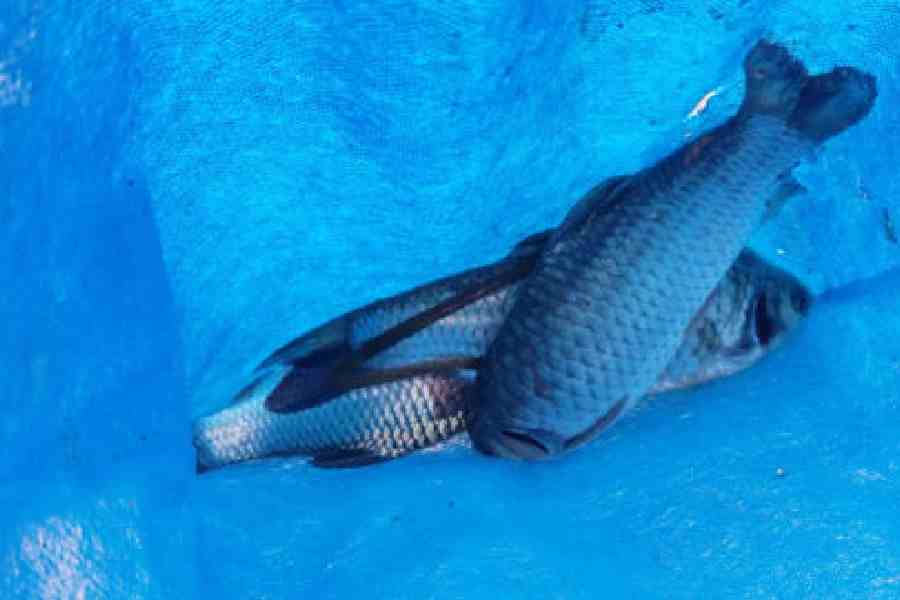
Thousands of dead fish were found floating in the Karala river in Jalpaiguri town on Sunday, triggering panic among residents.
Jalpaiguri district magistrate Shama Parveen said the fisheries department had been directed to collect water and fish samples to ascertain whether the river was contaminated.
“I asked officials of the fisheries department to collect samples of the water and dead fish for necessary tests. After receiving the report, the cause behind the death of such a large number of fish can be determined,” the district magistrate said.
Residents of Mashkalaibari under ward 22 of Jalpaiguri municipality were the first to spot the dead fish floating on the Karala. They claimed the water appeared oily in several stagnant stretches of the river.
“I found several fish floating on oily water. It seems somebody has put something in the river that killed the fish. I collected 4 kilos of dead fish from the river,” said Radha Das, a resident of Mashkalaibari.
Residents said several species, including large catfish, snakehead, rohu, katla, ritha and bata, were found dead. Apart from local residents, many fish vendors were also seen collecting the fish.
According to the fisheries department, a similar incident had occurred in the Karala in 2011, when goons allegedly used pesticides to take fish from the river.
An officer of the district fisheries department said that during winter the flow of the Karala slows down, affecting oxygen levels.
“In stagnant stretches, the normal dissolved oxygen level, which should be between five and eight milligrams per litre, often drops during winter when water levels recede. Gloomy weather further worsens the situation. As a result, some fish may die naturally. However, we have collected water and fish samples to determine whether pesticides or any other contaminants were involved to kill the fish,” said Ramesh Biswas, assistant fisheries officer of the district.
The fisheries department also used public address systems to warn people against selling or consuming fish collected from the river.
Trinamool Congress councillor Rinku Biswas said that several tea gardens were located near the stretch of the river area and alleged that pesticide contamination could be a factor behind fish deaths.