Government officials from India and Bhutan held a secretary-level bilateral meeting in Thimphu on Wednesday to discuss transboundary river management and review the Punatsangchhu-I hydroelectric project being implemented in Bhutan in partnership with the Indian government.
A source said the Indian delegation was led by V. L. Kantha Rao, secretary of the department of water resources, river development & Ganga rejuvenation — which functions under the Union ministry of Jal Shakti — and comprised officers from the department as well as from the state governments of Bengal and Assam.
“The team visited Bhutan from February 24 to 27. On February 25, at the secretary-level bilateral meeting, both sides reviewed the existing mechanisms of cooperation in flood management and forecasting,” said a source.
The teams also discussed strengthening and modernising the existing hydro-meteorological observation network, improving data-sharing mechanisms for flood forecasts on transborder rivers, enhancing technical exchanges and addressing emerging challenges arising from climate change, such as glacial lake outburst floods (GLOFs) and other extreme weather events, the source added.
Rao visited the under-construction Punatsangchhu-I hydropower project and the recently commissioned Punatsangchhu-II hydroelectric project on Thursday.
“The visit aimed to enhance water resources management and climate resilience in shared river basins. It reaffirmed the shared commitment of both countries to the sustainable and mutually beneficial management of transboundary water resources,” the source said.
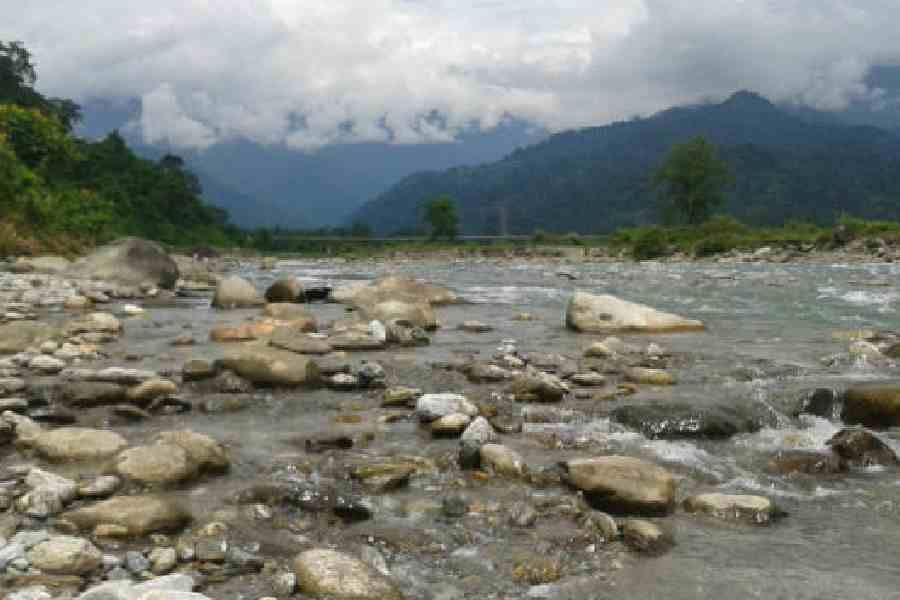
Chief minister Mamata Banerjee has previously said that rivers flowing into districts like Jalpaiguri, Alipurduar and Cooch Behar from Bhutan cause severe flash floods during the monsoon.
She had demanded that the Centre form a joint river commission with Bhutan, as it has with Bangladesh.
In October last year, flash floods in the Nagrakata and Banarhat blocks of Jalpaiguri killed several people and caused extensive property damage, displacing hundreds.
A Bengal irrigation department source said that despite the state’s request to form a joint river commission, the Centre has not responded.
“We hope that appropriate issues, including flash floods in north Bengal caused by the rivers originating from Bhutan, regular sharing of rainfall and other ancillary data, were discussed. The monsoons are ahead, and we want an effective mechanism to address these problems,” said a source.