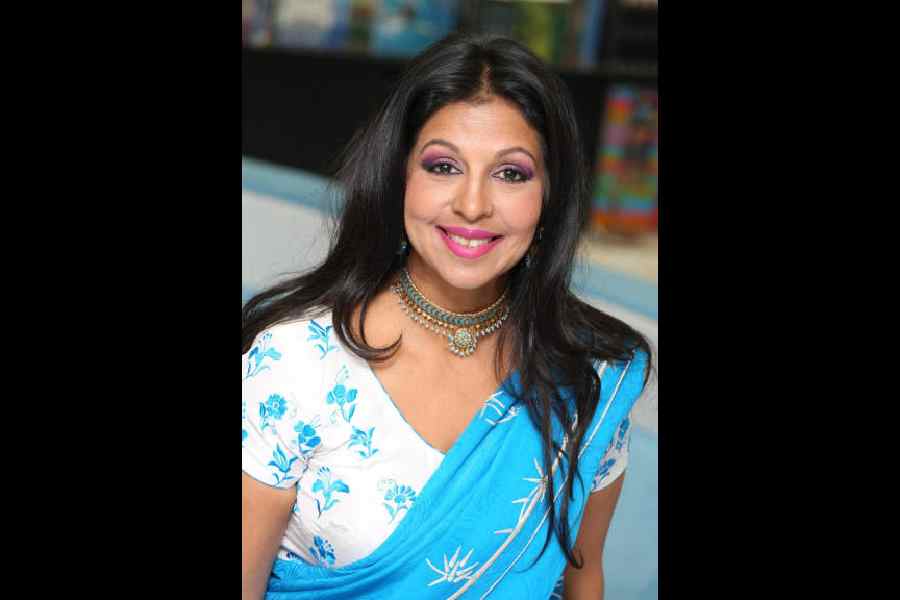
Apeejay Kolkata Literary Festival (AKLF) 2026 kicks off on January 9 and will run until January 11. The 17th edition of the festival inaugurates the season of annual literary gatherings in Calcutta and has added a new venue — The Alipore Museum, located at 17 Judges Court Road, Alipore.
Priti Paul, director, Apeejay Surrendra Group, describes it as a new chapter in the history of AKLF. “Apeejay Kolkata Literary Festival is entering a new chapter by expanding its horizons to the historic Alipore Museum. This transition is more than a change of scene; it is an embrace of one of Calcutta’s most significant heritage landmarks, reflecting our long-standing commitment to hosting intellectual discourse in spaces with a soul,” she said. AKLF has always celebrated landmarks like Park Mansion, St. Paul’s Cathedral, National Library, Indian Museum, Lascar War Memorial, Victoria Memorial Hall, Town Hall, Currency Building, as well as popular spots like The Park, Allen Park and St. John’s Church, and the century-old Oxford Bookstore.
The festival will see key commemorations this year, including dedicated sessions on pioneering writer and activist Mahasweta Devi and veteran filmmaker Raj Khosla. “Today, when conversations around dissent, freedom of expression, and the role of intellectuals are central, Mahasweta Devi’s life stands as an example of how literature can challenge power structures and provoke moral introspection. Her work also holds significance for contemporary readers because of its fearless honesty. She encourages readers and writers alike to question privilege, to listen to silenced histories, and to believe that literature is a tool for change. The festival’s commemoration, a centennial tribute to Mahasweta Devi, is therefore a living engagement with her ideas from a panel of women achievers who have faced challenges in their chosen field of work,” said Paul. Khosla, she felt, “brought an exceptional sensitivity to popular cinema, using music both as ornamentation and as a narrative force”. “The session will explore the emotional honesty that marked both his life and his art, remembering him as a storyteller who trusted feeling as much as craft. In doing so, the tribute seeks to reaffirm Raj Khosla’s relevance today, as a filmmaker whose legacy continues to inspire conversations around form, emotion, and the enduring power of cinema,” she said. This session will be hosted at The Park on the final day of the festival. A short film on his life and work will set the context, and his authorised biographer, Amborish Roychoudhury and son-in-law, G.M. Kapur, who is a part of Raj Khosla Films, will reflect on both his cinematic genius and his personality.
The Oxford Junior Literary Festival is for junior and middle-school students to immerse in a world of storytelling, interactive author sessions, and word games led by acclaimed authors and storytellers like Shobha Tharoor Srinivasan, Anita Nair, Madhurima Vidyarthi, and Norm Coady.
Dedicated sessions on queer literature, alternative sexualities and the spectrum of lived experiences sum up AKLF this year. The highlight includes a conversation between Pawan Dhall and Rohit K. Dasgupta, on Day Two, that will focus on the importance and challenges of documenting the queer experience in contemporary India. Other sessions include a panel dedicated to the queer novel and one on polyamory and alternate relationship choices.