Global warming has almost made spring evaporate. But for a few fleeting moments, nature turns over a new leaf, the breeze is soft and cool, and the cuckoo calls out plaintively. Kuhu kuhu bole koyaliya is a song for those moments.
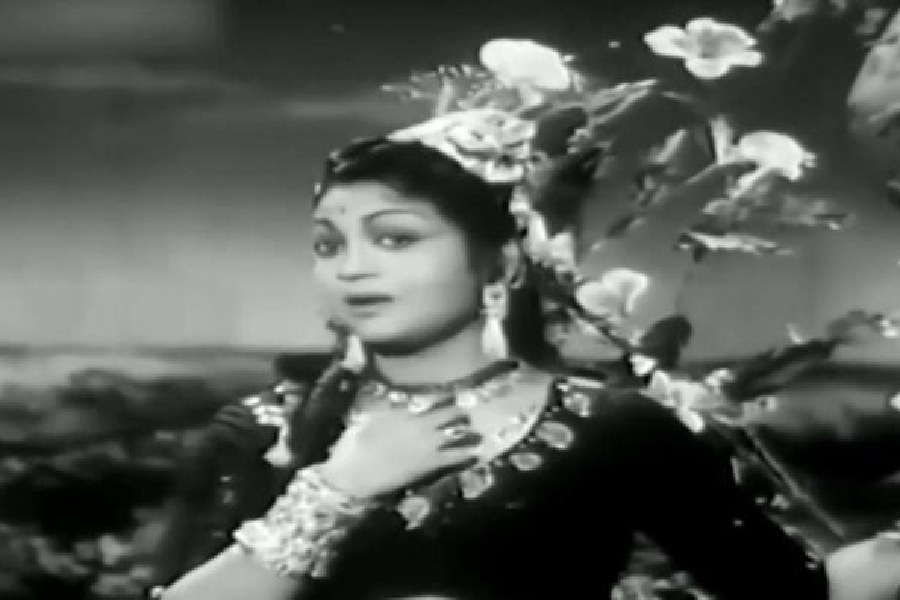
Sung by Lata Mangeshkar and Md Rafi for the 1958 hit Suvarna Sundari, it is unique for being a Raga Malika or a “garland of ragas”, a Carnatic music term for a composition set to different ragas.
The Hindi film is a remake of the 1957 Telugu blockbuster of the same name, directed by Vedantam Raghavayya and produced by P. Adinarayana Rao. Rao (1914-1991) was a rare multi-hyphenate — theatre artiste, film producer and music director.
The Telugu Suvarna Sundari and its Tamil version, Manaalane Mangaiyin Baakkiyam, were released within days of each other. Both were runaway hits. Essentially a love story of a prince and a celestial apsara, the plot was a delirious mishmash of magic, spells, separations, disguises and campy villains, culminating in a happy ending.
Lata Mangeshkar, who was by then a young superstar, enjoyed the Telugu film so much that she convinced Rao to remake it in Hindi. The real attraction could have been the classical-based love song Haayi haayiga sung by renowned Telugu playback names Ghantasala and Jikki. In the Hindi version, that song became Kuhu kuhu bole koyaliya.
Mounted on a lavish scale, the song has four ragas — Sohani, Bahar, Jaunpuri and Yaman — with the powerful Sohani holding the entire composition together. It can be utterly amazing to hear how four ragas, each symbolising a different mood and prahar (time of day), can be woven together into one song.
The finesse with which Lata and Rafi tease out the nuances of the four ragas, the aalaps and sargams, warrants careful, devoted attention. It’s a difficult composition with lyrics in Sanskritised Hindi, but the two classically trained singers ace it. Sur? Check. Expressions? Check. Diction? Check.
Lyricist Bharat Vyas, famed for songs Ae maalik tere bande hum (Do Aankhen Barah Haath) and Saranga teri yaad mein (Saranga), brings out the historical-fairy tale flavour of the song as well as the mood of each raga well.
Describing spring, Vyas writes: Saj singar ritu aayi basanti/Jaise naar koi ho rasvanti/ Daali daali kaliyon ko titliyan choome/ Phul phul pankhuriyan khole, amrit ghole.... (Here comes the decked-up spring like a luscious woman. On every branch, butterflies kiss the buds, flowers open their petals, fill the air with divine nectar.)
The intricate imagery reminds us of the Patachitra or Madhubani paintings.
Today, reality TV contestants sing Kuhu kuhu bole koyaliya when they need to impress judges. Yes, it is one of the finest classical compositions that any Indian music composer has ever produced for a film. But it is not just technically dazzling; it is also a song that lives rent-free in your heart once you hear it. And yes, the closing bars of the song are sure to make you grin.