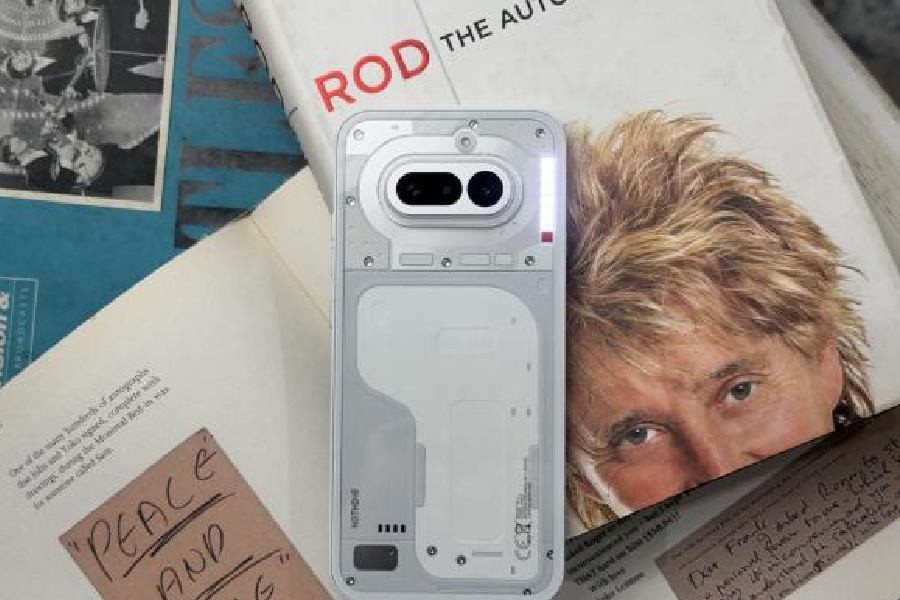
In the last few years, the tech space has felt as though nothing new needs to be offered in the design department. Instead of merely moving the camera module around the back panel of a smartphone, Nothing, the London-based tech company, has upped the design game. The latest phone to showcase this is the Nothing Phone (4a).
This is, quite simply, the most handsome Nothing phone to date—yes, even better than the Nothing Phone (4a) Pro. While it is true that prices have crept up, the question remains whether there are enough meaningful upgrades over the Phone (3a) to justify the purchase.
A masterclass in industrial design
The device embraces a retro aesthetic more than ever before, featuring intricate metal inlays visible beneath that signature glass back. One can immediately spot the number of exposed screws, which heightens the industrial charm.
In a welcome move, the buttons—now in aluminium—have been thoughtfully rearranged. The power button now sits on the right alongside the volume controls, while the customisable Essential Key occupies the left. It makes for a far more intuitive handling experience.
Nothing is also being more adventurous with its palette, offering a light blue, a crisp white, a classic black, and a most striking pink.
In terms of build, much remains familiar from the Phone (3a), including the glass sandwich construction. There is also an IP64 rating for dust and water resistance. However, durability has seen a boost; you can now submerge the handset in up to 25cm of water for 20 minutes. The rear is now protected by Panda glass, while the front features Corning Gorilla Glass 7i.
The iconic Glyph interface has also evolved significantly. Where the 3a featured three LED strips, the Phone (4a) introduces a sophisticated Glyph Bar. This consists of seven blocks housing 63 individual LEDs capable of hitting a blistering 3,500 nits. It is a brighter, more precise array with far less light bleed than its predecessor. There is even a red dot that glows when you are recording video.
The in-hand feel has improved as well. The device feels slightly denser and more substantial, whilst the more rounded edges ensure it no longer digs into one’s palms.
Enhanced performance
The headline camera upgrade is undoubtedly the 3.5x Samsung JN5 periscope lens. In this segment, the Nothing Phone (4a) is perhaps the only device to offer a periscope setup of this calibre. While the 50MP primary and 8MP ultra-wide sensors are carried over from the 3a, they are now bolstered by useful software refinements. Support for Ultra XDR and the new TrueLens Engine 4 suggest that the underlying algorithms have been significantly sharpened.
By default, the primary camera produces shots that are richly detailed in daylight. Nothing has stuck with its signature contrast-heavy tuning, resulting in a moody, punchy look that is instantly social-media-ready. In low light, the primary sensor holds its own, capturing a decent amount of detail with good control over highlights and shadows when shooting in HDR.
Portraits and skin tones remain a particular strength of the Nothing ecosystem, offering a natural look and a smooth bokeh drop-off. While the 8MP ultra-wide performs admirably in daylight, it does struggle once the sun goes down.
However, the telephoto lens is where the Phone (4a) truly shines. Zoom shots at 2x utilise an in-sensor crop of the main camera, but at 3.5x and beyond—specifically at the 7x and 10x marks—the pictures look fantastic once the telephoto hardware kicks in. You can even push the zoom to 70x, though upscaling quality naturally degrades beyond 10x. This periscope lens also allows for impressive macro photography.
On the video front, you can now shoot 4K at 30 fps across the primary and telephoto cameras, though the ultra-wide remains capped at 1080p. An HDR video option is available for the main and telephoto lenses, though this is currently restricted to 1080p at 30 fps.
The 6.78-inch Flexible AMOLED display has also seen crucial refinements, moving from FHD+ to a 1.5K resolution. With slimmer bezels and 120Hz LTPS technology, the screen estate feels more expansive. Outdoors, the high-brightness mode reaches 1,600 nits, making everything perfectly legible, while HDR content can peak at a staggering 4,500 nits.
Under the bonnet, the 4nm Snapdragon 7S Gen 4 chip offers a stable performance boost, allowing games like BGMI to run at 120 fps on ultra-extreme settings. Combined with LPDDR4x RAM and UFS 3.1 storage, the daily experience is fluid and stable.
The battery has been enlarged to a 5,400 mAh unit (in India), supported by 50W wired charging. Nothing OS 4.1, based on Android 16, remains a clean and minimal joy to use, with the company promising three years of software updates and six years of security patches. The animations feel more fluid, and the addition of resizable home screen components and a smart drawer adds to the utility.
The Essential Key is a clever touch, instantly capturing content to the Essential Space for cloud syncing. There are also several integrated AI tools, from Circle to Search to the Wallpaper Studio and a dedicated ChatGPT widget.
What about the pricing? It is upwards of ₹31,999 (without discounts). Given the increasing price of components, the era of cheap smartphones is over; this is slowly going to become the new normal.
What could Nothing have done better? There is a simple gripe that has existed for years. When you set up the phone for the first time, you are required to insert an Indian SIM card. For those who have already moved to eSIM, it is a hassle because you need to borrow someone else’s physical SIM card to get the device going. As eSIM becomes the new standard, Nothing needs to address this initial setup process.
Ultimately, Nothing continues to mature with a distinct visual identity and a refusal to compromise on software… a rare feat at this price point.
Mathures Paul
At a glance
Device: Nothing Phone (4a)
Price: Upwards of ₹31,999
High notes
Exceptional industrial design and build quality
Bright and precise Glyph Bar interface
Good periscope telephoto lens
Essential Space looks promising
Muffled notes
Ultra-wide camera performance remains unchanged
Physical SIM card needed to setup the phone