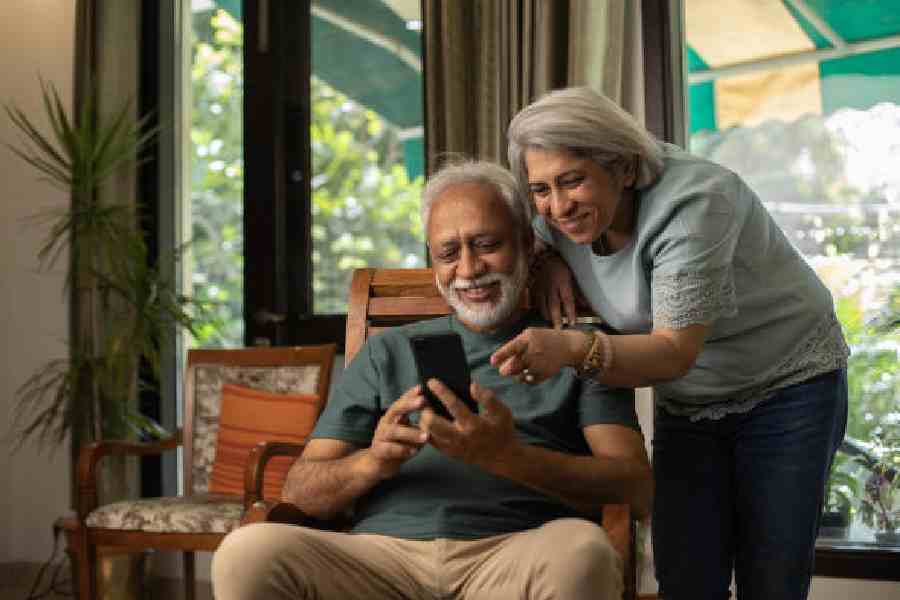
If one looks at the average retirement age in India, it becomes clear that people who used very little technology during their working lives are now over the age of 80 and are often not well versed in the digital world. Even those in their late 60s or 70s did not encounter artificial intelligence in its full force during their professional years. Yet today, many of them rely on the virtual world for routine essentials such as paying bills or transferring money.
Consider the rising number of fraudulent “digital arrest” threats reported across India. These scams prey on fear and unfamiliarity, making older adults particularly vulnerable.
Yesterday was Safer Internet Day, a reminder that the Internet must be a safe space not only for the young, but also for senior citizens. We spoke to Kunal Kishore, mission head, Agecare, HelpAge India, about the scale of the challenge seniors face online and how they can be better protected.
With an 86 per cent rise in cybercrimes against seniors, what “new age” scams dominated in 2025?
Based on HelpAge India’s on ground work, the most common scams in 2025 included digital arrest threats, AI generated bank calls, deepfake impersonation of family members, and OTP forced verifications. These scams are increasingly personalised and rely on fear, urgency and authority, making seniors especially vulnerable.
With nearly 15 crore seniors in India, is Digital India moving faster than protection?
Yes. HelpAge India’s experience shows that digital adoption among seniors has grown faster than digital safety awareness. Seniors now depend on smartphones and UPI for pensions, healthcare and daily payments, but most have never received formal training in online safety. Access has expanded, protection has not.
How does the digital arrest scam exploit senior psychology differently?
From HelpAge interactions, seniors show a higher tendency to trust authority and comply under pressure. Digital arrest scams exploit fear of legal trouble, emotional vulnerability and social embarrassment. Seniors are also high value targets because many rely on lifetime savings and are less likely to cross verify digital threats.
Deepfake impersonation of children is growing. How can seniors verify authenticity?
HelpAge has seen a rise in cases where seniors are unable to distinguish between a real and a fake voice, for example someone impersonating a family member or friend over a call, claiming to be in distress and asking for urgent help. The advice is simple: pause and verify. Disconnect the call, ring back on a known number, and involve another trusted family member. In workshops, emotional urgency is highlighted as one of the biggest red flags.
Should seniors be taught to distrust by default, or does that isolate them?
The aim is not to encourage distrust by default, but to promote precaution and awareness while building confidence. Seniors should be empowered to explore the online world safely. Pre and post workshop assessments show that confidence is the strongest form of protection. After training, seniors’ confidence in handling online fraud rose from 32.4 per cent to 87 per cent. Teaching calm verification works better than teaching fear.
Is there a gender gap in digital safety among seniors?
Yes. HelpAge India’s field observations show that older women are often more vulnerable. They typically have lower digital exposure, less independent access to devices, and greater dependence on intermediaries. Widows and women living alone face higher risks of financial abuse and impersonation scams.
The first 60 minutes after fraud are critical. Are reporting systems elderly friendly?
Not enough. The national 1930 cybercrime helpline and website are important steps, but many seniors are either unaware of them or unsure how to use them under stress. Current reporting systems assume speed and digital confidence, which many seniors lack. Reporting mechanisms need to be simpler and more age friendly.
If one safety feature could be mandated on smartphones for seniors, what should it be?
Based on HelpAge’s work, a built-in Senior Safety Mode is essential. This should include scam alerts, restricted app permissions, trusted contacts, and one touch access to helplines such as 1930. Safety should be enabled by default, not left to seniors to configure themselves.
Are seniors aware that Aadhaar and PAN data can be as valuable as OTPs?
Largely no. HelpAge sessions reveal that many seniors treat Aadhaar and PAN details as routine paperwork. In reality, this information can enable identity theft, loan fraud and account takeovers. Awareness of identity misuse remains far lower than awareness of OTP fraud, and this gap is increasingly being exploited.