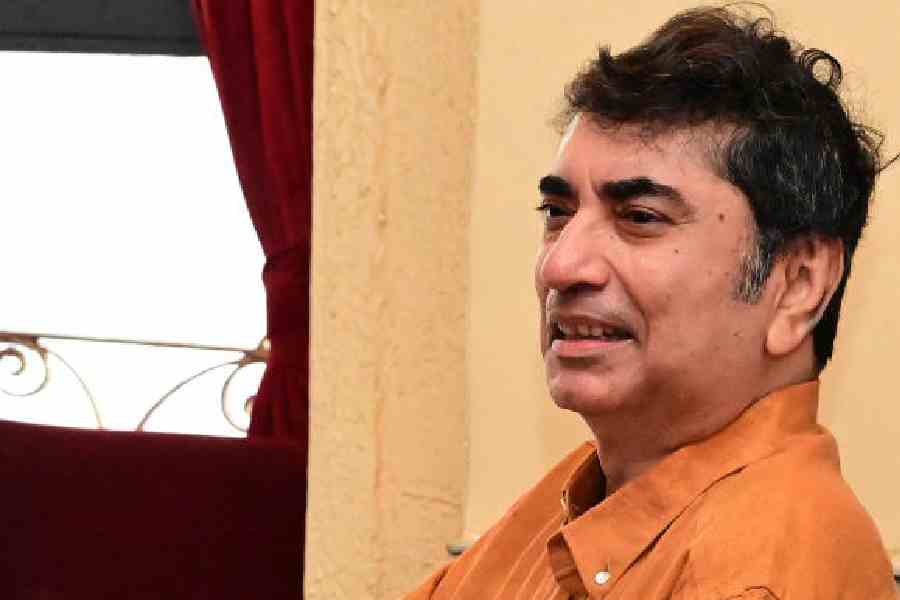
Anik Dutta managed to achieve a rare balance through his storytelling — encouraging thought without ever sacrificing entertainment. Across seven films, Dutta never chased box-office figures; rather, on many occasions, the numbers surprisingly chased him instead. Through his distinctive style of filmmaking, he took cinephiles on journeys woven with history and memory, engaging riddles, witty dialogues, memorable music, charming nostalgia and sharp satirical humour — all anchored by an authentic voice that never compromised.
His films often felt like nostalgic archives of Calcutta, richly capturing the city’s spirit and steeped in Bangaliana. More importantly, Dutta brought intelligent cinema to Bengali audiences without making it inaccessible, infusing his narratives with warmth and humour that made them equally suitable for family viewing.
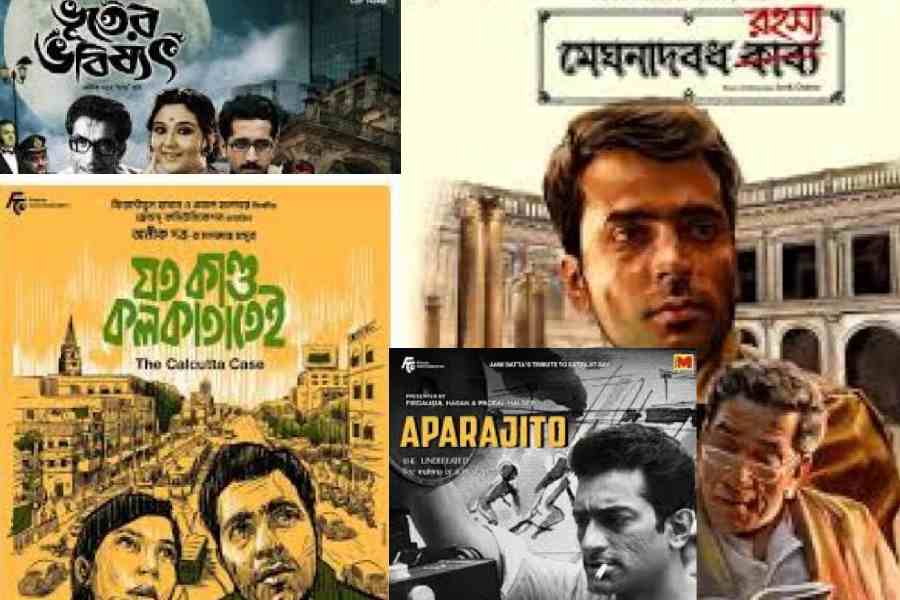
Films by late Anik Dutta
Bhooter Bhobishyot
Bengali cinema is yet to come across a filmmaker who could make ghosts as memorable as Anik Dutta did in his 2012 debut film, Bhooter Bhobishyot. His film was never merely about scares, nor was it just for laughs. Instead, it cleverly blended socio-political commentary with comedy, reinventing the genre and establishing the film as a landmark in the history of Bengali cinema. With immense care towards his craft, Dutta used ghosts as metaphors for the displaced middle class. Beneath the amusement lay an insightful reflection of contemporary realities — Calcutta’s rapid urbanisation, the neglect of cultural heritage, rampant consumerism, elitist mindsets, and the irony embedded within the communist political landscape.
Shot at the historic Serampore Rajbari, the imagined ‘Chowdhury Palace’ emerged as an unforgettable setting inhabited by ghosts from different eras of Bengali history, each representing distinct cultural and socio-economic backgrounds. Their peaceful existence is disrupted by a greedy developer determined to replace their home with a shopping mall. Despite lacking a lavish budget, Dutta’s ingenious storytelling struck a chord with audiences across generations and all walks of Bengali life, transforming the film into both a commercial success and a cultural milestone.
The film stood out for its sharp, witty dialogues, clever wordplay reminiscent of Sukumar Ray’s nonsense verse, memorable characters evoking nostalgia through representations of Bengali archetypes across eras, playful parodies of classic Bengali songs, and an ensemble cast delivering exceptional performances. Bhooter Bhobishyot not only introduced Dutta to Bengali audiences but also established him globally as a filmmaker of exceptional talent, an unparalleled satirist, and a distinctive voice in contemporary Bengali cinema.
Meghnadbodh Rohoshyo
While Bhooter Bhobishyot introduced Dutta as one of the most intelligent contemporary Bengali filmmakers, Meghnadbodh Rohoshyo firmly cemented that reputation through a clever suspense thriller infused with sharp humour, literary allusions, and audacious political commentary. The film — a harmonious blend of a classic whodunnit narrative with political history, presented as a smart allegory inspired by Bengali literature — earned widespread critical acclaim.
The mystery unfolds in a manner echoing the intricate dynamics of The Ramayana alongside Michael Madhusudan Dutt’s Meghnad Badh Kavya, inviting audiences to question who the true “heroes”, “traitors”, and “villains” really are. Released on the 50th anniversary of the Naxalbari movement, the film served as a poignant reminder of the Naxalite movement’s legacy and the burden of historical guilt associated with it. The storyline bravely explored how sections of the Bengali upper-middle class betrayed friends and family involved in the movement in favour of their own safety, making the film both a nostalgic and painful reflection for many viewers.
Staying true to Dutta’s distinctive style, the film was rich in bold, unapologetic political satire and his signature wit. The impressive ensemble cast further elevated the narrative, complemented by the haunting yet poignant climax song, Tomra ekhono ki, sung by Nikhita Gandhi.
Aparajito
Anik Dutta possessed a remarkable ability to revive theatres during periods of lull, and with Aparajito, he accomplished exactly that. The film vividly portrayed the resilient journey of legendary filmmaker Satyajit Ray during the tumultuous production of his 1955 debut masterpiece, Pather Panchali.
For aspiring independent filmmakers, the film served as a masterclass, chronicling the struggles of the visionary graphic designer-turned-filmmaker whose passion drove him to create a film that would eventually be regarded as one of the greatest works in world cinema and elevate regional cinema to global recognition.
Shot entirely in nostalgic monochrome as a tribute to Ray on his birth centenary, the film not only achieved box-office success but also emerged as a significant cultural touchstone. Beyond its making, one of the film’s most talked-about aspects was Jeetu Kamal’s astonishing physical and behavioural resemblance to Satyajit Ray — from his gaze and mannerisms to the texture of his voice. His performance received widespread acclaim from veterans within the film industry.
Dutta’s skilful fictionalisation of the biographical narrative, including the clever renaming of characters, set against the intellectual vibrancy of 1950s Calcutta, resonated deeply with Ray admirers. He framed Ray’s journey as “undefeated” against every obstacle, thereby giving the film its allusive title. Aparajito not only earned Dutta significant recognition but also won two National Film Awards — Best Production Design (Ananda Addhya) and Best Makeup Artist (Somnath Kundu) — among several other accolades.
Joto Kando Kolkatatei
In his eagerly awaited 2025 detective mystery thriller, Joto Kando Kolkatatei, Dutta wholeheartedly embraced his admiration for Satyajit Ray’s literary universe, crafting what felt like a cinematic love letter through his signature storytelling brilliance.
The film resonated deeply with Bengali cinephiles by tapping into their affection for the iconic world of Feluda and the nostalgic charm of Calcutta’s heritage, while also emerging as a box-office success amidst several festive releases.
What stood out for Feluda fans and cinephiles alike was Dutta’s decision to shift the spotlight from the flawless Feluda to his companion Topshe, charmingly portrayed by Abir Chatterjee as Toposmitro. This ingenious creative choice, coupled with Dutta’s treatment of the film as a modern allegory of Ray’s celebrated novel Gorosthane Sabdhan rather than a direct adaptation, shaped an intriguing, riddle-filled narrative centred around the resolution of a historical enigma.
The hallmarks of Dutta’s storytelling — intellectual nostalgia and Bangaliana — remained unmistakable throughout the film. The narrative immersed audiences in the rich tapestry of colonial Anglo-Indian history while weaving in references to Ray’s works and visually contrasting Calcutta’s storied past with its evolving present.
Calcutta itself emerged as a character central to the film’s intrigue. Traversing shared cross-border histories, humane perspectives, playful allegorical references, and engaging puzzles, the thriller culminated in a deeply warm resolution that tugged at the heartstrings of cinephiles of every kind — whether Feluda admirers, Anik Dutta enthusiasts, or simply lovers of Bengali cinema.
What is your favourite Anik Dutta film? Tell t2@abp.in