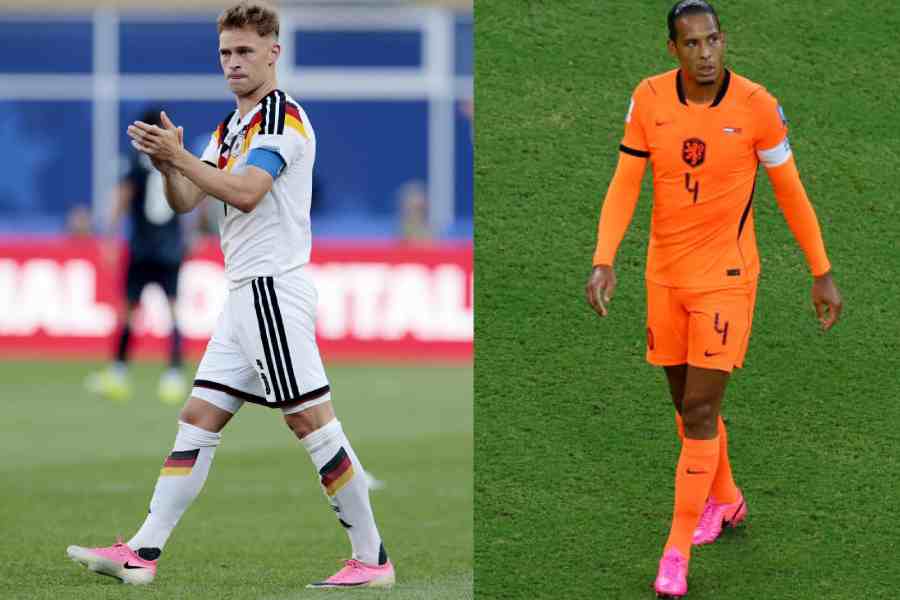
Germany and the Netherlands' exits from the Fifa World Cup have shown football is as much a game of leadership as tactics and skill.
Four-time winner Germany’s misery ended on June 29, when coach Julian Nagelsmann’s side lost the round of 32 knockout match to Paraguay in a penalty shootout. Die Mannschaft lost 4-3.
Joshua Kimmich, the captain and also probably the best footballer in the squad, had asked three or four players to take the sixth penalty before Jonathan Tah became the person to take it.
According to German media, Kimmich asked Leon Goretzka twice whether he wanted to take that sixth penalty but Goretzka refused.
The other players who were on the field were Waldemar Anton, Nathaniel Brown, Malick Thiaw, Tah and goalkeeper Manuel Neuer.
Tah, whose goal had been disallowed minutes earlier, stepped up to take the decisive penalty and shot it above the bar. He had never taken a penalty in his career before.
Many asked why a defender who just a few minutes earlier believed he had scored the decisive goal had to take the decisive penalty kick as well..
Footage showed Kimmich had also spoken to Goretzka. German media said the words of the captain could also be heard through a microphone.
"No, no, eight?" Kimmich asked, and then identified Brown as the potential eighth German taker. Kimmich then turned once more to Goretzka and asked: "Or Leon, you?" According to reports, there was no response from Goretzka.
Kimmich decided Goretzka as the ninth shooter. So why were Goretzka, Thiaw, Brown, and Anton reluctant to step forward when it came to taking responsibility?
But more than Goretzka, who apart from goalkeeper Neuer and Kimmich was the most experienced German player on the field, the fault lies with captain Kimmich.
Leadership 101 says decision-making is a key skill. But Kimmich appeared hesitant, asking teammates whether they wanted to take the next penalties rather than assigning the order. That hesitation may have contributed to Tah ending up with the decisive kick.
Also, when it comes to a sudden-death kind of situation, the captain should decide who goes next and not who would go for the number eight or ninth kick, given the match may end before that.
The episode also raises questions about Germany's preparation for a penalty shootout. Ideally, the order of penalty takers is determined in advance, with contingencies in place if players are unavailable.
A few hours later, the Netherlands lost to Morocco in a penalty shootout. Virgil Van Dijk, the Dutch captain, has faced intense scrutiny from pundits and social media for not stepping up and taking a penalty shot.
Van Dijk, also Liverpool captain, reportedly didn’t shoot from the spot because of “sudden discomfort.”
"Van Dijk had already indicated during the match, in extra time, that his calf was bothering him badly. Summerville had a cramp. So ultimately, it came down to who would take the fifth penalty, because at that point we didn't know yet whether Summerville would drop out or be able to take a penalty. Wout Weghorst was fourth on the list; due to this situation, he became the third taker. If Summerville hadn't said he was going to take the penalty, Virgil would have taken it,” coach Ronald Koeman said later.
Summerville, with a cramp, shot. He missed. Van Dijk is facing scrutiny for dodging a critical shot.
Rewind to the 1994 FIFA World Cup final, the first World Cup final to be decided by a penalty shootout.
Dunga, the captain of Brazil, scored from spot in the match. Dunga had replaced Rai, the then Brazilian star, in the middle of the tournament.
Raí had started the 1994 World Cup as the captain of the Brazil national team, but struggled with his form and lost his captaincy to Dunga during the knockout stages.
Despite the pressure of replacing Rai as the captain, Dunga took the fourth kick from the spot in the final.