A roar of celebration reverberated around the media box at Lusail Stadium in Qatar during the 2022 World Cup hours before Argentina’s quarter-final match against the Netherlands.
A few kilometres away at the Education City Stadium, television cameras panned to four stunned faces in a VIP enclosure — Ronaldo, Rivaldo, Roberto Carlos and Cafu. Immaculately dressed and visibly shocked, they were watching Brazil’s World Cup dream end at the hands of Croatia.
Someone in the media box sniggered: “Look at them. Happy to be globetrotters, and Brazilian football is suffering.”
It was a cruel observation, but not an unfair one. Four former world-class footballers — men who could have gone into coaching and shaped the next generation — are content criss-crossing the globe, collecting appearance fees and telling anyone who will listen before every World Cup that Brazil are the favourites. The results say otherwise.
Since their last triumph in 2002, the five-time champions have been knocked out by five different European sides — France in 2006, the Netherlands in 2010, Germany in 2014, Belgium in 2018, and Croatia in 2022. Each defeat has exposed the same fault lines — tactical naivety, an absence of a Plan B, and a coaching culture that never quite took root.
Compare that to Argentina. When their golden generation retired, they moved into the dugout. Diego Simeone, Lionel Scaloni, Pablo Aimar, Walter Samuel, Ricardo Gareca, Gabriel Heinze, Javier Mascherano — the list is long. They are not necessarily Johann Cruyff-level thinkers, but they are shrewd, organised and deeply invested in the game. Brazil, by contrast, has largely exported players, not ideas. Except for Tele Santana, there has been nothing resembling a serious Brazilian coaching tradition.
The consequences are now impossible to ignore. Brazil had their worst-ever World Cup qualifying campaign for 2026, suffering six defeats and finishing fifth in the Conmebol standings. Direct qualification came only because the tournament expanded to 48 teams. The situation was dire enough for the players — Vinicius Junior, Raphinha — to lobby for a European coach to be brought in. And so Carlo Ancelotti, who turned 67 on Wednesday, arrived from Real Madrid, less a vote of confidence in Brazilian football than a referendum against it.
The coaching failures have been glaring. In the 2022 quarter-final against Croatia, Tite substituted Vinicius Junior in the 64th minute — a player whose greatest threat to opponents comes precisely in the closing stages of a match. In 2014, Luiz Felipe Scolari had no answer as Germany scored seven. In 2010, Wesley Sneijder dismantled Brazil’s defence while Carlos Dunga watched helplessly from the touchline. In 2006, Zinedine Zidane toyed with a Brazilian side containing Ronaldinho, Ronaldo and Kaka — and Thierry Henry scored the decisive goal with Roberto Carlos standing hopelessly out of position.
People argue that Brazil struggled once football became more tactical and physical. But that does not hold up. Mario Zagallo’s 1970 side married flair with tactical discipline and produced perhaps the most complete team in football history. Even after Pele, Brazil played a physical and structured game. The real problem came when football ideas began circulating globally — Brazil’s secrets became common knowledge, and they had nothing new to offer.
There is a cultural dimension too. The Argentines, it is often said, have nothing but football. For Brazilians, rising prosperity brought other options, other ambitions. A day after the 7-1 humiliation in Belo Horizonte in 2014, Sao Paulo was going about its business as if nothing had happened. The contrast with the national mythology of football as religion was jarring.
What Brazil’s athletic conveyor belt now produces most reliably is goalkeepers, defenders and defensive midfielders — Alisson, Ederson, Marquinhos, Casemiro. Excellent club players, but not the stuff with which World Cups are won. Even Vinicius and Raphinha, the men on whose shoulders Brazil’s 2026 hopes rest, are wide forwards rather than strikers.
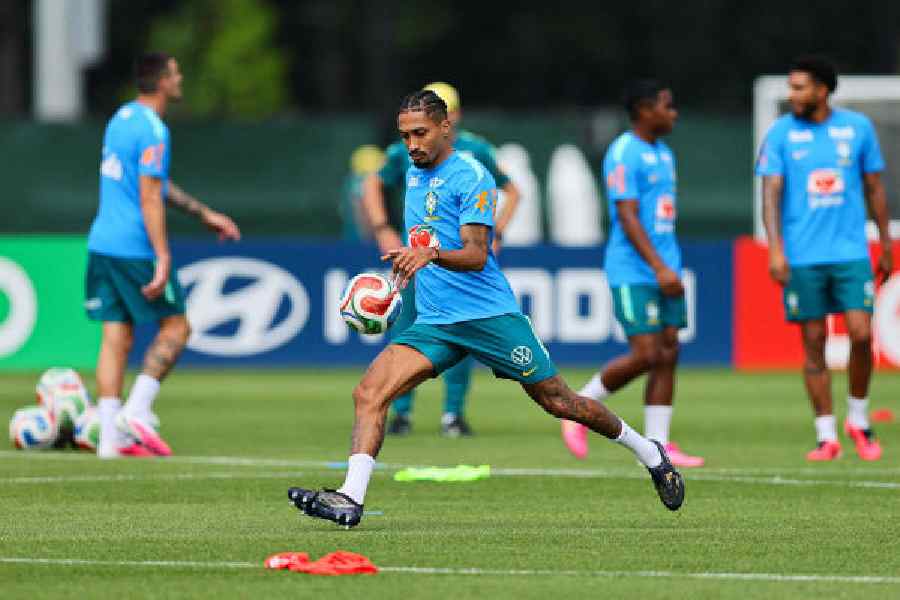
And yet, not all is lost as a new World Cup begins. Brazil still possess resources that most nations can only envy. Vinicius remains one of the most devastating attackers in world football, Raphinha is capable of changing matches in an instant, and a new generation of players is emerging from a talent pipeline that remains unmatched. Above all, the arrival of Ancelotti offers something Brazil have lacked for years — a proven strategist with the stature to command immediate respect. If he can blend Brazil’s natural flair with tactical discipline, the five-time champions may yet surprise their critics.
Brazil’s tragedy is not that talent has disappeared. It is that the country that once dictated football’s future now finds itself trying to rediscover it. The players are still there. What Brazil have been missing are the ideas. Whether Ancelotti can help restore them may be one of the defining stories of this World Cup.