When West Bengal’s post-SIR electoral rolls are published on Saturday, it will not only update a list of over seven crore voters, but also reflect months of political confrontation, courtroom battles, street protests and a climate of anxiety that have reshaped the narrative ahead of the high-stakes Assembly polls.
The February 28 publication, classifying 7.08 crore electors as "approved", "deleted" or "under adjudication", marks a pivotal moment in an exercise that has travelled far beyond bureaucratic correction to become the central flashpoint before the polls.
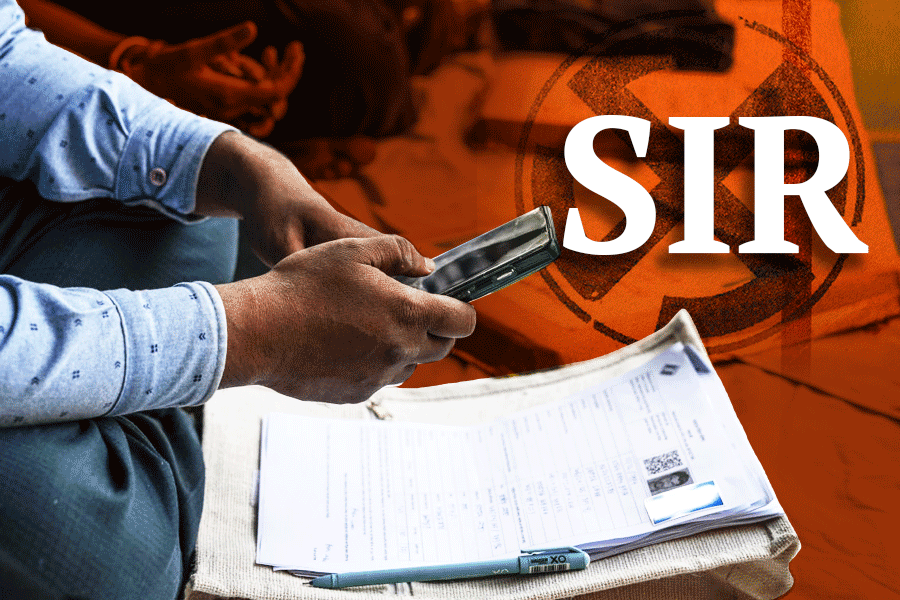
The Special Intensive Revision (SIR), the first statewide exercise since 2002, was conceived by the Election Commission as a statutory clean-up ahead of a major election.
Draft rolls published on December 16 saw the electorate shrink from 7.66 crore to 7.08 crore, with over 58 lakh names deleted due to death, migration, duplication or untraceability.
The second phase covered hearings for 1.67 crore electors - 1.36 crore flagged for "logical discrepancies" and 31 lakh lacking mapping. Around 60 lakh voters remain under adjudication.
The EC maintains the exercise is "routine and necessary to ensure accuracy". But in Bengal’s politically charged environment, numbers have rarely remained just numbers.
The ruling TMC has mounted fierce resistance, branding the SIR as "NRC through the backdoor".
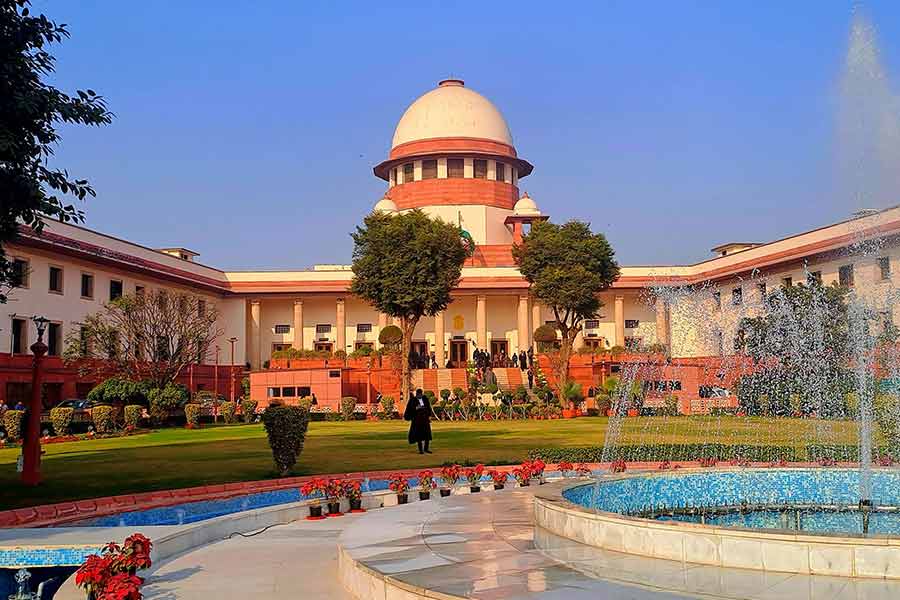
Chief Minister Mamata Banerjee, in an unprecedented move, appeared in the Supreme Court "as a common citizen" seeking that the next Assembly election be conducted on the existing 2025 rolls.
"Lakhs of genuine voters are at risk of exclusion. This is not revision, this is omission," Banerjee said, alleging that genuine names were "surreptitiously removed" under the pretext of discrepancies.
The BJP has backed the revision unequivocally. "A clean and transparent rolls is the foundation of democracy. Infiltrators and duplicate voters cannot decide Bengal's mandate," a senior leader said, arguing that questionable entries had distorted past outcomes.
The CPI(M) and the Congress have opposed the timing and manner of the exercise. "Transparency is welcome, but panic-inducing processes erode trust," CPI(M) leader Sujan Chakraborty said.
The most disturbing layer of the SIR saga has been the alleged deaths linked to fears of disenfranchisement.
The TMC has claimed at least 120 deaths since the beginning of the exercise on November 4, including alleged suicides by voters and booth-level officers during the process.
The BJP has dismissed attempts to link the alleged deaths directly to the revision, accusing the ruling party of "fear-mongering for political mileage".
Yet on the ground, confusion among marginalised groups has been palpable.
Among the most affected are sections of the Matua community, many migrants from Bangladesh decades ago, and Bengali-speaking Muslims in border districts. The insistence on linking entries to 2002 legacy data has triggered uncertainty among those lacking older documentation.
While the BJP has mobilised around the Citizenship (Amendment) Act plank, the TMC has warned of exclusion and identity-based targeting.
In minority-dominated belts, comparisons with NRC exercises elsewhere have amplified apprehensions.
The EC has reiterated that the SIR is not a citizenship determination exercise and that aggrieved voters have avenues for redressal.
Administratively, the scale has been staggering. BLOs tasked with physical verification have faced heavy workload pressures. Allegations of clerical errors, confusion over acceptable documents, and chaotic hearings surfaced across districts. Sporadic protests and tense stand-offs occurred outside some venues, though large-scale violence was avoided.
Political apprehension has also been shaped by developments in Bihar, where a similar intensive revision reportedly saw over 40 lakh deletions.
The BJP cites it as evidence of systemic cleansing; opponents see it as a cautionary template.
"Bengal is not Bihar. The demography here is uniquely sensitive," TMC leader Kunal Ghosh has said.
In an irony not lost on observers, SIR hearings briefly became arenas of convergence.
Senior politicians cutting across party lines and eminent personalities queued up to resolve logical discrepancies. For a brief moment, Bengal’s political class was reduced to what the rolls record them as first-voters.
Crucially, those marked "under adjudication" will not be permitted to vote until cleared and included in supplementary rolls. Names tagged "deleted" will remain visible but ineligible unless reinstated. Supplementary lists will continue in phases.
Saturday's publication may be only a procedural snapshot, but with the Assembly polls two months away, it is set to trigger a sharper TMC-BJP duel, each framing the SIR to consolidate its core vote- one invoking "Bengali identity and the poor", the other pitching "national security and clean rolls." At its core, the SIR has exposed the tightrope between electoral cleansing and social reassurance in a border state where citizenship and identity are deeply intertwined.
As Bengal readies for the categorised rolls, parties will dissect every name with forensic zeal, turning what began as a routine revision into a high-stakes political duel that could shape not just the 2026 electorate, but public trust in the democratic process itself.
Except for the headline, this story has not been edited by The Telegraph Online staff and has been published from a syndicated feed.