
AshaRani Mathur's Nilina's Song: the Life of Naina Devi is different from her previous run of books usually listed under 'reference' or 'travel'. It works well as a chronological account of the subject's life and times, but not as an effort to depict the relationship between an artist and her music. Perhaps that was not the book's intention.
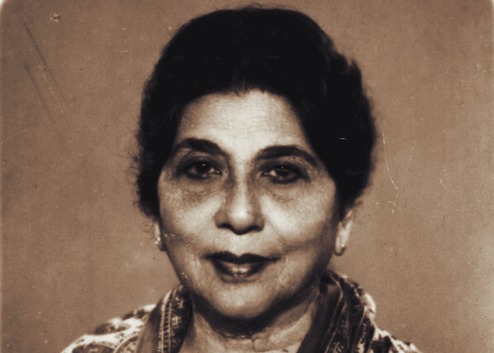
The book feels good in the hand, hardbound and a little heavy. The title is a mouthful. While the subtitle claims to be 'the' life, that is, a definitive biography of the artist and patron, the title has her maiden name, and the portrait on the jacket depicts Nina Ripjit Singh. So, although the brown and sepia jacket is rather uninspiring, it does represent all three stages of her life. Black-and-white photographs help the reader to get a feel of the era.
Although Mathur confesses that her acquaintance with Naina Devi was quite short, she still makes an effort to capture the essence of her seemingly three disparate existences, and justify the ethos that led her to take up a new persona and a new name at different periods of her life. As such, the book is divided into three chronological sections, headed with her successive names and detailing the life led under that name. There is an epilogue with a reminiscence of her by her grandson, and two articles by herself.
The book is fortunately not a eulogy, though there is some glorification. Naina Devi's initial portrayal as "innocent" and "malleable" seems oversimplified. From that perspective, Mathur's portrayal of the limitations of female agency in the given socio-historical context of acknowledging a woman as an artist seems to carry a note of fatalism. The portrayals drift between speculation and explanation, as in, "[e]ventually it made sense for them to accept his proposal", and "she had clearly imbibed many of their traditions".
It is tricky to follow the author's thread as she weaves in and out of historical context, the events of Naina Devi's life, and her take on them. Her style veers between formal and informal, but is not intimidating. The language flows well, though there are a few clunky phrases, such as "the hurt was a deep blow". Biographical incidents are sustained with phrases like "may or may not", "it would seem", "we can only imagine" and so on. At times Mathur is too glib, trying to convince too much, as with "...he sensed that she would never contradict him or go against his wishes". Such instances hint at a too-omnipresent author. The end, with Naina Devi's demise, is abrupt, but nicely rounded off with a small reported reminiscence.
The book has some minor issues — misspelling Sudakshina Tagore's name, inconsistencies like Nellie/Nelly, Purnima/ Poornima. Naina Devi apparently learnt kirtan in Vrindavan, a topic not elaborated on.
From the select bibliography, it seems that most of Mathur's efforts had gone into historical background research. Unsurprisingly, only one book (Heart to Heart: Remembering Nainaji by Vidya Rao) is directly about Naina Devi. But unexpectedly, Mathur omits proper reference and acknowledgement of the interviews, formal or informal, that she has had with Naina Devi's children and disciples. Personally, I consider a mere mention of the primary sources in the Acknowledgements section inadequate, especially when the book both claims to be an authorized biography and affects an academic air.
The book may not hold much interest for a musically-inclined reader looking for an account of Naina Devi's musical feats or her course of learning. Overall, it is a necessary addition to libraries or music-related collections.