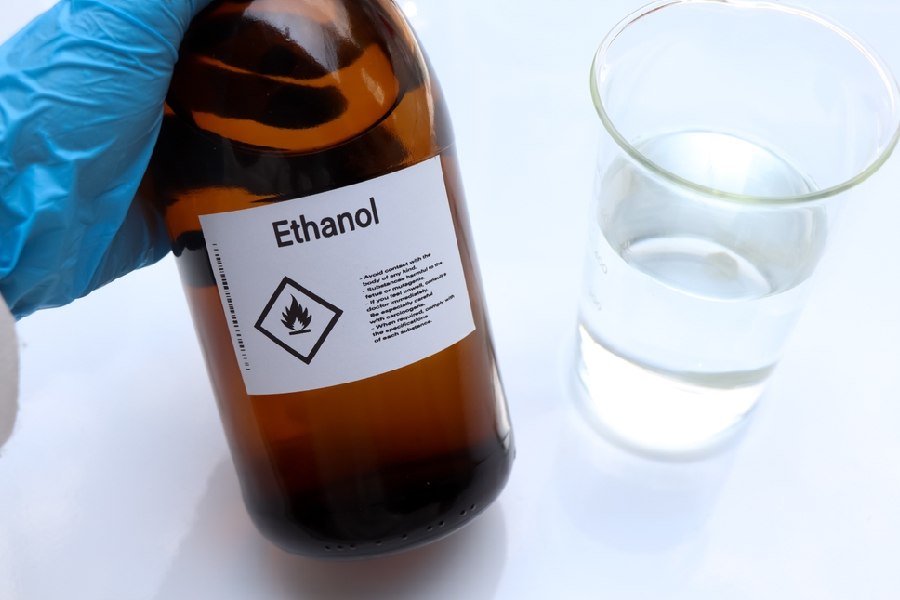
India has cleared the way for blending ethanol and other synthetic hydrocarbons into aviation turbine fuel (ATF), but has not fixed any immediate targets.
The change comes through an amendment to the Aviation Turbine Fuel (Regulation of Marketing) Order, 2001, under the Essential Commodities Act, 1955.
The revised rules expand the definition of ATF to include blends with synthetic or man-made hydrocarbons.

The Ministry of Petroleum and Natural Gas (MoPNG), in a gazette notification, said ATF can now be a mixture of hydrocarbons meeting IS 1571 standards, or blends with synthetic hydrocarbons under IS 17081.
This allows the introduction of newer fuel variants, including sustainable aviation fuel (SAF). ATF in India is largely produced from crude oil. The inclusion of synthetic blends is meant to reduce emissions and dependence on imports.
SAF is made from renewable sources such as waste oils and fats, sugar and cereals, municipal solid waste, agricultural residue, wood, or even captured CO2. These fuels are also referred to as synthetic hydrocarbons.
Countries such as the UK and Japan have already introduced mandates for blending SAF with jet fuel. India has not taken that route yet.
There are, however, phased targets for international aviation. India plans to blend 1 per cent SAF in jet fuel for international flights by 2027, increasing to 2 per cent by 2028 and 5 per cent by 2030.
These targets are aligned with the Carbon Offsetting and Reduction Scheme for International Aviation (CORSIA). No targets have been set for domestic flights so far.
CORSIA, led by the International Civil Aviation Organisation (ICAO), requires airlines to offset CO2 emissions from international flights beyond 2020 levels.
The scheme is voluntary from 2021 to 2026 and becomes mandatory for most countries from 2027 to 2035.
The notification also updates enforcement provisions. Search and seizure rules will now follow the Bharatiya Nagarik Suraksha Sanhita, 2023.
The amendment, titled the Aviation Turbine Fuel (Regulation of Marketing) Amendment Order, 2026, comes into effect from the date it is published in the Official Gazette.