|
|
| Good friend |

Some weeks ago, I wrote a piece on the prime ministers of India, explaining why I rated Manmohan Singh as the best. It drew a lot of criticism from readers. Most of the letters accusing me of being biased were published: the editor was right in doing so. I was expecting some hostile reaction and so I took it in my stride. But some also accused me of being a sycophant. That hurts. I detest sycophants, cronies and name-droppers since they are a curse on Indian society. They try to get close to men and women in power to promote themselves. We call them toadies, chaaploos and face-flatterers.
So let me tell my readers that I have not been anywhere near the prime minister’s house or office, never spoken to him on the phone, never asked him for any favour for myself, my relations or friends. Likewise, I have never called on Sonia or Rahul Gandhi, nor on any chief minister, minister, governor or senior official. The charge against me of being a sycophant is provably false and malicious. It would be very foolish of anyone in his late 90s to harbour worldly ambitions. I am no fool.
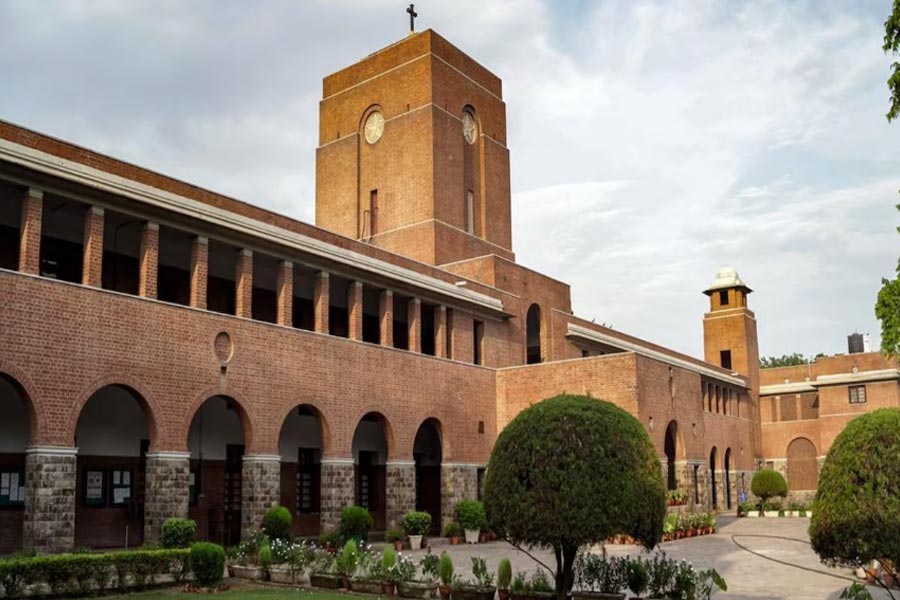
However, I admit that I enjoy the prevailing impression that I am close to the prime minister’s family. For this I am grateful to my one and only grandchild, Naina Dayal. She was a favourite pupil of the prime minister’s daughter, Professor Upinder Tankha, during her student years in St Stephen’s College, where she is now a teacher. From her association with Upinder Tankha, Naina got to know her mother, Gursharan Kaur. So I got to know the prime minister’s wife. From the word go, she and I hit it off. Though she rued the fact that I was an agnostic, she was happy that at the same time, I have spent so many years writing the history of the Sikhs and translating the Gurbani. She came to my book launches and presided over three. She proved to be as good a crowd-puller as any star from Bollywood. She will be presiding over the launch of my last novel, Sunset Club, on November 30 in Hotel Le Méridien.
At times, she offloads some flowers given to her by people who call on the prime minister. So periodically, my granddaughter, Naina, my neighbour, Reeta Devi Varma, and I receive a lot of them. I make it a point to keep them on a table in the centre of my sitting room so that my visitors can see them and ask: “From where did you get all these lilies, roses and carnations?” And I reply casually, “See the card attached to the bouquet. It reads: “From the PM’s home.” So the rumour spreads. It is a childish thing to do; I can be very childish at times.
Wild fruits
Chiranjit Parmar was born in Mandi in Himachal Pradesh in 1939. His career was determined while he was still at his nursery level in school. On his way to school and back, he would stray from the road into the jungle to look for wild berries and fruits which were edible but not available in the baazar. So he decided to become a horticulturalist.
After finishing school, he joined the Punjab Agricultural University and got his M.Sc degree. Then he went to a university in Udaipur and got his doctorate. For a while, he worked in his own state university and then in the universities of Liberia (West Africa), Sweden and Japan. He took voluntary retirement and joined an Indo-Italian company which introduced the Himalayan yew, whose leaves are believed to combat cancer.
Parmar is a widely travelled horticulturalist and has been to 30 countries. In 1982, he published a compendium of his research entitled Wild Fruits of the Sub-Himalayan Region, in which he dealt with 26 varieties of edible fruits growing in the wilderness of the mountains. He has recently produced a CD, which he presented to me. So I learnt something about a subject of which I knew nothing. I feel enriched.
Blood ties
My friend, who believes in avoiding doctors, nursing homes and hospitals at all costs, had to have emergency treatment for diabetes. He lost weight and became very weak, but still protesting the whole idea of prolonged treatment, he muttered: “When god gave man blood sugar, there must have been a reason for it being there.”
“Oh, there is a reason,” said his doctor. “God gave you diabetes so that I could send my children to college.”