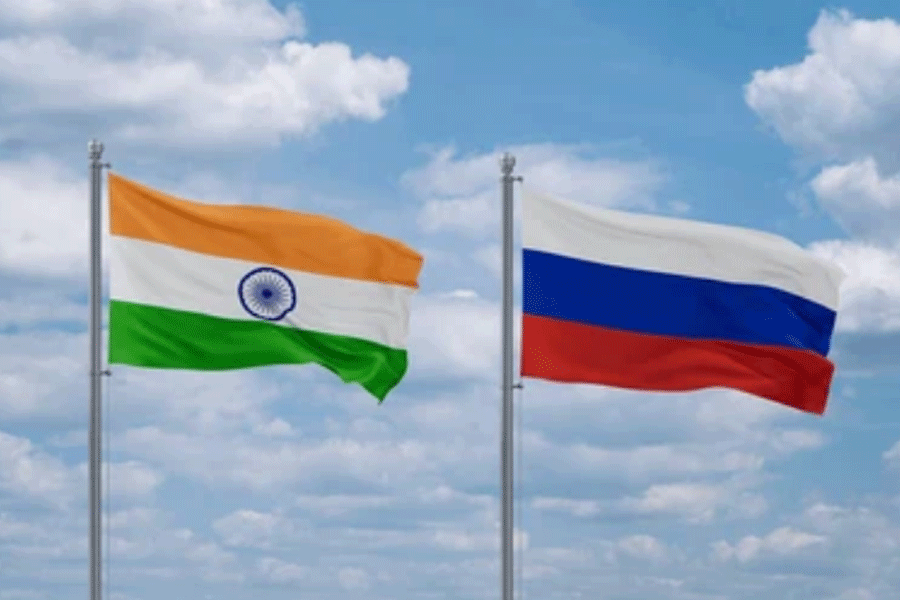
India and Russia are in advanced talks to sign a preliminary agreement on critical minerals covering exploration, processing and technological collaboration, two sources familiar with the matter said.
The deal is expected to focus on lithium and rare earths, with the two governments also set to facilitate corporate investments, the sources said, declining to be identified as the deliberations were not public.
The agreement could be signed within two months, they added.
"We have shared a draft of the proposed agreement with our Russian counterparts," one of the sources said.
The Ministry of Mines, which is leading discussions with Russia, did not respond to a Reuters email seeking comment. Russia's Ministry of Industry and Trade and the office of First Deputy Prime Minister Denis Manturov also did not respond to requests for comment.
India is keen to cut its dependence on China, which dominates global supplies of several key minerals and has advanced mining and processing technology, and secure new overseas supplies to support its energy transition and infrastructure development.
New Delhi has signed critical minerals agreements with Argentina, Australia and Japan, and is in talks with Peru and Chile on broader bilateral agreements that also include critical minerals.
However, India has had limited success in securing overseas critical minerals assets and has so far signed only a single lithium exploration and mining project agreement, covering five blocks in Argentina in 2024.
India could also revisit Russian state nuclear corporation Rosatom's lithium exploration project in Mali if the political situation in the West African nation stabilised, one of the sources said. Earlier this year, Reuters reported that India withdrew from the Mali lithium project because of security concerns.
New Delhi has signed a series of agreements this year with countries including Germany, Brazil and Canada to strengthen access to technology and partnerships. In 2023, the government identified more than 20 minerals, including lithium, as critical for its energy transition and rising industrial and infrastructure demand.