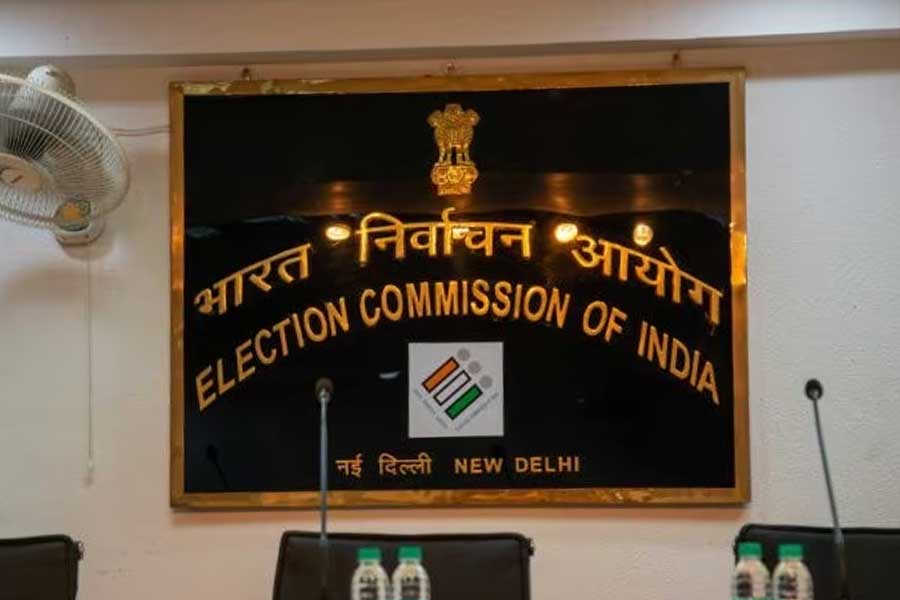
The world seems resigned to elections in India always turning out to be a carnival. And carnivals are supposed to be gleefully lawless affairs. So what can be more fun than inventively and colourfully defacing other people’s property, especially if that can be combined with propaganda and muscle-flexing? Indian political graffiti and posters turn all this into a not-so-fine art, and Bengal could easily claim to lead the way in this — as with so many other forms of questionable creativity. With assembly elections coming up in a few states, the Election Commission has once again banned poll graffiti and posters, even when the house-owner has given permission. State or local laws, or else the EC’s vigilance, will be used to implement the ban. This protects the rights of private property on which every modern democracy must be founded. But, in deciding to overlook the validity of the house-owner’s permission, the EC has also acknowledged another important aspect of Indian political life: how the abuse of power by political parties shadows the everyday lives of ordinary citizens.
This will also have a special resonance in West Bengal. Before the 2006 elections in the state, the EC had strictly enforced the existing law against the defacement of private and public property. But one of the first things that Buddhadeb Bhattacharjee did to celebrate his, and his party’s, triumph in the elections was to change the law to make room for posters and graffiti (“non-commercial advertisement”) that was put up and written with the permission of the property-owner. Mr Bhattacharjee could not have been unaware of how unofficial forms of power invested in both the police and party-cadre (of all hues) made it impossible for property-owners to withhold permission in such situations. For many who derive profit and delight from what they see as popular forms of cultural expression, a world without posters and graffiti would certainly appear less interestingly human. But if one sees such activity as part of a larger spectrum of street activism that repeatedly disrupts the texture of everyday life in Bengal, then the point of endorsing the rule of law in this matter becomes clearer. Modern democracies are supposed to be made of diverse and vibrant cultures, but aggressive vandalism cannot be allowed to become an acceptable part of such ways of life.