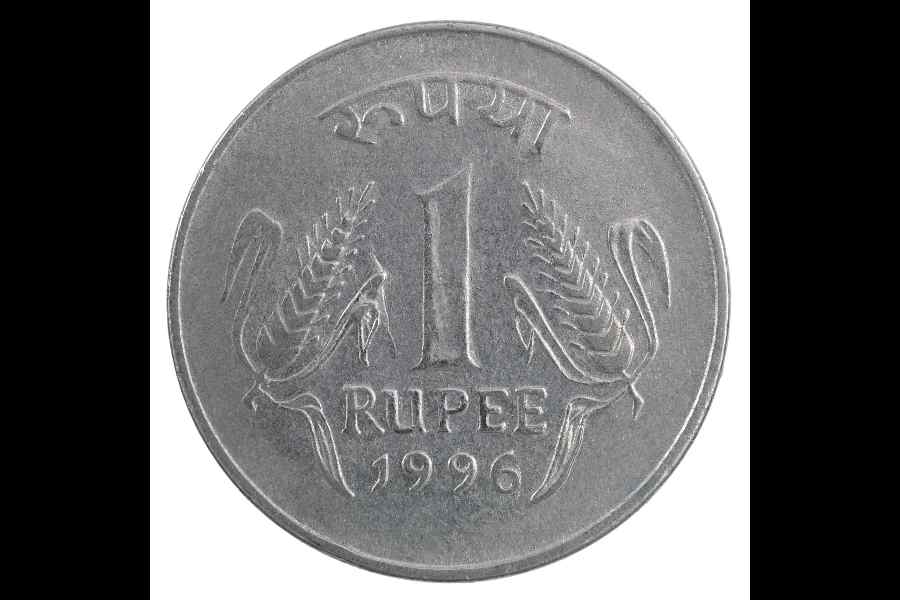
The continued dominance of the one rupee coin in India offers lessons for policymakers eager to declare the arrival of a cashless economy. The Reserve Bank of India’s latest annual report shows that the one rupee coin accounts for nearly two-fifths of all coins in circulation despite the extraordinary growth of UPI and other digital payment platforms. This is neither accidental nor irrational; it reflects the practical demands of an economy where exact change remains essential for millions of transactions as cash continues to function as the most accessible medium of exchange. Across much of the world, governments are withdrawing low-value coins because minting costs exceed their face value — it takes Rs 1.11 to mint a one rupee coin — and digital payments have reduced the need for physical currency. Canada and the United States of America have stopped minting the penny, several Eurozone countries have dispensed with one and two cent coins, while Australia, New Zealand and others have withdrawn their smallest denominations. India presents a different, intriguing reality. A growing digital economy coexists with a vast informal sector, uneven internet access, patchy digital infrastructure and varied levels of financial literacy. Cash thus remains an economic necessity as much as a cultural preference. Physical currency carries familiarity, certainty and universal acceptance in ways that digital systems do not.
The continued popularity of cash has wider economic consequences. Currency imposes costs through printing, minting, transportation and security, while large cash transactions reduce transparency and slow down the formalisation of economic activity. At the same time, cash provides resilience during network failures, protects economic participation where digital access is limited and supports livelihoods in sectors that remain outside the reach of formal finance. The objective, therefore, should not be the premature retreat of cash. It should be the steady removal of the barriers that make cash indispensable. Reliable digital infrastructure, affordable smartphones, universal internet connectivity, stronger cybersecurity, financial literacy and broader digital inclusion must become public priorities. The popularity of the one rupee coin demonstrates that the transition to a digital economy depends less on technology and more on equal access to it. India should retain its smallest denomination for as long as public demand justifies it while ensuring that future dependence on cash declines because digital alternatives become genuinely accessible, trusted and efficient for every citizen.