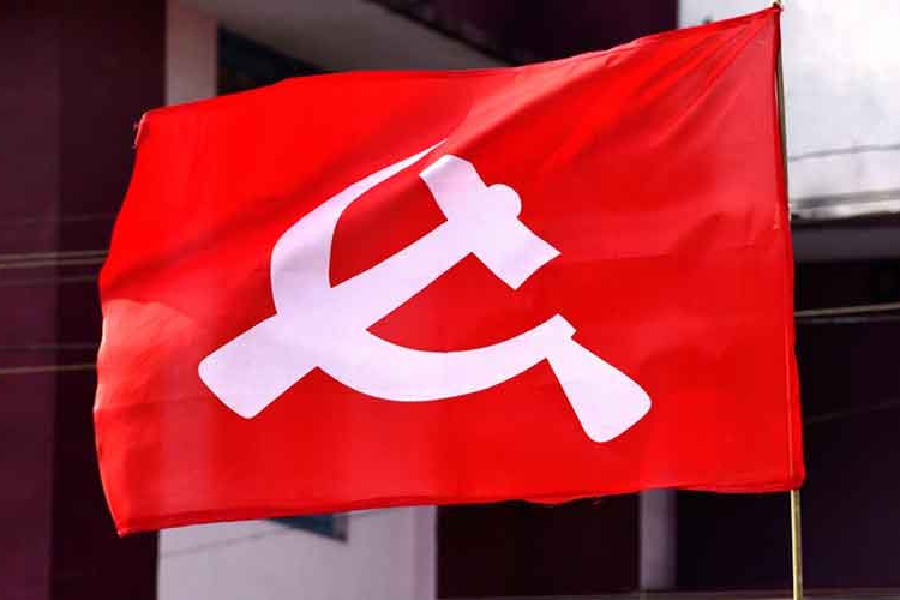
For the first time in seven decades, no major Left party governs any Indian state. This is not merely an electoral shift. For anyone who still believes that labour dignity, public welfare, decentralisation, and resistance to capital accumulation matter, it feels like the exhaustion of a political imagination itself.
Yet the decline of the Left cannot be explained only through organisational weakness, poor leadership, or ascendant authoritarian nationalism. The deeper question is why the Left has stopped resonating emotionally with people.
Part of the problem lies in how many progressive traditions imagined the human being. If people receive enough information, rational critique, and scientific education, they, it is assumed, will become secular, democratic, egalitarian, and environmentally conscious. But politics operates not only through rationality but also through fear, humiliation, aspiration, loneliness, resentment, and the search for meaning. When people fail to respond to progressive politics, fingers are pointed at ‘false consciousness’ — the masses are manipulated or are irrational.
The problem with dismissing people as duped is that one eventually stops listening to them. Progressive politics then becomes hostage to an enlightened minority attempting to educate society. This also raises a more uncomfortable question: under what conditions does rationality itself become possible? Rational discourse often depends on economic security, educational access, and psychological stability. But caste hierarchy, precarity, and unequal access to education have denied those conditions to large sections of society.
This is not an argument against rationality or secularism. It is an argument against treating them as sufficient by themselves. For millions living with uncertainty and humiliation, religion offers emotional anchoring, symbolic dignity, moral structure, and a sense of community. Rational critique alone cannot replace these functions. A politics that offers only critique, without addressing the emotional hunger beneath it, will repeatedly lose to a politics that offers belonging and certainty.
The crisis runs deeper because the Left often failed to question the developmental imagination itself. It critiqued inequality and privatisation but largely accepted industrial growth, technological acceleration, upward mobility, and consumer aspiration as unquestioned goods.
Success increasingly means exit — exit from dependence, negotiation, collective obligation, and shared vulnerability. Consumer modernity undoubtedly provides freedoms that older, caste-ridden and patriarchal structures denied. This same developmental order also weakens the foundations of collective political life. Public systems decay while private insulation becomes aspirational.
This partly explains why emotionally-charged majoritarian politics often succeeds where rational, democratic politics struggles. Liberal-progressive politics often offers critique, nuance, and policy complexity — all intellectually necessary but emotionally less mobilising. M.K. Gandhi and Rabindranath Tagore perhaps understood this more deeply than many later progressive formations. Whatever their limitations, they recognised that politics cannot survive through rational critique alone. Songs, symbols, rituals, poetry, and shared ethical practices are not decorative additions to politics; they are attempts to cultivate emotional worlds capable of sustaining collective life.
The crisis of the Left, therefore, is not merely electoral. It is also a crisis of modernity itself. Rationality alone cannot sustain democratic life. Information alone cannot produce ethical transformation. Human beings also require meaning, recognition, dignity, and spaces where genuine dialogue remains possible. Democratic life, if it survives at all, will survive only through the cultivation of spaces where people can still listen, reflect, disagree, and resist turning one another into enemies.
Soumyajit Bhar is Senior Assistant Professor at the School of Liberal Studies, BML Munjal University