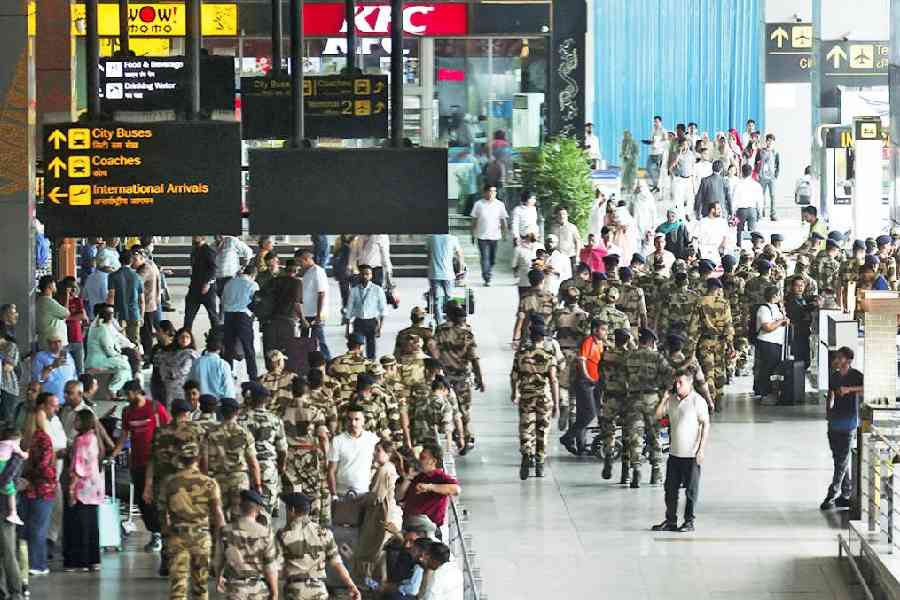
The Central Industrial Security Force (CISF) has flagged concerns over the lack of foolproof security at several airports in the country, most of which were developed under the UDAN scheme launched by the Narendra Modi government in 2016, sources in the paramilitary force said.
“During enquiry, we have found lacunae in the existing security mechanism in several airports which need to be addressed on an urgent basis. We have prepared a report flagging the absence of foolproof security at several airports,” a CISF official told The Telegraph.
The CISF currently handles the security of around 70 airports. Under the UDAN scheme, the number of operational airports has increased from 74 in 2014 to around 165.
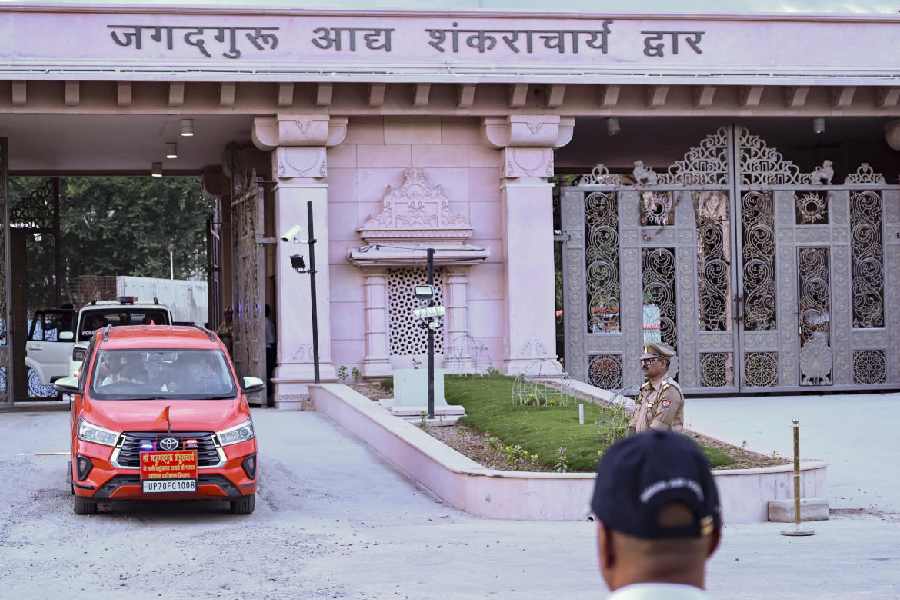
Local police or other central paramilitary forces provide security to the remaining airports, which include Gorakhpur, Mysore, Jabalpur, Ludhiana, Jamshedpur, Cooch Behar and Durgapur. Several of these airports have been classified “sensitive”.
According to the CISF official, the report has recommended standardised security protocols at these airports, including controlled entry and exit using access cards, biometric credentials and personal identification numbers for different security areas of the airport complex.
The protocol followed at all major airports includes metal detector door frames, frisking and X-ray scanners to check baggage.
The CISF has expressed willingness to handle the security of airports beyond the 70 it is responsible for in light of heightened security risks.
Sources in the security establishment have also said that smaller airports were vulnerable to terror attacks.
“Apart from building new airports, we need better security mechanisms in the light of heightened threat perception. There are several security vulnerabilities at the smaller airports, and terrorists can exploit the gaps to target aircraft taking off from there,” said an Intelligence Bureau official.
The UDAN scheme was launched in October 2016 to make air travel affordable and strengthen connectivity to tier-II and tier-III cities. The scheme built dozens of regional airports, but many lie idle after falling victim to poor planning, low demand and weak connectivity.
Around 15 airports developed under the UDAN scheme have temporarily ceased commercial operations following low passenger demand, lack of airline interest and technical and operational challenges, raising concerns about the long-term sustainability of regional aviation.
Of these 15 airports, seven are in Uttar Pradesh, two in Punjab, and one each in Bengal, Sikkim, Assam, Gujarat, Chhattisgarh and Madhya Pradesh.
During a recent internal security review meeting, CISF officials found that many airports were vulnerable to terror attacks as the local police responsible for securing the parking area and the approach road were not fully equipped to handle such threats, the CISF official said.
“Local police don’t deploy enough personnel to guard the area around airports and they are also not well-trained to do the job. There are several lacunae in the security apparatus outside airports which need immediate attention,” the official said.
Sources said security officials attached to the Union home ministry had earlier suggested that the security cover of the functional airports should be handed over to the CISF. “This was recommended in 2021 after conducting a security audit of all airports in the country, considering the heightened threat,” a security official said.
Airport security was handed over to the CISF after an Indian Airlines flight was hijacked by Jaish-e-Mohammed terrorists in Kathmandu in December 1999, which resulted in Masood Azhar’s release in Kandahar in exchange for Indian hostages.
Before the induction of the CISF, the state police handled the job.