What is the status of pedestrians in India? Irrespective of the economic determinant called purchasing power, pedestrians experience a second-rate citizenship since walking has practically been reduced to an instrumental act: walking to one’s destination or walking desperately to meet one’s fitness regime.
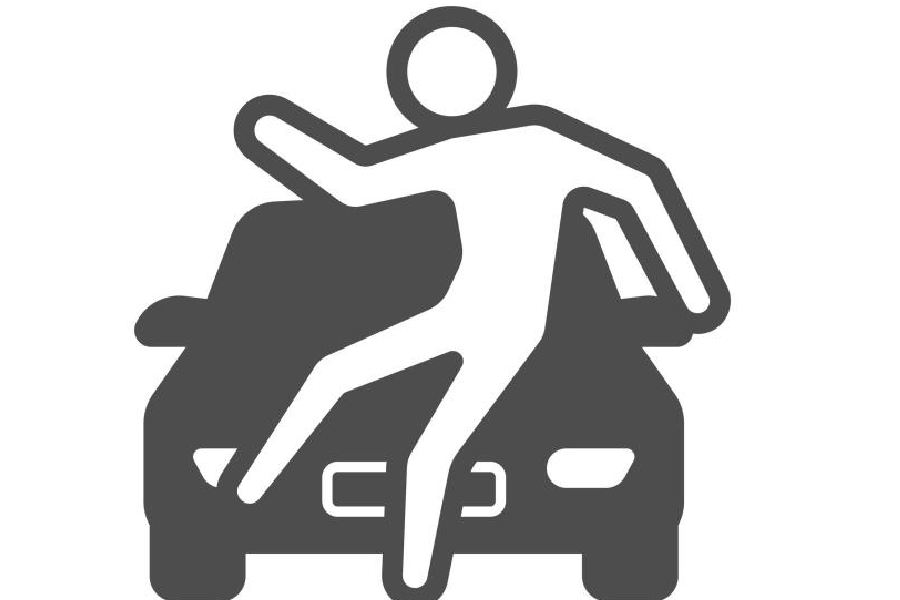
What makes the pursuit challenging, even risky, is the fact that pedestrians have to navigate disabling infrastructure as well as unregulated expansion of concrete urbanity. There are reports of rising rates of fatalities. The Delhi traffic police’s data, for instance, have underlined a steady rise in pedestrian deaths due to public and private transportation on the road. Calcutta Police records have likewise informed about the exceeding number of fatal accidents of pedestrians on the roads. This is the situation not just in India’s Tier I cities: small towns are not an exception.
An uncanny but revealing paradox unfolded recently. A consumerist celebration broke out when the Central government tweaked GST rates that led to a drop in prices of cars in some segments during the festive season of 2025. The Society for Indian Automobile Manufacturers, comprising top-notch automobile companies, noted a whopping rise in manufacturing and sales of cars in the financial year of 2025. This despite the fact that parking spaces are inadequate in most housing societies. In fact, pedestrian pathways inside residential areas have been swallowed up by cars.
The SIAM president, Shailesh Chandra, who is also the CEO of Tata Motors, has also welcomed the positive support for the automobile sector in this year’s budget. The Union budget has envisioned a capital expenditure target of Rs 12.2 lakh crore for the financial year, 2026-27, that will create a strong impetus for demand creation and industrial activity. Besides, the recent trade agreement between India and the European Union would make luxury cars available in India. The pedestrian, however, has been left wondering whether the budget has anything pertaining to their safety.
Consumerism, arguably, has cornered the pedestrian. This is an irony since human civilisation has witnessed several exemplars of the tradition of walking.
After the great Mahabharata war, the Pandavas undertook a journey to the Himalayas for penance and renunciation. They walked, with only Yudhishthira completing the journey. Prophets in the Islamic tradition were also glorious walkers. The 9th-century scholar, Imam al-Tirmidhi, composed a unique treatise, Ash-Shamail al Muhammadiyya, also known as Shama’il al-Tirmidhi. The treatise described the gait and the mannerisms of Prophet Mohammad (peace be upon him). The most striking part in the discussion concerned his agile walks. The Jataka stories offer riveting glimpses of the ever-wandering, awakened monk, the Buddha. Along with his disciples as well as alone, the Bodhisatva walked across sovereignties.
Such civilisational walks continued in the modern times too. Mahatma Gandhi emerged as an iconic addition to this tradition, with the Mahatma walking miles to mobilise human strength in pursuit of swaraj.
Should we then forget the existence of the pedestrian in a consumerist India? The bigger question perhaps is this: is sustainable development not related to the intangible heritage inherent in the pedestrians’ pursuits?
Dev Nath Pathak, Associate Dean, Faculty of Social Sciences, South Asian University, New Delhi