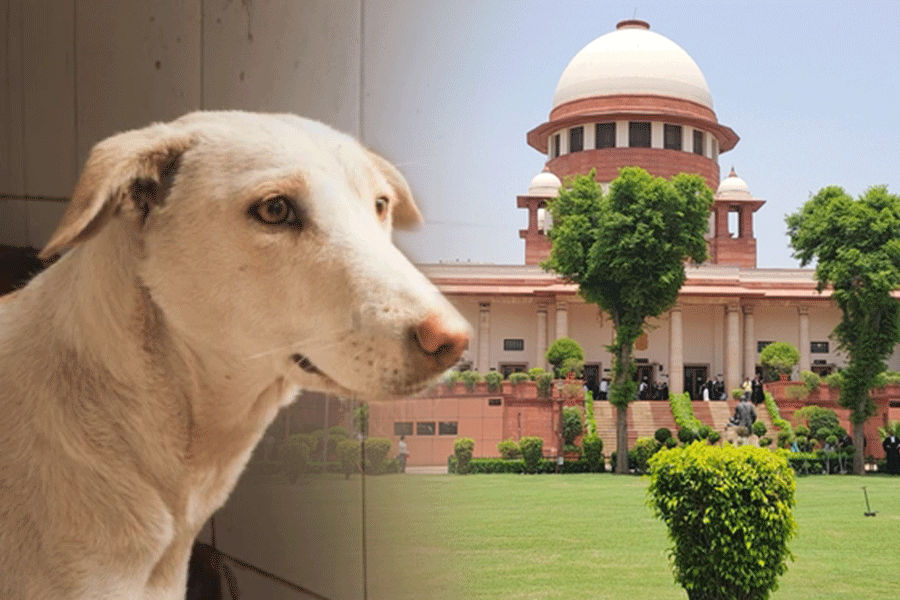
The reservation system is sometimes misused. Sitting on a case of recruitment in Rajasthan and the Rajasthan High Court’s ruling on it, the Supreme Court made some clarificatory remarks that would make such misuse impossible. The most significant among these would be the highest court’s interpretation of the ‘general’ category. The Supreme Court said that the general category was not a reserved quota for a particular community but an open category where any candidate could be included based on merit, irrespective of caste or class. That is ‘general’ is not a category like the scheduled caste and scheduled tribes quota, or the quotas for other backward classes and economically weaker sections. The Supreme Court’s clarification would put paid to the covert tendency to treat the ‘general’, ‘open’ or unreserved category as a quota for unreserved candidates only. The court made clear that this was an arena where merit was the only deciding factor, saying that if an SC/ST, OBC or EWS candidate acquired the required marks or exceeded the cut-off marks, the candidate should be included in the open category. That a deserving candidate be appointed in a general or unreserved post was not to be considered a double benefit simply because their group had been granted a quota. The open classification was meant to be exactly that — open to all.
This is a significant ruling by the Supreme Court to prevent making the ‘general’ category an exclusive one. It follows the important Indra Sawhney judgment of 1992 by pointing to the general category as an area for the deserving. Excluding meritorious candidates from it on the excuse that they have their quotas would violate Articles 14 and 16 of the Constitution, which guarantee equality and equal opportunity in public employment. In other words, the ruling prevents authorities from treating quotas like cages. The Supreme Court’s clarification exemplifies the finest form of affirmative action. When followed, it would also be a step towards solving the issue
of poor representation of certain castes and communities in the higher posts of public organisations. That the problem of proportionate representation has persisted with perhaps only a little improvement would suggest that the reservations system has not always been working with the highest principles in mind. The Supreme Court’s remarks act as a reminder of these principles, emphasising inclusiveness and the overarching importance of merit.