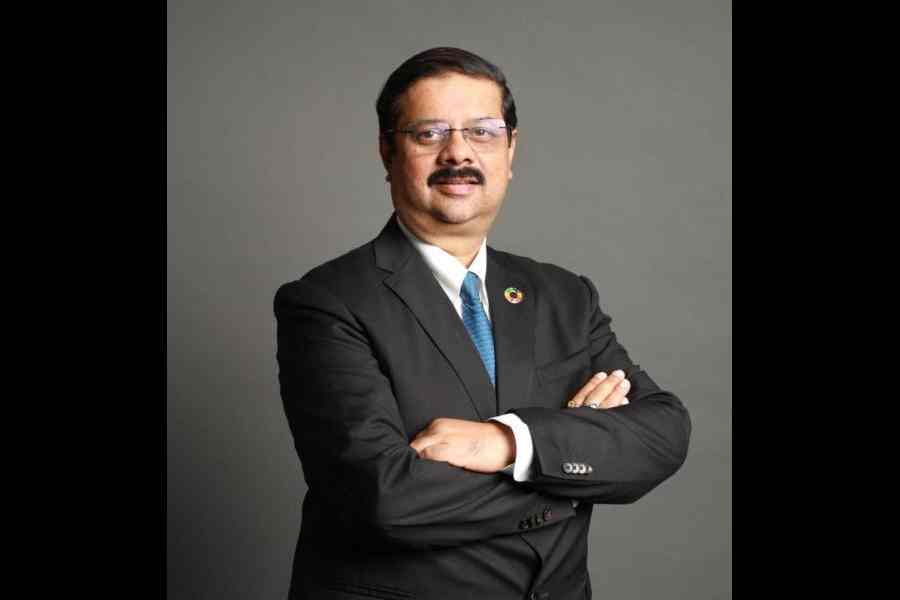
Tata Steel posted a nine-fold jump in PAT in Q3FY26 despite an indifferent performance of the European business. The company’s ED and CFO, Koushik Chatterjee,
however, tells Sambit Saha of The Telegraph that EU steel will see better profitability with CBAM coming in, even as the wait for policy support from the UK lingers on. An edited excerpt.
The third quarter witnessed the lowest domestic steel prices in five years before rebounding in December. Given the safeguard duty in place, what is your expectation for Q4 and the rest of the year?
The pricing environment has remained challenging for most of the current financial year and over the last couple of years, and yes, the December quarter was one of the weakest in recent times. The prices started to increase in late December and are now in a recovery mode due to multiple factors, including the safeguard sentiments, low inventory levels, demand stability and expectation of growth momentum.
Given the price destruction in the last couple of years, there is significant headroom for a price increase. Despite such challenging business conditions, Tata Steel has demonstrated a very strong quarter on a consolidated basis with a 15 per cent EBIDTA margin, ₹2,730 crore PAT and operating cash flows of ₹10,345 crore.
The UK performance continues to be a drag despite shutting down the BF operation. Is there a respite without the UK government imposing a quota on tariff-free steel imports?
I would put it differently. In the UK, we have not just closed the upstream, including the blast furnaces; there has been a rewiring of the cost structure, including almost a 50 per cent reduction of fixed costs that has taken out almost £500 million, and we run the operations very frugally.
The core issue is that the trade policy framework in the UK has to re-adjust to the new realities in a domestic market that has shrunk in recent years. The EU has now made some structural moves as it recognises the importance of steel sovereignty in this uncertain world. The UK government, which controls some parts of the UK steel industry itself, is losing money; it is well aware of the urgency. We are expecting the policy changes not just on quotas but also alignment with the EU regulations, including reciprocity for seamless trade.
With CBAM in place, how do you see the European steel sector changing structurally going forward?
The economics of the European steel industry are getting structurally reset with the introduction of CBAM and the proposed EU Steel Tariff Plan 2.0. The EU has strategically refocused its attention on a foundational industry like steel, given the priorities on security and defence, manufacturing and employment. Implemented from January 1, CBAM is a carbon actualisation cost that equalises the carbon tax of the domestic industry with the carbon embedded imports.
The Steel Plan is a safeguard against unfairly priced imports by cutting the quotas. With both these implemented, we should see a structural and material upward repricing of steel going forward. Like the steel companies in the US, which enjoy a headroom in prices and hence profitability, we will see a better profitability profile of the European steel industry in the future.
In India, is Tata Steel pivoting towards a value-added business-led growth over volume expansion?
It’s an integrated strategy and not a binary approach. We drive a value-focused growth, designed to extend the volume growth to downstream products and also to solutions and services. Tata Steel has been in value-added portfolio, be it in packaging, steel, tubes, wires, cold rolled products, coated products and steel service centres. Our expanded footprint in Kalinganagar has state-of-the-art cold rolling and galvanising facilities, added a combi-mill for high-end automotive long products and has recently consolidated the colour coating business for the construction segment, which we intend to grow further.
We are now investing on growing the value-added downstream portfolio with latest technology, for example, in tinplate and wires, and also bringing new-to-the-market products like HR pickled and galvanised line (HRPGL). We will continue to increase the downstream portfolio, grow in services and solutions businesses and other downstream to continuously enrich the product basket.
Is Tata Steel planning to build an electric-grade steel plant in Jamshedpur? Will it seek a global alliance for the same?
Like many other new product options, this is also under consideration.
In your view, how do you see the volatility due to geopolitical upheaval and especially the impact of the Chinese economy on the global steel industry?
The global geopolitical dynamics are certainly increasing the volatility for all businesses, especially those that are dollar-denominated or dependent on global supply chains. This will remain the new norm, and managing volatility and building cost resilience have become critical.
On your China question, clearly China is trying to implement its anti-involution strategy to rebalance the supply side based on demand dynamics to ensure domestic price stability while freeing up export levers. We saw around 120 million tonnes of steel exported in 2025, which is an all-time high.
We estimate China’s steel production was 960 mt in 2025, which is less by 1.5 per cent year-on-year, translating to steel exports of around 12 per cent of China’s steel production. Production in the next couple of years in China will be at similar levels to 2025, and its steel exports will remain high at 100 mt. So, the rest of the global steel industry has to calibrate its competitive levers.