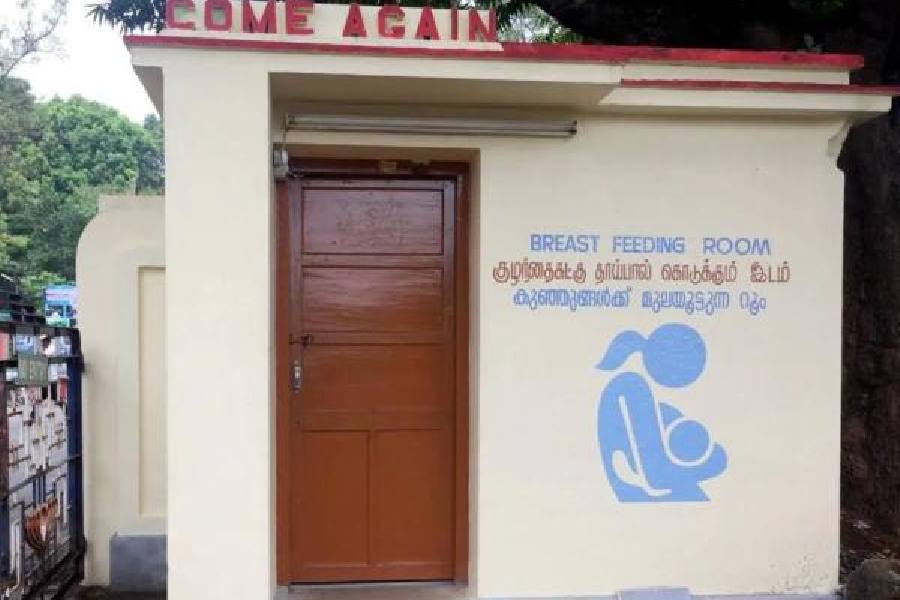
Public spaces in India are often described as being inclusive. But women with infants face a peculiar exclusion. A safe, clean, and private space for breastfeeding remains elusive in the design of India's public infrastructure.
In February 2025, the Supreme Court addressed this issue in Maatr Sparsh An Initiative by Avyaan Foundation versus Union of India. The case arose from a public interest petition seeking the creation of breastfeeding rooms, childcare spaces, and crèche facilities in public places.
The court did not treat breastfeeding as a matter of convenience. It located it firmly within the framework of constitutional rights. Breastfeeding, the court observed, is an integral part of a child’s right to life under Article 21. Equally, the court deemed that a mother’s dignity, privacy, and bodily autonomy are protected constitutional values.
At first glance, the judgment appears progressive. It recognises a long-ignored reality and affirms it in constitutional terms. But the real question is not what the court said: it is what followed.
One year has passed since the judgment. Yet, breastfeeding rooms remain largely absent in most public spaces. The gap between judicial recognition and administrative action remains evident. This underscores the fact that without binding, enforceable directions, even well-intentioned judgments risk being reduced to symbolic gestures. Instead of issuing strict, binding directions, the court had relied on the Centre's advisory that recommends installing sanitary pad vending machines in public institutions, creating dedicated breastfeeding and childcare spaces, and ensuring crèche facilities in establishments employing 50 or more women. It also calls for similar arrangements in bus stands, schools, universities, and other high-footfall locations.
An advisory is not an order. It signals intent, but it does not impose obligation. In administrative functioning, this distinction is decisive. Advisories can be ignored without consequence. Binding directions, particularly those backed by the court’s powers under Article 142, create accountability and compel compliance. The absence of such enforceable directions is the most visible limitation of this judgment.
This gap becomes sharper when one considers the realities of implementation. In metropolitan cities, some compliance may emerge over time. But beyond urban centres, the picture remains uncertain. At the district and the taluka levels, public buildings continue to struggle with basic amenities such as clean toilets and drinking water. Breastfeeding rooms are unlikely to feature high on administrative priorities in these sites.
Yet, this is not a marginal issue. Global estimates indicate that improved breastfeeding practices can prevent approximately 820,000 child deaths every year.
India's public spaces are no longer male-dominated. Yet their design continues to reflect outdated assumptions.
This brings us to the central issue: accountability. If breastfeeding rooms are not created, who is responsible? Which authority must act? What timelines apply?
There is also a social dimension that cannot be ignored. Breastfeeding, despite being natural and essential, continues to be viewed with discomfort in public. This perception influences both behaviour and policy. Changing this requires public messaging, institutional sensitivity, and cultural acceptance.
The need now is clear: stricter, binding and enforceable guidelines must replace advisory suggestions to fulfil the judgment's promise.