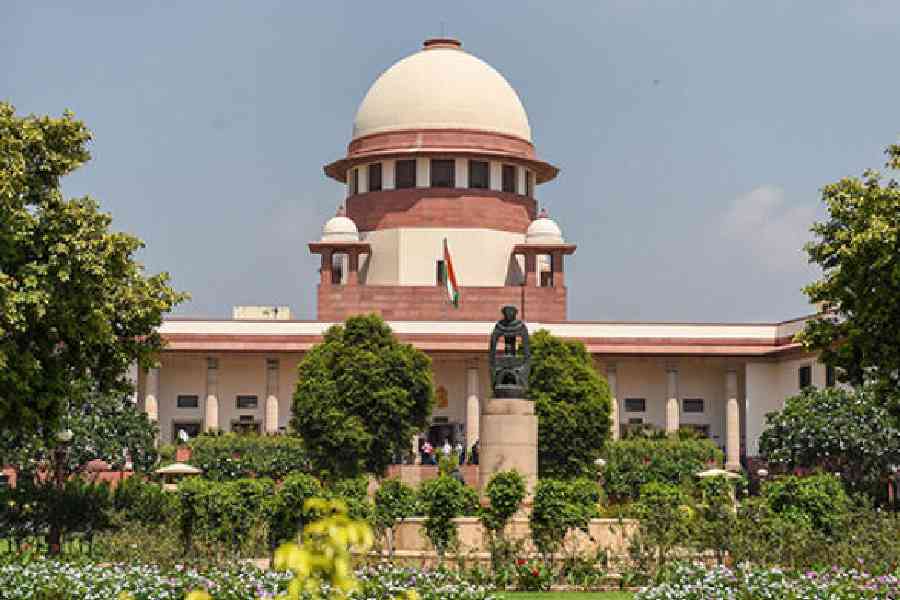
A spade, for most people, is a spade. But the dictionary indulges in the circumlocution of calling it a tool used for digging. Circumlocutions are necessary, as long as they do not entirely obscure the truth. When an apex court judge declares getting her two daughters married a “liability” on the official website of the court, it is difficult to decide whether to laud, or wince at, her directness. She is being absolute in her way of upholding transparency, and this is rather startling. After all, the dictionary does define liability as a “financial obligation”. If Gyan Sudha Misra regards getting her daughters married as a binding duty that would cost her a significant amount of money, then it might look squeamish to deny the logic of her declaration. (She also lists a loan for a daughter’s education and having to build a house after retirement as other liabilities.) Yet, clubbing together daughters, loan and house in such a context also sounds precisely like the sort of commodification from which the Supreme Court, more than any other public institution, has been trying to save marriageable young women in India. Besides, given the eminently public nature of a Supreme Court judge’s professional identity, it is expected that she would take special care about what sort of language she uses in public, for one of a judge’s roles in society is to set an impeccable example to ordinary citizens.
It is important, though, to reflect on this instance from a point of view that is not politically correct in an unthinking way. For many people, getting a daughter or son married is a material reality that would directly affect their financial status. So, even if a parent does not call this obligation a ‘liability’, she might quite understandably call it an ‘expenditure’ and not be held up for seeming to imply that her female children are a burden. In this sense, how much, say, a man expects to spend on his own wedding might be listed — in a fit of exemplary conscientiousness — as an expenditure, and therefore a liability, without the whole thing sounding objectionable. To not confront, or even to wish away, a persisting reality by rhetorically avoiding direct verbal references to it, or by thinking up ingenious circumlocutions for it, is another kind of wishful thinking. Sometimes — and for some, rather unflinching, people — nothing other than a spade would do for a real bit of digging.