Equally regressive
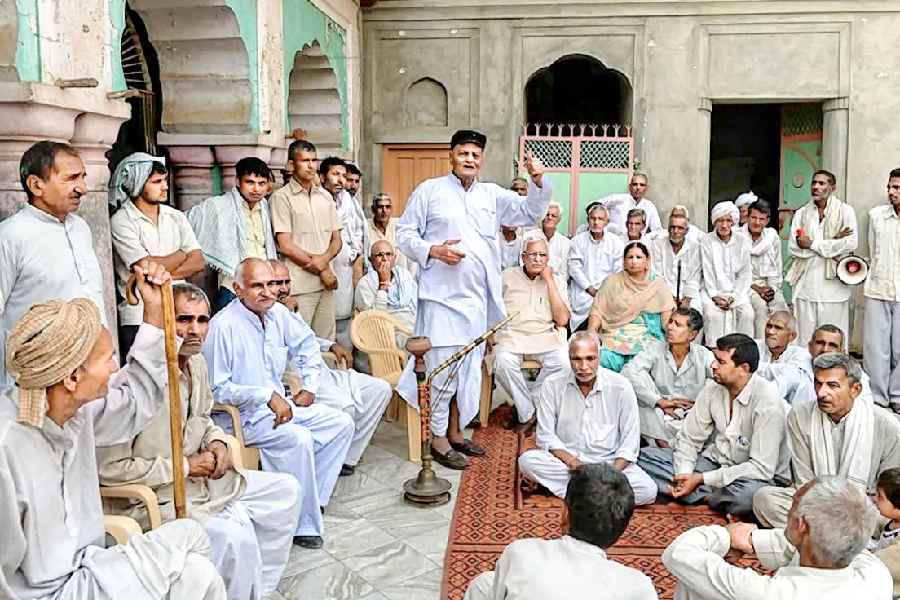
Sir — The word, ‘equality’, is mostly associated with progress. Yet, in a strange twist in the tale, khap panchayats in Uttar Pradesh seem to have brought equality to regression. Usually known for policing women, the khaps have now taken to banning half-pants and smartphones for boys under 18. Teenage boys have been asked to don kurta-pyjamas and stay away from their phones. While these diktats are absurdly restrictive, at least the khaps are determined to be inclusive in their regressive mandates. Could it be that even though social progress has not been able to change the outdated mindset of khap panchayats, it has managed to teach them something about equality?
Rimjhim Dey,
Bandel
New matrix
Sir — The article, “Tangible hope” (Jan 5), perceptively captures a moment of rare optimism in Indian higher education. The convergence of the National Education Policy-led structural reform, Artificial Intelligence-assisted pedagogy, and international academic engagement indeed marks a significant departure from decades of institutional inertia in India.
Ubaida Abul Hasanat,
North 24 Parganas
Sir — The real test of the NEP and AI in education lies in whether they deepen learning or merely accelerate it. Global classrooms mean little unless Indian universities also become globally credible sites of original thought and not just efficient consumers of it. This year, universities must prioritise academic freedom, research funding, and equitable access to knowledge.
K. Chidanand Kumar,
Bengaluru
Sir — We are at a rare turning point where universities will have to decide whether they become factories that hand out degrees or evolve into places where thinkers are forged. The greatest risk now is not change, but the adoption of modern tools like AI while clinging onto an outdated mindset concerning the curricula. Education must choose courage over comfort. When used wisely, AI does not replace human intellect but amplifies it. This is the path that must be chosen for the future generations.
Aditya Kamble,
Kalaburagi, Karnataka
Hollow shine
Sir — The image of Indore being the cleanest city in India has been dented with the recent deaths there due to contaminated drinking water from taps when waste water mixed with drinking water in some colonies (“Water woes”, Jan 5). This is further proof that smart cities are built to cater only to the rich who
are content with flyovers
and other infrastructure for them without sparing a thought for the living conditions of the poor. If municipal corporations are not able to provide all citizens with clean water and air, then why do we need them at all? No city should be permitted to expand unless it can provide its residents with basic amenities.
Brij B. Goyal,
Ludhiana
Sir — Indore is just one example of what happens to citizens as a result of administrative apathy. Tags such as ‘clean city’ and ‘smart city’ cannot stop people from dying when the infrastructure is hollowed out from the inside.
Dattaprasad Shirodkar,
Mumbai
Sir — The Madhya Pradesh government should not shy away from taking strict action against officials responsible for the Indore water contamination crisis. The sorry state of affairs in that city has compelled the National Human Rights Commission and the Madhya Pradesh High Court to intervene. The formation of inquiry committees, the announcement of compensation for victims, and the suspension of junior officials have become all-too-familiar exercises in damage control. They do not bring real accountability or change.
S.S. Paul,
Nadia
Sir — Regular quality checks at water delivery points in every city across the country are essential. The government must prioritise upkeep and monitoring of infrastructure to prevent further health crises of the kind that occurred in Indore.
T.S. Karthik,
Chennai
Sir — The fatalities and the illness resulting from contaminated water in Indore expose the dangerous gap between surface-level awards and crumbling public health infrastructure. A city which was hailed for its spotlessness for years is at a crossroads all at once because beneath the streets corroded pipes bled sewage into drinking water lines. This is not just a civic failure; it is a profound betrayal of trust and a glaring indictment of a model of urban governance that prizes spectacle over substance and awards over accountability. Indore’s drinking water tragedy is a wake-up call for every town and city in India. It reminds us that the right to clean water is one of the most fundamental rights of all.
Ranganathan Sivakumar,
Chennai
Master of the cue
Sir — It was heartbreaking to learn that the former billiards world champion and Indian cue sports titan, Manoj Kothari, passed away at the age of 67 ( “Manoj Kothari no more, fraternity mourns”, Dec 6). He helped popularise cue sports in India. The Indian government conferred the Dhyan Chand Award on him in 2005.
Jayanta Datta,
Hooghly
Risk management
Sir — Reports of gold and silver prices rising after the United States of America’s strike in Venezuela show how sensitive markets are to global conflict. The uncertainty pushed investors towards assets seen as safer. When fear rises, money moves away from risk. Precious metals often benefit from this behaviour, regardless of whether supply conditions actually change.
Suchit Singh,
Calcutta